
How to remember what I learn?
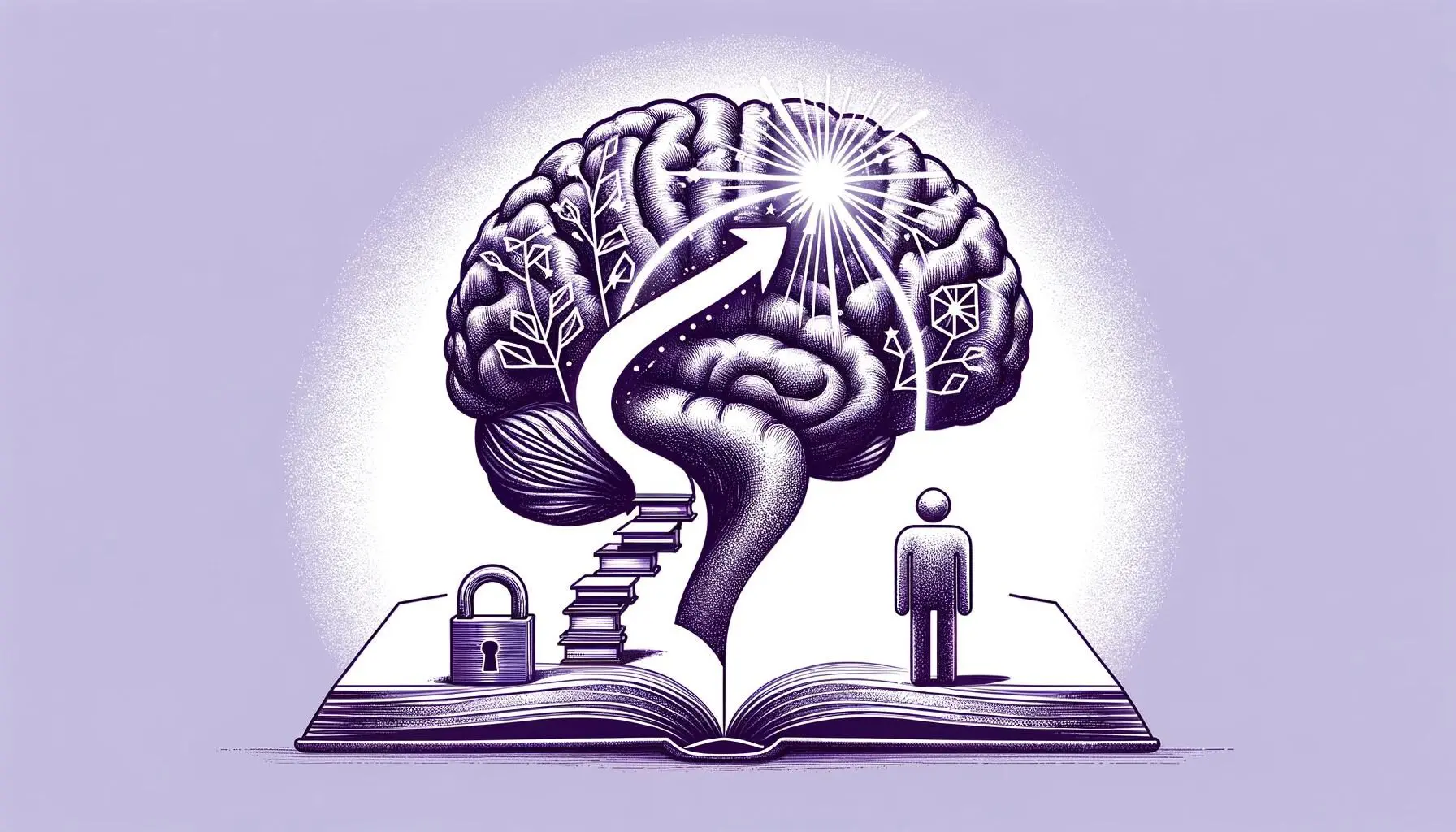
How to Remember What You Learn?
Learning something is relatively easy.
Remembering it weeks later is the real challenge.
Most people have experienced the same frustrating cycle:
Read a book.
Watch a course.
Take notes.
Feel confident.
Then a month later, much of the information seems to have vanished.
The natural conclusion is:
"I must have a bad memory."
Usually, that's not the problem.
The problem is that learning and remembering are not the same thing.
Exposure creates familiarity.
Retention requires reinforcement.
And understanding the difference changes everything.
The Memory Myth Most People Believe
Many people assume memory works like storage.
Put information in.
Retrieve it later.
But human memory doesn't function like a hard drive.
Memory is reconstructive.
Every time you recall something, your brain rebuilds it from neural connections.
Those connections strengthen when they are used and weaken when they are ignored.
\text{Retention} \propto \text{Recall Frequency}
This is why rereading often feels productive but produces disappointing long-term results.
Recognition is not recall.
Seeing information again creates familiarity.
Remembering it without prompts creates retention.
Why We Forget So Quickly
The brain is constantly filtering information.
If it kept everything equally accessible, daily functioning would become overwhelming.
Instead, the brain prioritizes information that appears useful.
Information is more likely to be retained when it is:
-
recalled repeatedly
-
emotionally significant
-
connected to existing knowledge
-
applied in practice
Information that receives none of these signals tends to fade.
Not because your memory is failing.
Because your brain is optimizing.
The Single Most Effective Technique: Active Recall
If there is one strategy that consistently outperforms most others, it's active recall.
Active recall means attempting to retrieve information from memory without looking at the answer.
Examples include:
-
self-testing
-
flashcards
-
answering questions
-
explaining concepts from memory
\text{Active Recall} > \text{Passive Review}
The act of retrieval strengthens neural pathways.
Each successful recall makes future recall easier.
This is why testing yourself often improves memory more than rereading notes repeatedly.
Spaced Repetition: The Science of Timing
One mistake people make is reviewing information only once.
Memory improves when review occurs over increasing intervals.
This is known as spaced repetition.
For example:
-
review today
-
review tomorrow
-
review in three days
-
review in one week
-
review in one month
\text{Long-Term Retention} = \text{Spaced Recall Sessions}
Each review strengthens memory while requiring less effort than the previous one.
The spacing itself is part of what makes the process effective.
Understanding Beats Memorization
Pure memorization has limits.
Information becomes easier to remember when it makes sense.
When learning something new, ask:
-
Why does this work?
-
How does it connect to what I already know?
-
What problem does it solve?
The more connections a concept has, the easier it becomes to retrieve later.
Memory thrives on relationships.
Isolated facts are harder to retain.
Teach What You Learn
One of the fastest ways to expose weak understanding is attempting to teach a concept.
Teaching forces you to:
-
organize ideas
-
simplify explanations
-
identify knowledge gaps
-
retrieve information actively
\text{Teaching} = \text{Understanding Test}
If you cannot explain a concept clearly, you probably do not understand it as deeply as you think.
And that's valuable feedback.
Take Better Notes
Many notes become archives that nobody revisits.
Effective notes should support thinking, not transcription.
Good notes tend to:
-
summarize key ideas
-
highlight connections
-
include questions
-
capture insights in your own words
Copying information verbatim often creates the illusion of learning without strengthening retention.
Processing information matters more than recording it.
Connect New Knowledge to Existing Knowledge
The brain learns more efficiently when new information attaches to existing frameworks.
For example:
-
connect a new concept to a familiar example
-
compare ideas across subjects
-
relate theories to real experiences
\text{Memory Strength} = \text{Knowledge Connections}
The more links a concept has, the easier it becomes to retrieve.
Think of learning as building a network, not collecting isolated facts.
Application Accelerates Retention
Using knowledge strengthens memory far more than reviewing it.
This is why practical application is so powerful.
Examples include:
-
writing about what you learned
-
solving problems
-
building projects
-
teaching others
-
using skills in real situations
Information that influences action becomes significantly harder to forget.
Reduce Cognitive Overload
Many learners consume too much information too quickly.
More input does not automatically create more retention.
When learning sessions become overloaded:
-
attention decreases
-
understanding weakens
-
memory formation suffers
Sometimes learning less and reviewing more produces better results.
\text{Retention} = \frac{\text{Useful Learning}}{\text{Cognitive Overload}}
The goal is not maximum information consumption.
The goal is maximum information retention.
Sleep Is Part of Learning
People often treat sleep as separate from learning.
It isn't.
Sleep plays a major role in memory consolidation.
During sleep, the brain strengthens and organizes information acquired during the day.
Research consistently shows that inadequate sleep negatively affects:
-
retention
-
recall
-
concentration
-
learning speed
\text{Learning} + \text{Sleep} = \text{Memory Consolidation}
Improving memory sometimes begins with improving recovery.
Why Rereading Feels Effective But Often Isn't
Rereading creates familiarity.
Familiarity feels like mastery.
But familiarity can be deceptive.
When information is directly in front of you, recognition becomes easy.
The challenge is recalling it later without prompts.
This is why many students feel confident after reviewing notes but struggle during tests.
The learning felt stronger than the retention actually was.
A Personal Lesson About Remembering
For years, I believed that remembering more required consuming more information.
So I:
-
took extensive notes
-
highlighted aggressively
-
reread material repeatedly
It felt productive.
But weeks later, much of the information had faded.
The turning point came when I started testing myself instead.
Initially, it felt harder.
Sometimes frustrating.
But I quickly noticed something surprising.
The concepts I struggled to recall were exactly the concepts I needed to revisit.
And the act of retrieval itself strengthened retention.
What felt less comfortable turned out to be far more effective.
A Comparison of Common Learning Methods
| Method | Feels Productive | Improves Retention | Long-Term Effectiveness |
|---|---|---|---|
| Rereading | Very High | Low | Moderate |
| Highlighting | High | Low | Low |
| Passive Review | High | Moderate | Moderate |
| Active Recall | Moderate | Very High | Very High |
| Spaced Repetition | Moderate | Very High | Very High |
| Teaching Others | Moderate | Very High | Very High |
| Practical Application | Moderate | Extremely High | Extremely High |
| Self-Testing | Moderate | Very High | Very High |
The methods that feel easiest are often not the methods that produce the strongest memory.
The Structural Formula for Remembering
Long-term retention improves when learning includes:
-
active recall
-
spaced repetition
-
practical application
-
meaningful understanding
-
teaching
-
sleep and recovery
\text{Memory} = \text{Recall} + \text{Repetition} + \text{Application}
Retention is not a passive process.
It is an active one.
Conclusion: You Remember What You Repeatedly Retrieve
Most people focus on putting information into their brains.
The more important question is:
"How often do I pull it back out?"
Because memory strengthens through retrieval.
Not exposure.
The learners who remember the most are rarely those who consume the most information.
They are the people who:
-
test themselves regularly
-
review strategically
-
apply what they learn
-
teach others
-
revisit important ideas over time
Learning creates the possibility of memory.
Retrieval turns that possibility into reality.
And the difference between knowing something today and remembering it six months from now often comes down to one simple principle:
What gets recalled gets retained.
- Arts
- Business
- Computers
- Spiele
- Health
- Startseite
- Kids and Teens
- Geld
- News
- Personal Development
- Recreation
- Regional
- Reference
- Science
- Shopping
- Society
- Sports
- Бизнес
- Деньги
- Дом
- Досуг
- Здоровье
- Игры
- Искусство
- Источники информации
- Компьютеры
- Личное развитие
- Наука
- Новости и СМИ
- Общество
- Покупки
- Спорт
- Страны и регионы
- World

 English
 Russian
 French
 Spanish
 Portuguese
 Turkish
 Dutch
Dutch
 Italiano
 Arabic
 Romaian
 Portuguese (Brazil)
 Greek
Greek
