
What is active learning?
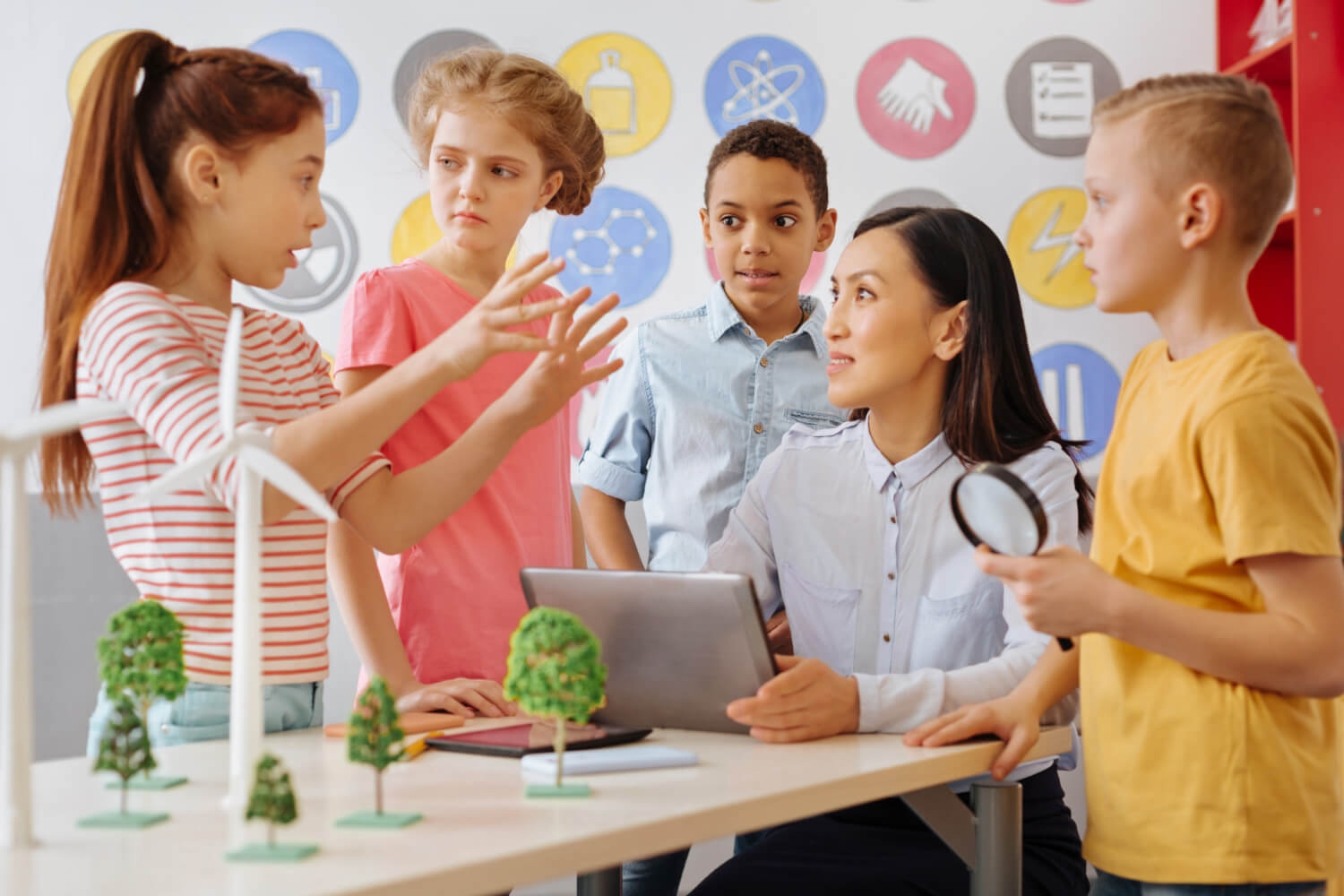
What Is Active Learning?
Most people think learning happens when information enters the brain.
You read a chapter.
Watch a video.
Listen to a lecture.
At the end, you feel informed.
And sometimes you are.
But there's a problem.
Feeling informed and actually learning are not the same thing.
Many people spend hours consuming information only to discover days later that they remember very little of it.
Why?
Because passive exposure creates familiarity.
Active learning creates understanding.
And the gap between those two outcomes is larger than most people realize.
The Simple Definition of Active Learning
Active learning is any learning method that requires you to participate in the learning process rather than simply receive information.
Instead of being a spectator, you become involved.
Examples include:
-
answering questions
-
solving problems
-
discussing ideas
-
teaching concepts
-
applying knowledge
-
testing yourself
The key difference is engagement.
\text{Active Learning} = \text{Participation in Learning}
Learning becomes something you do, not something that happens to you.
Why Passive Learning Feels Effective
Passive learning often feels productive because it is smooth.
Reading flows easily.
Videos play continuously.
Lectures deliver information without requiring much effort.
This creates a dangerous illusion.
The information feels familiar, which the brain sometimes interprets as understanding.
But familiarity is not mastery.
Recognizing information later is very different from recalling or applying it independently.
The Fundamental Difference
Consider two students.
The first:
-
rereads notes repeatedly
-
highlights key passages
-
watches explanations
The second:
-
solves practice problems
-
answers questions from memory
-
explains concepts aloud
Both spend the same amount of time.
The second student usually develops stronger retention and deeper understanding.
Why?
Because active learning requires retrieval and application.
\text{Retention} \propto \text{Active Engagement}
The brain learns more effectively when it must work with information rather than simply observe it.
Active Learning Creates Stronger Memory
Memory strengthens through use.
Every time you retrieve information:
-
neural pathways activate
-
connections strengthen
-
recall becomes easier
Passive review often skips this process.
You see the information.
But you do not necessarily retrieve it.
\text{Memory Strength} = \text{Recall Frequency}
This is one reason self-testing consistently outperforms repeated rereading.
Examples of Active Learning
Many people already use active learning without realizing it.
Common examples include:
Self-Testing
Instead of reviewing answers immediately, attempt to recall them first.
Examples:
-
flashcards
-
quizzes
-
practice exams
This forces retrieval.
Problem Solving
Knowledge becomes more durable when applied.
Examples:
-
math exercises
-
coding projects
-
case studies
-
simulations
Application transforms information into usable skill.
Teaching Others
Teaching exposes gaps in understanding quickly.
If you struggle to explain a concept clearly, you may not fully understand it yet.
\text{Teaching} = \text{Understanding Verification}
This makes teaching one of the most effective learning tools available.
Discussion
Conversations force you to:
-
articulate ideas
-
defend positions
-
clarify misunderstandings
-
connect concepts
Discussion turns passive information into active thinking.
Writing
Writing requires organization.
When you write about a topic, you must:
-
structure ideas
-
identify relationships
-
explain concepts logically
This process strengthens comprehension.
Why Active Learning Feels Harder
An interesting paradox exists.
The best learning methods often feel less comfortable.
Active learning:
-
exposes mistakes
-
reveals confusion
-
requires effort
-
creates mental strain
Passive learning:
-
feels smooth
-
feels familiar
-
feels productive
But learning is not measured by comfort.
It is measured by adaptation.
\text{Learning Gain} \neq \text{Comfort Level}
Sometimes the most effective learning feels more difficult precisely because it is working.
Active Learning Improves Critical Thinking
Passive learning often focuses on information acquisition.
Active learning develops information processing.
Instead of asking:
"What does this say?"
Active learners ask:
-
Why does this work?
-
What assumptions exist?
-
How does this connect to other ideas?
-
Where might this fail?
These questions deepen understanding.
And deep understanding transfers more effectively across situations.
The Role of Feedback
Active learning works best when feedback is available.
Feedback helps identify:
-
errors
-
misconceptions
-
weak areas
-
improvement opportunities
Without feedback, mistakes can become reinforced.
With feedback, mistakes become learning opportunities.
\text{Active Learning} + \text{Feedback} = \text{Faster Improvement}
The learning loop becomes much more efficient.
Active Learning and Skill Development
Knowledge and skill are related but different.
Reading about swimming is not swimming.
Watching a tutorial on public speaking is not public speaking.
Learning a programming language is not the same as building software.
Skills develop through active engagement.
The brain must practice execution, not just observation.
Technology Doesn't Automatically Create Active Learning
Many people assume modern educational technology automatically improves learning.
Sometimes it does.
Sometimes it simply digitizes passive learning.
A video remains passive if you only watch it.
An online course remains passive if you never apply the material.
The tool matters less than the behavior.
Active participation remains the essential ingredient.
A Personal Observation About Learning
For a long time, I measured learning by consumption.
More books.
More articles.
More videos.
At the end of a session, I often felt knowledgeable.
But when I tried explaining concepts later, something became obvious.
My understanding wasn't as strong as I assumed.
The shift happened when I began asking questions during learning:
-
Can I explain this?
-
Can I solve a problem with it?
-
Can I recall it without looking?
Those simple changes made learning feel harder.
But they also made the knowledge last much longer.
That lesson was difficult to ignore.
Active Learning vs Passive Learning
| Learning Method | Engagement Level | Retention Strength | Skill Development |
|---|---|---|---|
| Reading Only | Low | Moderate | Low |
| Watching Videos | Low | Moderate | Low |
| Listening to Lectures | Low | Moderate | Low |
| Highlighting Notes | Low | Low | Very Low |
| Self-Testing | High | Very High | High |
| Practice Problems | High | Very High | Very High |
| Teaching Others | Very High | Very High | High |
| Discussion | High | High | High |
| Building Projects | Very High | Extremely High | Extremely High |
The pattern is consistent.
The more actively you engage with information, the more likely you are to retain and apply it.
The Structural Formula for Active Learning
Effective active learning generally includes:
-
retrieval
-
application
-
feedback
-
reflection
-
repetition
\text{Active Learning} = \text{Recall} + \text{Application} + \text{Feedback}
These elements transform information into understanding.
Conclusion: Learning Happens Through Participation
Many people treat learning as a consumption activity.
Read more.
Watch more.
Listen more.
Those activities can introduce knowledge.
But understanding develops when information is used.
Active learning works because it forces the brain to:
-
retrieve information
-
organize ideas
-
solve problems
-
apply concepts
-
confront misunderstandings
The result is deeper retention, stronger understanding, and better real-world performance.
Because the most effective learners are rarely the people who consume the most information.
They are the people who engage with it most actively.
And that distinction often determines whether knowledge fades quickly or becomes something you can actually use.
- Arts
- Business
- Computers
- Jogos
- Health
- Início
- Kids and Teens
- Money
- News
- Personal Development
- Recreation
- Regional
- Reference
- Science
- Shopping
- Society
- Sports
- Бизнес
- Деньги
- Дом
- Досуг
- Здоровье
- Игры
- Искусство
- Источники информации
- Компьютеры
- Личное развитие
- Наука
- Новости и СМИ
- Общество
- Покупки
- Спорт
- Страны и регионы
- World

 English
 Russian
 French
 Spanish
 Deutsch
 Turkish
 Dutch
Dutch
 Italiano
 Arabic
 Romaian
 Portuguese (Brazil)
 Greek
Greek
