
Why Do Some Franchises Fail?
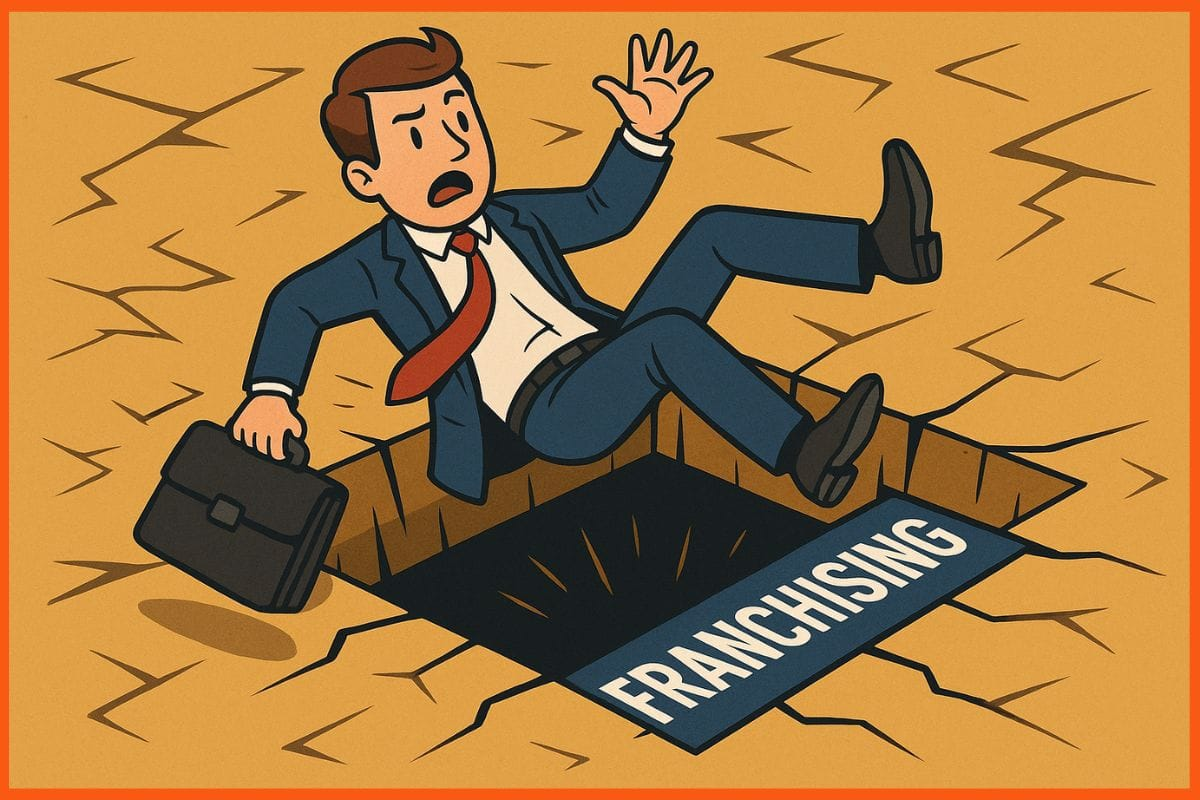
Franchising sells a compelling promise.
A proven business model. Established brand recognition. Operational systems refined over years. Marketing support. Training programs. Vendor relationships. A roadmap where independent entrepreneurs might otherwise face uncertainty.
It's easy to see the appeal.
After all, if someone has already figured out what works, why reinvent the wheel?
Yet every year, franchise locations close their doors.
Some struggle quietly for months before disappearing. Others survive long enough to exhaust savings, patience, and optimism before eventually shutting down. A few never gain meaningful traction from the beginning.
This surprises many people.
There's a widespread belief that franchising somehow eliminates business risk.
It doesn't.
It reduces certain risks. It introduces others.
And understanding why franchises fail requires looking beyond the comforting mythology that often surrounds the franchise industry.
Because failure rarely arrives as a single catastrophic event.
More often, it arrives disguised as a series of small decisions, overlooked assumptions, and operational weaknesses that compound over time.
The logo above the door may be familiar.
The challenges inside are still very real.
The Biggest Misconception About Franchising
The most dangerous assumption in franchising is simple:
"The system guarantees success."
It doesn't.
A franchise system provides tools.
Tools are not outcomes.
The franchisor may offer:
- Training
- Brand recognition
- Marketing resources
- Operational procedures
- Ongoing support
But execution remains the responsibility of the franchisee.
This distinction explains why two owners operating identical franchises in similar markets can achieve dramatically different results.
The business model may be the same.
The leadership is not.
Failure Often Begins Before the Franchise Opens
Many franchise failures can be traced back to decisions made long before launch.
The warning signs exist.
They're simply ignored.
Choosing the Wrong Franchise
Some buyers become captivated by a brand without evaluating whether the business aligns with their skills, interests, or goals.
A person uncomfortable managing employees buys a restaurant.
An owner seeking passive income invests in an operationally intensive business.
An investor with limited capital chooses a concept requiring significant ongoing cash reserves.
Misalignment creates problems early.
And those problems rarely improve with time.
Inadequate Due Diligence
Enthusiasm often outruns investigation.
Prospective franchisees sometimes spend more time studying marketing materials than speaking with existing operators.
That imbalance can be costly.
The Franchise Disclosure Document exists for a reason.
So do franchisee interviews.
Ignoring either invites unnecessary risk.
Underestimating Capital Requirements
One of the most common causes of franchise failure is remarkably straightforward.
The business runs out of money.
Not because the concept is flawed.
Not because customers don't exist.
Because cash disappears faster than expected.
Why This Happens
Many franchisees budget for startup costs.
Fewer budget adequately for post-launch realities.
Common surprises include:
- Slower-than-expected revenue growth
- Higher staffing costs
- Increased marketing expenses
- Unexpected repairs
- Seasonal fluctuations
Businesses rarely fail because they need money once.
They fail because they need it repeatedly.
Working Capital Matters More Than People Think
The franchise fee attracts attention.
Working capital deserves equal attention.
Possibly more.
Cash reserves create flexibility.
Flexibility creates survival opportunities.
Without it, small setbacks become serious threats.
Comparing Common Franchise Failure Factors
| Failure Factor | Impact on Business | Frequency | Preventability |
|---|---|---|---|
| Insufficient Capital | Very High | Very Common | High |
| Poor Location Selection | High | Common | Moderate |
| Weak Management | Very High | Very Common | High |
| Failure to Follow Systems | High | Common | High |
| Inadequate Marketing | Moderate to High | Common | High |
| Excessive Debt | High | Common | Moderate |
| Staffing Challenges | High | Very Common | Moderate |
| Market Misalignment | High | Less Common | Moderate |
One pattern becomes immediately obvious.
Many franchise failures are preventable.
Not all.
But many.
Poor Location Selection
For location-dependent franchises, geography can influence outcomes dramatically.
A great business in the wrong location often struggles.
A good business in the right location frequently thrives.
Common Location Mistakes
Owners sometimes choose sites based on:
- Lower rent
- Personal convenience
- Assumptions rather than data
Successful location selection requires analysis.
Demographics.
Traffic patterns.
Competition.
Consumer behavior.
The process deserves rigor.
Because correcting a poor location decision is often expensive.
Failure to Follow the System
This reason surprises many people.
After all, why would someone invest in a franchise and then ignore the system?
It happens regularly.
The Entrepreneurial Paradox
Many franchisees are naturally entrepreneurial.
That's often a strength.
Occasionally, it becomes a liability.
Some owners attempt to modify proven processes prematurely.
They alter pricing structures.
Ignore operational standards.
Create independent marketing campaigns.
Replace established procedures.
The results are mixed at best.
Franchise systems exist because consistency matters.
Departing from them introduces risk.
Sometimes substantial risk.
Weak Leadership and Management
Franchise ownership is fundamentally a leadership exercise.
Systems matter.
People matter more.
Employees require direction.
Customers require service.
Operations require oversight.
Without strong management, even excellent business models can deteriorate.
Signs of Weak Management
Common indicators include:
- High employee turnover
- Poor customer experiences
- Operational inconsistency
- Financial disorganization
- Lack of accountability
These problems rarely remain isolated.
They spread.
And they spread quickly.
A Lesson I Learned From Speaking With Franchise Owners
Several years ago, I interviewed a collection of franchise operators across different industries.
One owner stood out.
His franchise had underperformed despite operating within a highly respected system.
When discussing the experience, he admitted something unusually candid.
He spent months searching for external explanations.
Competition.
Economic conditions.
Marketing support.
Territory challenges.
Eventually, he recognized a more uncomfortable reality.
Many of the problems originated inside the business rather than outside it.
Staffing decisions.
Operational oversight.
Delayed responses to emerging issues.
That conversation reinforced a lesson that applies well beyond franchising.
Businesses often fail gradually while owners search for external causes.
The sooner leaders examine internal factors, the greater their chances of recovery.
Hiring the Wrong People
Employees shape customer experiences.
Customer experiences shape business outcomes.
The connection is direct.
Yet staffing remains one of the most persistent franchise challenges.
Common Hiring Problems
Owners frequently struggle with:
- Recruiting qualified candidates
- Retaining employees
- Training consistency
- Labor shortages
Poor hiring decisions create ripple effects.
Productivity declines.
Customer satisfaction suffers.
Turnover increases.
Costs rise.
The consequences compound.
Inadequate Local Marketing
National advertising creates awareness.
Local marketing creates customers.
Some franchisees mistakenly assume brand recognition alone will generate sufficient demand.
That assumption can be dangerous.
Even well-known brands often require localized outreach.
Community engagement.
Digital marketing.
Referral generation.
Relationship building.
Visibility matters.
So does effort.
Excessive Debt Burdens
Debt can accelerate growth.
It can also amplify risk.
Franchise owners who overextend financially often find themselves operating under significant pressure.
Revenue fluctuations become more threatening.
Unexpected expenses become harder to absorb.
Decision-making becomes reactive.
Financial flexibility disappears.
The business becomes fragile.
Fragility rarely supports long-term success.
Franchisor Challenges Can Contribute
Not every franchise failure originates with the franchisee.
Sometimes the system itself experiences difficulties.
Potential Franchisor Issues
Examples include:
- Weak training programs
- Insufficient support
- Rapid expansion
- Brand reputation problems
- Ineffective leadership
Strong franchise systems generally improve franchisee odds.
Weak systems may create additional obstacles.
This is why due diligence matters so much before investing.
Market Conditions Still Matter
Some investors view franchising as protection against economic realities.
It isn't.
Franchises remain businesses.
Businesses operate within markets.
Markets change.
Consumer preferences evolve.
Economic cycles emerge.
Competition increases.
Demand shifts.
No franchise system is immune to broader market forces.
Strong operators adapt.
Weak operators struggle.
The Hidden Cause of Failure: Unrealistic Expectations
This factor receives less attention than it deserves.
Many franchise buyers enter ownership expecting immediate success.
Rapid profitability.
Predictable growth.
Minimal surprises.
Reality tends to be messier.
Most businesses require:
- Time
- Persistence
- Adaptation
- Continuous improvement
When expectations diverge dramatically from reality, frustration often follows.
Frustration influences decisions.
Poor decisions influence outcomes.
Can Franchise Failure Be Avoided?
Not entirely.
Business ownership always involves uncertainty.
However, many risks can be reduced.
Best Practices
Successful franchisees often:
- Conduct extensive due diligence
- Maintain adequate capital reserves
- Follow proven systems
- Invest in leadership development
- Monitor financial performance closely
- Hire carefully
- Adapt strategically
None of these guarantee success.
They improve probabilities.
Significantly.
Conclusion: Franchises Don't Fail for the Reasons Most People Assume
People often imagine franchise failures occur because the concept was flawed.
Sometimes that's true.
More often, failure emerges from a combination of ordinary factors.
Insufficient capital.
Weak leadership.
Poor hiring.
Operational inconsistency.
Inadequate preparation.
Unrealistic expectations.
The causes are rarely dramatic.
They are cumulative.
And that's what makes them dangerous.
Because cumulative problems are easy to ignore in the beginning.
The strongest franchise operators understand this. They recognize that buying a franchise doesn't eliminate responsibility. It simply provides a framework within which responsibility must operate.
The brand creates opportunity.
The system creates structure.
The owner determines whether those advantages become results.
And that may be the most important lesson hidden inside every franchise success story—and every franchise failure.
- Arts
- Business
- Computers
- Jocuri
- Health
- Home
- Kids and Teens
- Money
- News
- Personal Development
- Recreation
- Regional
- Reference
- Science
- Shopping
- Society
- Sports
- Бизнес
- Деньги
- Дом
- Досуг
- Здоровье
- Игры
- Искусство
- Источники информации
- Компьютеры
- Личное развитие
- Наука
- Новости и СМИ
- Общество
- Покупки
- Спорт
- Страны и регионы
- World

 English
 Russian
 French
 Spanish
 Portuguese
 Deutsch
 Turkish
 Dutch
Dutch
 Italiano
 Arabic
 Portuguese (Brazil)
 Greek
Greek