
Which Cloud Model Is Best for Businesses?
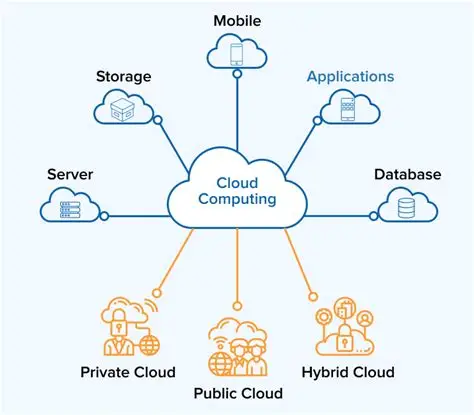
Business leaders often ask cloud questions as though there must be a single correct answer.
Which cloud provider is best?
Which migration strategy is safest?
Which architecture will deliver the greatest return?
And perhaps most commonly:
Which cloud model is best for businesses?
It is an appealing question because it suggests a definitive conclusion. A winner. A preferred option. A clear destination at the end of an increasingly crowded technology landscape.
The problem is that cloud computing rarely rewards simplistic thinking.
A startup developing its first application faces different challenges than a multinational financial institution. A manufacturing company has different priorities than a software company. A rapidly growing e-commerce brand operates under different constraints than a regional healthcare provider.
Yet organizations continue searching for a universal answer.
After years of observing cloud adoption strategies, one lesson appears repeatedly: the best cloud model is not the one with the most features. It is the one that removes the greatest amount of friction from achieving business objectives.
That distinction changes everything.
Because the debate is not really about technology.
It is about responsibility.
Understanding the Main Cloud Models
Before determining which model is best, it is worth clarifying what businesses are actually choosing between.
The three primary cloud service models are:
- Infrastructure as a Service (IaaS)
- Platform as a Service (PaaS)
- Software as a Service (SaaS)
Each transfers a different amount of responsibility from the customer to the provider.
That shift in responsibility shapes costs, flexibility, operational complexity, scalability, and innovation potential.
The cloud models are connected.
But they solve very different business problems.
IaaS: The Model Built for Control
Infrastructure as a Service provides access to computing resources such as:
- Virtual servers
- Storage systems
- Networking infrastructure
- Security capabilities
Organizations manage applications, operating systems, and configurations while the provider manages the underlying hardware.
Think of IaaS as leasing a fully serviced building shell.
The structure exists.
The utilities function.
What happens inside remains largely under your control.
When IaaS Excels
IaaS works particularly well when businesses require:
- Extensive customization
- Flexible scaling
- Infrastructure-level control
- Support for specialized applications
- Migration of legacy systems
Technology teams often favor IaaS because it preserves freedom.
Businesses can design environments that align precisely with operational requirements.
That flexibility is valuable.
It also introduces complexity.
Control and responsibility tend to travel together.
PaaS: The Model Designed for Builders
Platform as a Service occupies the middle ground.
Instead of managing infrastructure, developers receive a ready-made platform for building, testing, and deploying applications.
The provider handles:
- Infrastructure
- Operating systems
- Runtime environments
- Middleware
- Maintenance
Developers focus primarily on creating software.
Why PaaS Appeals to Growing Businesses
Many organizations discover that infrastructure management consumes resources without creating direct customer value.
Servers require updates.
Operating systems require patches.
Configurations require troubleshooting.
PaaS reduces those burdens.
Development teams can move faster because the platform already exists.
Applications become the priority.
Infrastructure fades into the background.
For businesses where software development drives competitive advantage, that shift can be significant.
SaaS: The Model Most Businesses Already Use
Software as a Service is the most familiar cloud model.
Users access fully functional applications through browsers or mobile apps while the provider manages the entire technology stack.
Examples include:
- Customer relationship management platforms
- Collaboration software
- Accounting systems
- Project management tools
- Communication applications
Customers simply use the software.
Everything else happens behind the scenes.
Why SaaS Dominates Business Adoption
The appeal is straightforward.
SaaS minimizes operational complexity.
Deployment is fast.
Maintenance requirements are minimal.
Costs are generally predictable.
Organizations gain capabilities without assuming infrastructure responsibilities.
For many business functions, that convenience is difficult to ignore.
The Cloud Model Comparison Businesses Actually Need
Technology comparisons often focus on features.
Business comparisons should focus on outcomes.
The following table illustrates the practical differences.
| Factor | IaaS | PaaS | SaaS |
|---|---|---|---|
| Infrastructure Control | High | Moderate | Low |
| Technical Expertise Required | High | Moderate | Low |
| Deployment Speed | Fast | Faster | Immediate |
| Customization Potential | Extensive | Significant | Limited |
| Maintenance Burden | Moderate to High | Low | Very Low |
| Scalability | Excellent | Excellent | Provider-managed |
| Development Flexibility | Maximum | High | Minimal |
| Time to Value | Moderate | Fast | Very Fast |
| Operational Complexity | High | Moderate | Low |
| Typical Users | IT teams | Developers | Business users |
The most revealing takeaway is not which model performs best.
It is how differently they approach responsibility.
The Lesson That Changed My View of Cloud Strategy
Several years ago, I observed a company undergoing a substantial digital transformation initiative.
Leadership initially wanted a single cloud strategy.
One model.
One framework.
One solution.
The logic seemed reasonable.
Standardization often simplifies operations.
Yet as discussions progressed, a more complicated reality emerged.
The sales department relied heavily on SaaS applications.
The software development team preferred PaaS environments.
Meanwhile, the IT department required IaaS resources for specialized workloads and legacy applications.
Attempting to force every requirement into a single model created unnecessary compromises.
The eventual solution incorporated all three.
The lesson was surprisingly simple.
Cloud maturity often means recognizing that different business functions have different needs.
The objective is not selecting one model.
The objective is selecting the right model for each situation.
Why SaaS Is Often the Best Starting Point
If the question is which cloud model benefits the greatest number of businesses, SaaS is arguably the strongest candidate.
Not because it is technically superior.
Because it solves common business problems efficiently.
Most organizations do not need to build their own email systems.
They do not need to develop proprietary accounting platforms.
They do not need to maintain custom collaboration tools.
SaaS delivers immediate functionality without infrastructure complexity.
For routine business processes, that simplicity creates enormous value.
The fewer resources spent maintaining software, the more resources remain available for strategic priorities.
Why PaaS Is Often Best for Innovation
Companies developing software products face a different challenge.
Speed matters.
Iteration matters.
Development efficiency matters.
PaaS supports these priorities by removing much of the infrastructure management burden.
Developers gain access to scalable environments without spending excessive time configuring servers or maintaining operating systems.
The result is often faster product development.
And in competitive markets, development speed can become a meaningful advantage.
Organizations pursuing digital products frequently discover that PaaS offers the most balanced combination of flexibility and simplicity.
Why IaaS Remains Essential
Cloud conversations occasionally imply that infrastructure management is becoming irrelevant.
That interpretation misses an important point.
Some businesses genuinely require extensive control.
Complex enterprise systems.
Specialized workloads.
Highly customized environments.
Regulated operations.
Legacy application migrations.
These scenarios often benefit from IaaS.
The model provides flexibility unavailable through SaaS and operational freedom beyond what many PaaS platforms offer.
For organizations with sophisticated infrastructure requirements, IaaS remains indispensable.
The Rise of Multi-Cloud and Hybrid Strategies
An interesting development has emerged in recent years.
Businesses increasingly reject the notion of choosing a single cloud model.
Instead, they combine multiple approaches.
A company might use:
- SaaS for customer relationship management
- PaaS for application development
- IaaS for infrastructure-intensive workloads
This strategy reflects a broader shift in thinking.
The goal is no longer technological consistency.
The goal is business optimization.
Different workloads deserve different solutions.
The cloud enables that flexibility.
Factors Businesses Should Evaluate Before Choosing
Several considerations can help determine which model aligns best with organizational needs.
Technical Resources
Does the company have skilled infrastructure teams?
Or would resources be better allocated elsewhere?
Growth Expectations
Will demand remain stable or fluctuate significantly?
Scalability requirements influence model selection.
Customization Needs
Some organizations require extensive control.
Others prioritize simplicity.
Understanding which matters more is essential.
Budget Structure
Capital expenditure preferences differ from operational expenditure preferences.
Cloud models support these approaches differently.
Competitive Priorities
Is the organization primarily consuming software or creating it?
The answer often points toward SaaS, PaaS, or IaaS respectively.
So, Which Cloud Model Is Best?
The temptation is to rank them.
SaaS first.
PaaS second.
IaaS third.
Or perhaps the reverse.
But that approach misunderstands the purpose of cloud models.
These are not competing products.
They are different levels of abstraction.
Each exists because different businesses require different degrees of control.
The best cloud model is therefore contextual rather than universal.
Conclusion: The Best Cloud Model Is the One That Removes the Most Friction
Businesses often begin cloud discussions by asking which model is best.
They frequently end those discussions with a different realization.
The most valuable cloud model is the one that allows the organization to focus on what it does best.
For many companies, that means SaaS.
For software-focused organizations, it may mean PaaS.
For enterprises requiring infrastructure flexibility, it may mean IaaS.
Increasingly, it means all three.
Perhaps the most provocative truth is that cloud success rarely comes from choosing the most powerful technology.
It comes from choosing the technology that demands the least unnecessary attention.
Because businesses do not exist to manage cloud infrastructure.
They exist to create products, serve customers, solve problems, and grow.
The best cloud model is simply the one that helps them do those things with fewer obstacles standing in the way.
- Arts
- Business
- Computers
- Jocuri
- Health
- Home
- Kids and Teens
- Money
- News
- Personal Development
- Recreation
- Regional
- Reference
- Science
- Shopping
- Society
- Sports
- Бизнес
- Деньги
- Дом
- Досуг
- Здоровье
- Игры
- Искусство
- Источники информации
- Компьютеры
- Личное развитие
- Наука
- Новости и СМИ
- Общество
- Покупки
- Спорт
- Страны и регионы
- World

 English
 Russian
 French
 Spanish
 Portuguese
 Deutsch
 Turkish
 Dutch
Dutch
 Italiano
 Arabic
 Portuguese (Brazil)
 Greek
Greek
