
What is an example of a cognitive bias?
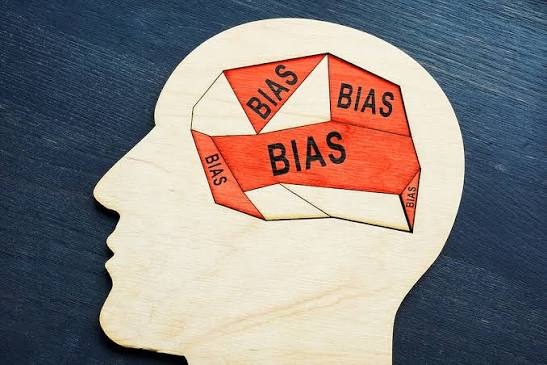
What Is an Example of a Cognitive Bias?
A Simple Question With a Non-Simple Answer
A person is asked whether more words in English begin with the letter “K” or have “K” as the third letter.
Most people choose the first option.
It feels correct. Immediate. Intuitive.
But it is wrong.
In reality, far more English words contain “K” in the third position than begin with it.
What drives the error is not lack of intelligence. It is not inattention in the ordinary sense.
It is a cognitive bias in action.
Specifically, the availability heuristic.
And it illustrates something important: biases are not abstract concepts. They are visible in ordinary judgment, often without awareness.
Example 1: Availability Bias
The availability bias occurs when people estimate probability based on how easily examples come to mind.
If an event is:
-
Vivid
-
Recent
-
Emotionally charged
it feels more likely than it actually is.
For example:
After seeing news reports of airplane crashes, a person may overestimate the danger of flying, even though statistically it remains one of the safest modes of transport.
The mechanism is simple:
The mind substitutes ease of recall for actual frequency.
What is easy to remember feels common.
Example 2: Anchoring Bias
Suppose a person is asked whether the population of a city is more or less than 10 million, and then asked to estimate the actual population.
Their answer will tend to cluster around 10 million—even if that number is irrelevant.
This is anchoring.
The first piece of information acts as a reference point.
Even arbitrary numbers influence judgment.
The mind does not start from zero. It starts from what is presented.
Example 3: Confirmation Bias
A person believes that a particular investment strategy is effective.
They seek out information that supports this belief and overlook evidence that contradicts it.
This is confirmation bias.
The mind does not evaluate all evidence equally.
It preferentially absorbs information that preserves existing beliefs.
This leads to:
-
Reinforced opinions
-
Selective attention
-
Skewed interpretation
Beliefs become self-reinforcing systems.
Example 4: Framing Effect
Two patients are given the same medical information:
-
Treatment A: “90% survival rate”
-
Treatment B: “10% mortality rate”
Although the outcomes are identical, people prefer Treatment A.
This is the framing effect.
The way information is presented changes perception.
The mind responds not only to content, but to structure.
Example 5: Loss Aversion
A person is offered:
-
A 50% chance to gain $100
-
Or a guaranteed $45
Many choose the sure $45.
But when reversed:
-
A 50% chance to lose $100
-
Or a guaranteed loss of $45
Many choose to gamble.
This asymmetry is loss aversion.
Losses feel more intense than equivalent gains.
The emotional weight is uneven.
A Personal Observation on Everyday Bias
At one point, while observing decision patterns in routine situations, a recurring pattern became clear.
People were not generally irrational in chaotic ways.
They were predictably inconsistent in specific directions.
A vivid example would dominate probability judgments.
An initial number would shape later estimates.
A loss would linger longer than a gain.
These were not isolated mistakes.
They were recurring structures in thinking.
Why These Examples Matter
Each of these examples is not just a curiosity.
It demonstrates a broader principle:
Human judgment does not operate like a statistical calculator.
It operates through:
-
Memory
-
Attention
-
Emotion
-
Heuristics
-
Context
Cognitive biases are the predictable outcome of this system.
They are not rare failures.
They are common patterns of normal cognition.
Conclusion: An Example Is Not an Exception
An example of a cognitive bias is not an anomaly in thinking.
It is thinking under constraint.
From availability to anchoring to framing, each bias reveals a different way in which the mind simplifies complexity.
The important insight is not that people make mistakes.
It is that those mistakes are structured, repeatable, and deeply tied to how cognition actually works.
In that sense, a cognitive bias is not something that occasionally happens.
It is something that regularly reveals how the mind operates.
- Arts
- Business
- Computers
- Jeux
- Health
- Domicile
- Kids and Teens
- Argent
- News
- Personal Development
- Recreation
- Regional
- Reference
- Science
- Shopping
- Society
- Sports
- Бизнес
- Деньги
- Дом
- Досуг
- Здоровье
- Игры
- Искусство
- Источники информации
- Компьютеры
- Личное развитие
- Наука
- Новости и СМИ
- Общество
- Покупки
- Спорт
- Страны и регионы
- World

 English
 Russian
 Spanish
 Portuguese
 Deutsch
 Turkish
 Dutch
Dutch
 Italiano
 Arabic
 Romaian
 Portuguese (Brazil)
 Greek
Greek