
What is the strongest currency in the world?
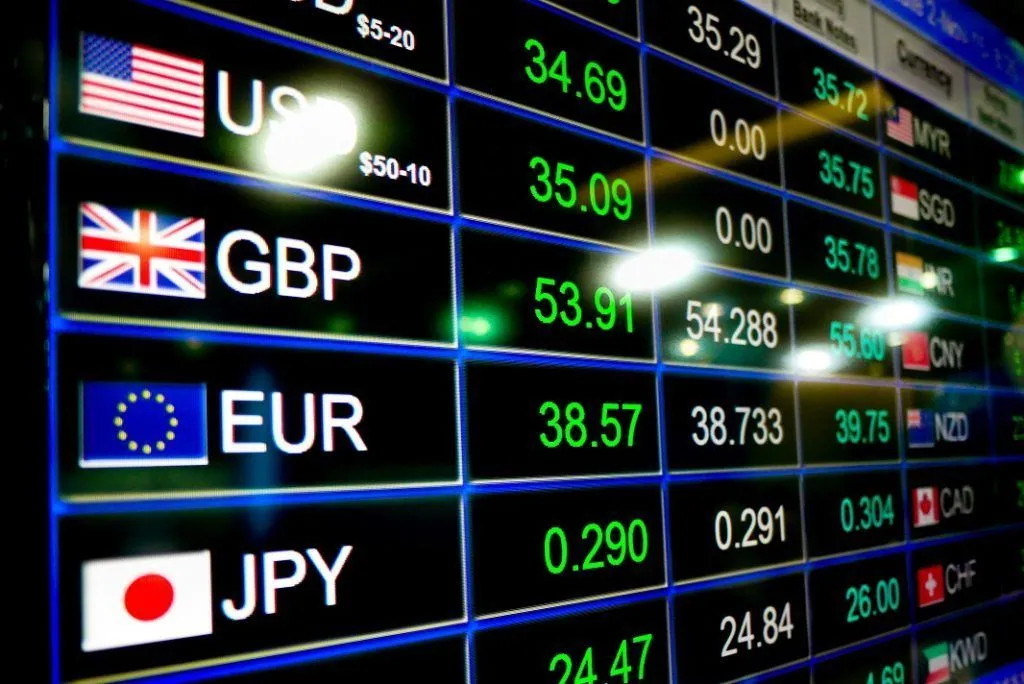
What Is the Strongest Currency in the World?
Ask ten people this question and nine of them will say the U.S. dollar. That answer sounds right. The dollar dominates global trade, anchors central bank reserves, and sits at the center of finance from Wall Street to Singapore. But “strongest” is one of those deceptively simple words. Strongest by what measure? Most traded? Most stable? Most valuable per unit? Most trusted in a crisis?
If you define strength by exchange value against the U.S. dollar, the winner is not the dollar. It’s the Kuwaiti dinar (KWD), which consistently ranks as the world’s highest-valued currency per unit.
Now, before anyone rushes to buy dinars, there’s a catch: a strong currency is not automatically the most influential, liquid, or desirable for investors. Currency strength is part economics, part geopolitics, part psychology. It’s a scorecard with multiple columns, and different currencies dominate different categories.
The Short Answer: The Kuwaiti Dinar Is the Highest-Valued Currency
The Kuwaiti dinar (KWD) is widely recognized as the world’s strongest currency by exchange rate value. One dinar is typically worth more than three U.S. dollars.
Why the Dinar Is So Valuable
-
Massive oil wealth: Kuwait has one of the highest GDPs per capita in the world, fueled by enormous petroleum reserves.
-
Small population: A relatively small number of citizens share substantial national wealth, increasing purchasing power.
-
Managed currency policy: Kuwait’s central bank carefully manages the dinar against a basket of currencies, helping maintain stability.
-
Strong sovereign finances: The country holds substantial foreign reserves and sovereign wealth assets.
But exchange-rate supremacy doesn’t mean the dinar dominates world commerce. You can’t walk into most international markets and casually transact in KWD the way you can with dollars or euros.
Strongest vs. Most Important: Two Different Questions
This distinction matters. A currency can be highly valued per unit without being the backbone of the global financial system.
Think of It Like Real Estate
A luxury penthouse in Manhattan may cost more per square foot than a suburban home in Dallas. That doesn’t mean Manhattan has more total housing or more practical living space. The same logic applies to currencies.
Here’s the breakdown
-
Highest-valued currency: Kuwaiti dinar.
-
Most influential currency: U.S. dollar.
-
Most traded currency pair: EUR/USD.
-
Most widely held reserve currency: U.S. dollar.
-
Most stable “safe haven” currencies: Swiss franc and Japanese yen.
So the real conversation isn’t “Which currency is strongest?” It’s “Strongest in what context?”
The Top 10 Strongest Currencies by Value
Below is a snapshot of the world’s highest-valued currencies relative to the U.S. dollar.
Top 10 Strongest Currencies by Value (Approximate Exchange Rates)
| Rank | Currency | Code | Approx. Value vs. USD | Primary Strength Driver |
|---|---|---|---|---|
| 1 | Kuwaiti Dinar | KWD | 1 KWD ≈ 3.25 USD | Oil wealth and fiscal stability |
| 2 | Bahraini Dinar | BHD | 1 BHD ≈ 2.65 USD | Energy exports and financial services |
| 3 | Omani Rial | OMR | 1 OMR ≈ 2.60 USD | Oil revenues and monetary management |
| 4 | Jordanian Dinar | JOD | 1 JOD ≈ 1.41 USD | Stable peg to the U.S. dollar |
| 5 | British Pound Sterling | GBP | 1 GBP ≈ 1.27 USD | Major global financial center |
| 6 | Gibraltar Pound | GIP | 1 GIP ≈ 1.27 USD | Parity with the British pound |
| 7 | Swiss Franc | CHF | 1 CHF ≈ 1.11 USD | Safe-haven reputation |
| 8 | Euro | EUR | 1 EUR ≈ 1.08 USD | Large economic bloc and trade power |
| 9 | U.S. Dollar | USD | 1 USD = 1 USD | Global reserve and trade dominance |
| 10 | Canadian Dollar | CAD | 1 CAD ≈ 0.74 USD | Commodity exports and stable governance |
Exchange rates fluctuate daily; values are approximate.
Why Some Middle Eastern Currencies Dominate the Rankings
Notice something interesting? The top three currencies are all from Gulf nations: Kuwait, Bahrain, and Oman.
That’s not a coincidence.
These countries benefit from a combination of:
-
Significant hydrocarbon exports
-
Low public debt
-
Strong fiscal reserves
-
Currency pegs or tightly managed exchange systems
-
Relatively low inflation
Oil revenues generate large inflows of foreign currency, particularly U.S. dollars. That allows governments to support strong exchange rates and maintain confidence in their currencies.
But There’s a Trade-Off
Extremely strong currencies can make exports less competitive outside the energy sector. A country selling manufactured goods abroad often benefits from a somewhat weaker currency, which makes its products cheaper internationally.
That’s one reason why economic giants like Japan and China do not pursue ultra-strong exchange rates. Competitiveness matters.
The U.S. Dollar: Still the Kingpin
If the dollar isn’t the highest-valued currency, why does everyone treat it like the heavyweight champion?
Because influence beats face value.
The Dollar’s Real Power
-
Around 58% of global foreign exchange reserves are held in U.S. dollars.
-
Most international commodities, including oil, are priced in dollars.
-
Global debt markets rely heavily on dollar-denominated securities.
-
During crises, investors typically rush into dollars as a safe haven.
I learned this viscerally during the 2008 financial crisis. I was meeting with business owners who assumed the U.S. economy was collapsing permanently. Yet capital kept flowing into dollars and U.S. Treasury bonds. Why? Trust. Liquidity. Depth of markets. When fear spikes, the world doesn’t ask, “What has the highest exchange rate?” It asks, “Where can I park money safely and move it quickly?”
That’s the dollar’s superpower.
The Swiss Franc and Japanese Yen: Safe Havens With a Different Kind of Strength
Not all currency strength is about price. Some currencies are prized for stability during turmoil.
Swiss Franc (CHF)
The Swiss franc is famous for:
-
Political neutrality
-
Low inflation
-
Strong banking and financial institutions
-
Conservative fiscal policy
Investors often buy francs during geopolitical or economic uncertainty.
Japanese Yen (JPY)
The yen plays a similar role, despite Japan’s high public debt. Why?
-
Japan is a major creditor nation.
-
Its financial markets are deep and liquid.
-
The yen is widely used in global funding and carry trades.
Interestingly, a safe-haven currency can appreciate even when the country’s economy is struggling. Market psychology matters as much as raw economics.
Why Exchange Rates Alone Can Be Misleading
Here’s a common misconception: “If one currency unit is worth more than one dollar, that country must be richer.”
Not necessarily.
Currency Units Are Arbitrary
A country can redenominate its currency at any time. For example:
-
1 Kuwaiti dinar is worth more than 3 dollars.
-
1 Japanese yen is worth less than 1 cent.
That does not mean Kuwait’s economy is larger than Japan’s. Japan’s economy is vastly bigger.
What matters more is:
-
GDP and productivity
-
Inflation rates
-
Trade balances
-
Political stability
-
Monetary policy credibility
-
Foreign exchange reserves
Exchange rates are influenced by all of these factors, plus speculation and capital flows.
What Makes a Currency Strong Over Time?
Sustained currency strength usually comes from a mix of structural advantages.
1. Economic Productivity
Countries that produce high-value goods and services tend to attract investment and maintain stronger currencies.
2. Low Inflation
A currency that steadily loses purchasing power becomes less attractive. Central banks with strong anti-inflation credibility, like the Swiss National Bank, tend to support stronger currencies.
3. Political and Institutional Stability
Investors value predictability. Rule of law, transparent institutions, and stable governance matter enormously.
4. Trade and Current Account Surpluses
Countries that export more than they import often accumulate foreign currency reserves, supporting their own currency.
5. Confidence
This is the intangible factor. Currencies are ultimately social contracts. People hold them because they believe others will continue to hold them tomorrow.
The Strongest Currency Isn’t Always the Best Investment
This surprises many people.
A currency can be extremely strong and still deliver mediocre investment returns. Why?
-
Exchange rates may already reflect optimism.
-
Central banks can intervene to prevent excessive appreciation.
-
Economic growth may be limited in mature or resource-dependent economies.
-
Interest rates and inflation differentials affect real returns.
For example, Switzerland’s strong franc has sometimes created headaches for Swiss exporters because it makes their products more expensive abroad.
Investing in currencies is less about picking the “strongest” and more about understanding macroeconomic cycles, interest rate trends, and risk sentiment.
A Provocative Conclusion: Strength Is Context, Not a Crown
So what is the strongest currency in the world?
If you want the highest-valued currency unit, the answer is the Kuwaiti dinar.
If you want the currency with the greatest global influence, liquidity, and strategic importance, it’s the U.S. dollar.
If you want the currency most associated with stability and safety, the Swiss franc has a compelling claim.
And that’s the real lesson: currency strength is multidimensional. The world’s financial system doesn’t operate like a beauty contest with one permanent winner. It’s more like a constantly shifting balance of trust, resources, policy, and power.
I’ve spent enough time around markets to know that the loudest narratives are often the least durable. People chase whatever looks strongest in the moment. Then interest rates change. Oil prices swing. Governments intervene. Capital moves. The hierarchy shifts.
Currencies are mirrors of nations. They reflect not just wealth, but discipline, credibility, and the confidence of millions of people making decisions every day.
And confidence, unlike oil or gold, can’t be drilled out of the ground.
- Arts
- Business
- Computers
- Spellen
- Health
- Home
- Kids and Teens
- Money
- News
- Personal Development
- Recreation
- Regional
- Reference
- Science
- Shopping
- Society
- Sports
- Бизнес
- Деньги
- Дом
- Досуг
- Здоровье
- Игры
- Искусство
- Источники информации
- Компьютеры
- Личное развитие
- Наука
- Новости и СМИ
- Общество
- Покупки
- Спорт
- Страны и регионы
- World

 English
 Russian
 French
 Spanish
 Portuguese
 Deutsch
 Turkish
 Italiano
 Arabic
 Romaian
 Portuguese (Brazil)
 Greek
Greek