
Why do people make irrational decisions?
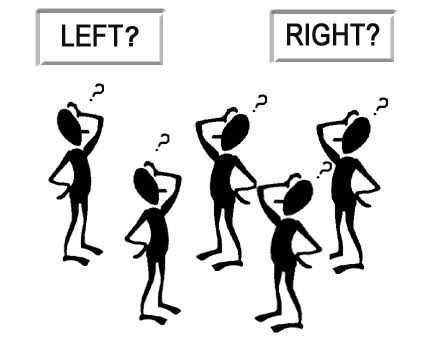
Why Do People Make Irrational Decisions?
The Idea of Irrationality and Everyday Choice
A person decides to avoid a small guaranteed gain in favor of a risky option with uncertain outcome.
Another person buys an expensive item during a sale, even though they do not need it.
A third delays an important task despite knowing it will create future stress.
From a purely logical perspective, these choices can appear irrational.
Yet they are common, predictable, and systematic.
This raises an important question: if people are capable of reasoning, why do they so often make decisions that seem inconsistent with optimal logic?
The answer is not that human thinking is broken.
It is that human thinking is designed for conditions very different from idealized rational models.
Rational Models vs Real Minds
Traditional economic theory often assumes that individuals:
-
Have complete information
-
Evaluate options consistently
-
Choose the optimal outcome
But real decision-making rarely occurs under these conditions.
Instead, people operate with:
-
Limited information
-
Limited time
-
Limited cognitive resources
This leads to what is known as bounded rationality.
Decisions are made not by maximizing outcomes perfectly, but by satisficing—choosing options that are “good enough” given constraints.
Cognitive Biases Shape Perception of Options
One major source of irrational-looking behavior is cognitive bias.
Biases influence:
-
What information is noticed
-
How information is interpreted
-
What feels convincing
For example:
-
Confirmation bias reinforces existing beliefs
-
Anchoring bias influences judgments based on initial values
-
Availability bias makes vivid examples feel more probable
These biases do not eliminate reasoning.
They guide it in predictable directions.
Emotions Are Part of Decision-Making, Not Interference
A common misconception is that emotions disrupt rational thought.
In reality, emotions are integral to decision-making.
They provide signals about:
-
Risk
-
Value
-
Urgency
-
Social meaning
For instance:
-
Fear can prevent dangerous choices
-
Excitement can motivate opportunity seeking
-
Regret can shape future behavior
However, emotions can also overpower long-term reasoning, especially under uncertainty.
This can produce decisions that appear inconsistent from a purely analytical perspective.
Present Bias and the Pull of the Immediate
One of the most powerful forces behind “irrational” decisions is present bias.
People tend to overvalue immediate rewards relative to future outcomes.
This leads to behaviors such as:
-
Procrastination
-
Impulse purchases
-
Poor long-term planning
Even when individuals understand long-term consequences, immediate rewards often feel more compelling in the moment.
The mind prioritizes immediacy because, evolutionarily, it often mattered more than distant outcomes.
Mental Shortcuts Improve Speed but Reduce Precision
Human cognition relies heavily on heuristics—mental shortcuts that simplify complex problems.
Examples include:
-
Using past experiences instead of full analysis
-
Relying on familiarity instead of probability
-
Trusting intuition under uncertainty
These shortcuts are efficient and often effective.
But they can also lead to systematic errors when applied outside their optimal context.
What appears irrational may actually be the byproduct of a fast, resource-efficient system operating under constraints.
Social Influence Changes Perceived Value
People do not make decisions in isolation.
They are influenced by:
-
Social norms
-
Peer behavior
-
Cultural expectations
This can lead to decisions that prioritize belonging or identity over strict utility maximization.
For example:
-
Purchasing trends driven by popularity rather than need
-
Investment decisions influenced by herd behavior
-
Lifestyle choices shaped by comparison
From an external perspective, these can appear irrational.
From a social perspective, they often serve meaningful adaptive functions.
Emotional State Shapes Immediate Choices
Decision quality is strongly influenced by temporary emotional states.
Under stress, anxiety, or excitement, people are more likely to:
-
Focus on short-term relief
-
Overweight immediate outcomes
-
Underestimate long-term consequences
Because emotional states fluctuate, decision consistency also fluctuates.
What appears irrational in hindsight may have been consistent with the emotional context at the time.
A Personal Observation on Decision Inconsistency
At one point, while reviewing past decisions across different contexts, a pattern became noticeable.
Some choices that seemed inconsistent with long-term goals were made under clear short-term pressures.
In other cases, the same individual made highly rational decisions when emotional load was low.
The variation was not random.
It was structured by context, attention, and emotional state.
This suggested that “irrationality” often reflects changing internal conditions rather than stable flaws in reasoning.
Information Is Always Incomplete
Perfect rationality assumes complete and accurate information.
In reality, people rarely have access to full data.
They must infer, estimate, and guess under uncertainty.
This leads to:
-
Misjudged probabilities
-
Overreliance on incomplete signals
-
Simplified mental models
Decisions made under uncertainty often deviate from optimal outcomes, even when reasoning is sound given the available information.
Irrationality Is Often a Trade-Off
Many seemingly irrational decisions are actually trade-offs between competing goals:
-
Speed vs accuracy
-
Short-term comfort vs long-term benefit
-
Certainty vs exploration
-
Effort vs reward
In this sense, irrationality is not always failure.
It is sometimes a compromise between multiple competing pressures.
Conclusion: A Different Kind of Rationality
People make decisions that appear irrational because human cognition is not designed to optimize abstract mathematical outcomes.
It is designed to function under constraints:
-
Limited time
-
Limited information
-
Emotional pressure
-
Social context
Cognitive biases, emotions, and heuristics are not external distortions of reasoning.
They are part of the system through which reasoning operates.
Understanding this shifts the question.
The issue is not why people fail to be perfectly rational.
It is how a bounded, emotional, and social mind produces decisions that are often adaptive—even when they appear inconsistent from a purely logical standpoint.
- Arts
- Business
- Computers
- Giochi
- Health
- Home
- Kids and Teens
- Money
- News
- Personal Development
- Recreation
- Regional
- Reference
- Science
- Shopping
- Society
- Sports
- Бизнес
- Деньги
- Дом
- Досуг
- Здоровье
- Игры
- Искусство
- Источники информации
- Компьютеры
- Личное развитие
- Наука
- Новости и СМИ
- Общество
- Покупки
- Спорт
- Страны и регионы
- World

 English
 Russian
 French
 Spanish
 Portuguese
 Deutsch
 Turkish
 Dutch
Dutch
 Arabic
 Romaian
 Portuguese (Brazil)
 Greek
Greek