
How do biases affect judgment?
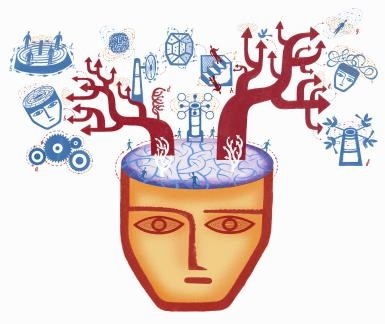
How Do Biases Affect Judgment?
The Invisible Shaping of What Feels True
A manager evaluates two job candidates.
Both have similar qualifications.
One is interviewed first and makes a strong initial impression.
The second performs slightly better on paper but feels less memorable.
The final decision favors the first candidate.
From the outside, the reasoning may appear straightforward.
From the inside, it feels justified.
This is how cognitive biases operate in judgment: not by replacing reasoning, but by quietly shaping its inputs and interpretations.
Judgment Begins Before Conscious Evaluation
Judgment is often assumed to be a deliberate process:
-
Gather information
-
Compare options
-
Reach a conclusion
In reality, much of the process occurs before conscious reasoning begins.
The mind first filters:
-
What is noticed
-
What feels relevant
-
What seems important
These early filters are already influenced by bias.
By the time conscious evaluation starts, the structure of judgment has already been shaped.
Attention Biases Shape What Gets Considered
Not all information receives equal attention.
Some details stand out more than others due to cognitive biases such as:
-
Availability bias: vivid or recent information is easier to recall
-
Salience effects: striking or emotionally charged details attract focus
As a result, judgment is built on a selective subset of available information.
What is not noticed cannot be evaluated.
Interpretation Biases Shape Meaning
Even when the same information is observed, it can be interpreted differently.
Cognitive biases influence this interpretation process:
-
Confirmation bias leads people to favor interpretations that align with prior beliefs
-
Framing effects change meaning depending on presentation
Ambiguous evidence is especially vulnerable.
It does not determine judgment on its own.
It is shaped by expectation.
Memory Biases Reshape Past Evidence
Judgment is not only influenced by current information.
It is also influenced by remembered information.
However, memory is not a perfect record.
It is reconstructive.
This introduces biases such as:
-
Selective recall of confirming evidence
-
Compression of complex past events into simplified narratives
-
Increased salience of emotionally significant experiences
As a result, judgment often reflects a reconstructed past rather than the actual distribution of evidence.
Anchoring Bias Sets Invisible Reference Points
Early information often acts as a reference point.
Once an anchor is established, subsequent judgments are adjusted from it.
However, these adjustments are typically insufficient.
This leads to systematic bias toward initial values, even when they are arbitrary.
Judgment becomes relative rather than absolute.
Emotional Biases Influence Weighting of Evidence
Emotions affect how strongly different pieces of information are weighted.
For example:
-
Fear increases sensitivity to potential losses
-
Excitement increases tolerance for risk
-
Discomfort can amplify perceived negative signals
Emotion does not replace reasoning.
It shifts emphasis within reasoning.
This changes the final judgment without changing the underlying facts.
A Personal Observation on Uneven Evaluation
At one point, while comparing multiple evaluations of similar situations, a recurring pattern emerged.
Certain pieces of information consistently received more weight depending on how early they appeared or how emotionally salient they were.
Even when all data was available, not all of it influenced the final judgment equally.
The structure of attention and memory appeared to determine which facts mattered most.
Biases Create Systematic Distortions, Not Random Errors
Cognitive biases do not produce random mistakes.
They produce predictable patterns of deviation.
For example:
-
Overweighting recent events
-
Preferring confirming evidence
-
Underadjusting from initial anchors
These patterns repeat across individuals and contexts.
This makes biased judgment measurable and predictable.
Why Biases Persist Even With Awareness
One of the most important features of cognitive biases is their persistence.
Even when individuals are aware of them, they continue to influence judgment because:
-
They operate automatically
-
They affect early stages of perception
-
They are embedded in memory and attention systems
Awareness influences reflection, but often not initial perception.
By the time correction is attempted, the judgment structure is already in place.
Judgment as a Constructed Process
Judgment is not a direct reading of reality.
It is a constructed interpretation shaped by multiple interacting systems:
-
Attention
-
Memory
-
Emotion
-
Prior belief
-
Context
Cognitive biases influence each of these layers.
The result is not incorrect thinking in a simple sense.
It is structured thinking shaped by internal constraints.
Conclusion: The Architecture Beneath Judgment
Cognitive biases affect judgment by shaping what is noticed, how it is interpreted, and how strongly it is weighted.
They influence both the inputs and the internal processing of information.
As a result, judgment is not a neutral evaluation of facts.
It is a filtered reconstruction of reality shaped by cognitive shortcuts and psychological tendencies.
Understanding this does not eliminate bias.
But it reveals that judgment is not a single moment of reasoning.
It is a layered process built on systems that quietly guide what feels true.
- Arts
- Business
- Computers
- Jeux
- Health
- Domicile
- Kids and Teens
- Argent
- News
- Personal Development
- Recreation
- Regional
- Reference
- Science
- Shopping
- Society
- Sports
- Бизнес
- Деньги
- Дом
- Досуг
- Здоровье
- Игры
- Искусство
- Источники информации
- Компьютеры
- Личное развитие
- Наука
- Новости и СМИ
- Общество
- Покупки
- Спорт
- Страны и регионы
- World

 English
 Russian
 Spanish
 Portuguese
 Deutsch
 Turkish
 Dutch
Dutch
 Italiano
 Arabic
 Romaian
 Portuguese (Brazil)
 Greek
Greek