
What causes a recession in markets?
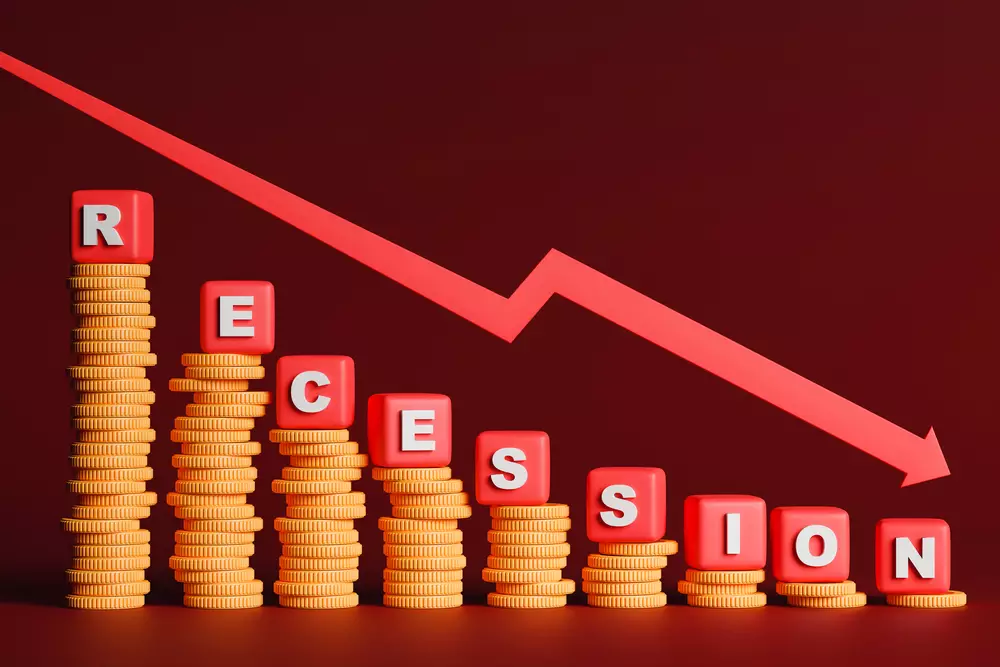
What Causes a Recession in Markets?
The Day Everyone Thought the Party Would Never End
I remember sitting in a boardroom years ago listening to a presentation that, on the surface, sounded flawless. Sales were climbing. Consumers were spending. Credit was easy. Asset prices seemed to rise every quarter. The confidence in that room was remarkable.
Then someone asked a simple question.
“What happens if growth slows?”
Silence.
Not because the answer was complicated. Because nobody wanted to think about it.
That's the thing about recessions. They rarely arrive when people are preparing for them. They arrive when confidence becomes so widespread that caution feels unnecessary.
The public often imagines recessions as sudden economic accidents—a shock, a crisis, a headline. In reality, recessions are usually the result of imbalances that build gradually beneath the surface of markets and economies. By the time the downturn becomes obvious, the conditions that created it have often been developing for years.
Understanding what causes a recession requires understanding something fundamental about markets: growth is never a straight line. Economies expand, contract, adjust, and reset. The real question isn't whether recessions occur. The real question is why they occur when they do.
What Is a Recession?
At its core, a recession is a significant decline in economic activity spread across the economy and lasting more than a few months.
Economic growth slows.
Business investment weakens.
Consumer spending declines.
Hiring slows or reverses.
Corporate profits come under pressure.
Markets typically react long before official economic data confirms the downturn.
That's because markets don't price today's economy. They price expectations about tomorrow.
When investors begin believing future earnings, future spending, or future growth will be weaker, asset prices often fall well before the broader economy enters recession.
The Most Common Causes of Recessions
No two recessions are identical.
Yet most downturns emerge from a surprisingly familiar set of forces.
1. Excessive Debt
Debt is one of the most powerful economic tools ever created.
Used responsibly, it fuels growth.
Used recklessly, it creates instability.
When consumers, corporations, or governments accumulate too much debt, future spending becomes constrained. More income goes toward servicing existing obligations rather than generating new economic activity.
Eventually borrowers reach a limit.
Credit conditions tighten.
Spending slows.
Growth weakens.
What began as an engine for expansion becomes a drag on the economy.
This pattern has appeared repeatedly throughout modern financial history.
2. Rising Interest Rates
Interest rates influence nearly every major economic decision.
When rates rise:
-
Mortgages become more expensive.
-
Business borrowing costs increase.
-
Credit card balances become harder to manage.
-
Investment projects become less attractive.
Central banks often raise rates intentionally to combat inflation.
The challenge is that monetary policy works with delays.
By the time higher rates fully impact the economy, borrowing, spending, and investment may already be slowing sharply.
The result can be a recession that began as an effort to control inflation.
3. Asset Bubbles
Human nature hasn't changed much over centuries.
People become excited when prices rise.
Then they become convinced prices can only rise.
Then they begin inventing reasons why traditional valuation metrics no longer matter.
That's usually when trouble begins.
Asset bubbles occur when prices detach from underlying fundamentals.
Stocks.
Housing.
Commercial real estate.
Cryptocurrencies.
The asset class changes. The psychology rarely does.
Eventually expectations become impossible to satisfy.
Prices stop rising.
Confidence weakens.
Selling accelerates.
Wealth evaporates.
Economic activity slows.
A recession often follows.
How Consumer Spending Drives the Economy
Consumers are the heartbeat of most developed economies.
When households feel secure, they spend.
When they become uncertain, they pull back.
That shift can happen remarkably fast.
A family delays purchasing a vehicle.
Another postpones a renovation.
A third cancels a vacation.
Individually these decisions seem insignificant.
Collectively they become powerful.
Reduced spending means lower revenues for businesses.
Lower revenues lead to hiring freezes.
Hiring freezes reduce income growth.
Reduced income growth further weakens spending.
The cycle feeds itself.
Economists sometimes refer to this as a demand shock, but behind the terminology lies a simple reality: people become cautious.
And caution spreads.
The Corporate Side of the Equation
Businesses often amplify economic cycles.
During expansions, executives invest aggressively.
They build factories.
Expand payrolls.
Launch new products.
Acquire competitors.
These decisions make sense when demand is strong.
But forecasts are imperfect.
Sometimes companies expand based on assumptions that prove overly optimistic.
When growth disappoints, businesses suddenly find themselves carrying excess costs.
Management responds predictably.
Investment slows.
Hiring slows.
Layoffs begin.
Capital expenditures are reduced.
The very companies that fueled growth become contributors to contraction.
Recession Triggers Throughout History
While every recession has unique characteristics, certain themes appear repeatedly.
| Recession Period | Primary Trigger | Key Market Impact |
|---|---|---|
| 1973–1975 | Oil shock and inflation | Equity weakness and economic contraction |
| 1981–1982 | Aggressive interest rate hikes | Sharp decline in borrowing and spending |
| 1990–1991 | Credit tightening and real estate weakness | Slower business investment |
| 2001 | Technology bubble collapse | Massive equity losses in growth sectors |
| 2008–2009 | Housing and credit crisis | Global financial system stress |
| 2020 | Pandemic shutdowns | Historic economic disruption and volatility |
The specifics differ.
The mechanism remains familiar.
An imbalance develops.
A trigger exposes it.
Confidence breaks.
Economic activity slows.
Why Markets Often Crash Before Recessions Begin
One of the most misunderstood aspects of recessions is timing.
Markets often decline before economic conditions deteriorate.
Why?
Because investors focus on future earnings.
Imagine a company earning record profits today.
If investors believe profits will decline next year, the stock can fall despite excellent current performance.
Markets operate on expectations.
The economy operates on actual activity.
That distinction explains why stock market declines frequently precede recessions.
It also explains why markets sometimes recover while economic headlines remain negative.
Investors are constantly looking ahead.
The Psychology Behind Every Recession
Numbers matter.
Human behavior matters more.
Every recession contains an emotional component.
Optimism turns into confidence.
Confidence turns into complacency.
Complacency turns into excess.
Then reality interrupts.
What fascinates me is how predictable this sequence becomes in retrospect and how invisible it feels while it's happening.
People often search for a single villain.
A politician.
A central bank.
A corporation.
A policy mistake.
Reality is usually messier.
Recessions emerge from millions of individual decisions made simultaneously across an economy.
Consumers borrow.
Businesses invest.
Banks lend.
Investors speculate.
Governments spend.
Together these decisions create momentum.
When momentum reverses, recessions follow.
Global Events Can Trigger Recessions Too
Not every recession begins domestically.
External shocks can create significant economic damage.
Examples include:
Energy Crises
Sharp increases in energy costs raise expenses for households and businesses simultaneously.
Consumers spend less elsewhere.
Corporate margins shrink.
Growth slows.
Geopolitical Conflict
Wars and international tensions can disrupt supply chains, commodity markets, and investor confidence.
Uncertainty alone can reduce investment activity.
Financial Contagion
Modern markets are deeply interconnected.
Problems in one country can spread rapidly through banking systems, trade networks, and capital markets.
Economic weakness is rarely confined by national borders.
Lessons Investors Often Learn Too Late
One lesson stands out from virtually every recession I've observed.
People spend too much time asking when a recession will begin and too little time asking what vulnerabilities already exist.
Nobody rings a bell at the top.
Nobody sends a calendar invitation announcing the start of a downturn.
The warning signs are usually visible.
Excess leverage.
Speculative behavior.
Aggressive borrowing.
Overconfidence.
Unsustainable valuations.
The difficulty is that these conditions often appear strongest during periods of prosperity.
That's precisely why they are ignored.
Why Recessions Are Necessary
This may sound provocative, but recessions serve a purpose.
Healthy economies require periodic correction.
Weak investments are exposed.
Unsustainable business models disappear.
Capital is reallocated.
Risk is repriced.
Productivity improves.
The process is uncomfortable.
Sometimes deeply painful.
Yet history suggests that economies emerge stronger when imbalances are addressed rather than postponed indefinitely.
The objective should not be eliminating recessions altogether.
The objective should be building resilience so their impact is less severe.
The Question Most Investors Get Wrong
People frequently ask, "What causes a recession?"
It's an important question, but not the most important one.
A better question is this:
"What conditions are developing today that could make the next recession possible?"
Because recessions rarely emerge from nowhere.
They grow quietly beneath periods of optimism.
They gather strength while headlines celebrate prosperity.
They take shape when credit becomes abundant, risk appears harmless, and everyone begins believing the cycle has been conquered.
History offers a different verdict.
Every generation believes it has discovered a new formula for permanent growth.
Every generation eventually discovers that markets, economies, and human nature still obey the same fundamental laws.
Growth creates opportunity.
Excess creates vulnerability.
And somewhere between those two forces lies the seed of every recession.
- Arts
- Business
- Computers
- Игры
- Health
- Главная
- Kids and Teens
- Деньги
- News
- Personal Development
- Recreation
- Regional
- Reference
- Science
- Shopping
- Society
- Sports
- Бизнес
- Деньги
- Дом
- Досуг
- Здоровье
- Игры
- Искусство
- Источники информации
- Компьютеры
- Личное развитие
- Наука
- Новости и СМИ
- Общество
- Покупки
- Спорт
- Страны и регионы
- World

 English
 French
 Spanish
 Portuguese
 Deutsch
 Turkish
 Dutch
Dutch
 Italiano
 Arabic
 Romaian
 Portuguese (Brazil)
 Greek
Greek