
Why do humans have biases?
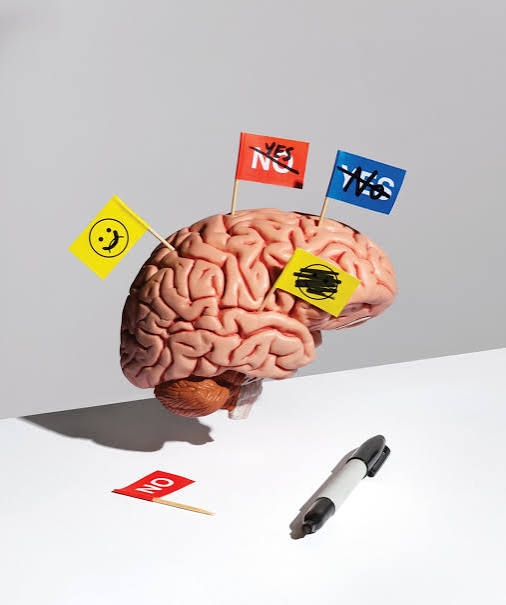
Why Do Humans Have Biases?
The Strange Reliability of Systematic Error
There is something unsettling about human error.
Not the occasional mistake. Those are expected. Acceptable. Easy to explain away.
What is more disturbing is repetition.
The same errors, appearing again and again, across people who are intelligent, educated, experienced, and well-intentioned.
An investor buys high and sells low.
A doctor misjudges probabilities under pressure.
A hiring manager prefers confident candidates over statistically stronger ones.
A judge is influenced by irrelevant anchors.
And the remarkable part is not that these errors occur.
It is that they occur predictably.
If mistakes were random, we would call them noise.
But they are not random.
They are structured.
Which raises a deeper question.
Why would a mind capable of calculus, engineering, literature, and science also produce such consistent distortions in judgment?
The answer is not that humans are irrational.
It is that the machinery of thought was never designed for accuracy in the abstract sense.
It was designed for survival under constraints.
And those constraints still govern us.
Two Systems, One Mind
Human cognition does not operate as a single unified engine.
It behaves more like two interacting systems.
One is fast, automatic, and effortless.
The other is slow, deliberate, and demanding.
The fast system generates impressions:
-
This looks dangerous.
-
That person seems trustworthy.
-
This price feels too high.
-
That opportunity feels right.
The slow system evaluates:
-
probabilities
-
trade-offs
-
evidence
-
consistency
But there is an imbalance.
The fast system is always on.
The slow system is expensive.
Energy-consuming.
Easily distracted.
Often unwilling to engage unless forced.
This division is not a flaw in design.
It is a compromise.
A necessary one.
Because a mind that deliberates on everything would fail to act at all.
Why Biases Are Not Accidents
To understand biases, it is tempting to treat them as defects.
But this framing is misleading.
Biases are not malfunctions.
They are byproducts of efficient thinking.
Consider a simple question:
Is that animal a predator?
A fully analytical response would require:
-
detailed observation
-
probability estimation
-
comparison with known species
-
calculation of risk thresholds
But hesitation could be fatal.
So the brain shortcuts.
It uses pattern recognition.
It substitutes incomplete information for quick judgment.
Most of the time, this works.
Sometimes it does not.
The cost of occasional error is tolerated because the alternative—slowness—is more dangerous.
Bias emerges from this trade-off.
Not from stupidity.
From efficiency.
Heuristics: The Rules That Make Mistakes Predictable
Humans rely on heuristics: mental shortcuts that simplify complex decisions.
These include:
-
“If it is easy to recall, it must be important.”
-
“If others believe it, it is likely true.”
-
“If it feels familiar, it is safe.”
-
“If it is recent, it is more relevant.”
These rules are not arbitrary.
They are adaptive.
They compress complexity into manageable judgments.
But compression introduces distortion.
And distortion becomes bias.
What is crucial is not that heuristics exist.
It is that they operate beneath awareness.
People do not feel themselves using shortcuts.
They feel themselves reasoning.
A Brief Table of Cognitive Bias Origins
| Bias Type | Mental Shortcut | Adaptive Origin | Modern Failure Mode |
|---|---|---|---|
| Availability bias | “Easily recalled = likely” | Memory-based survival learning | Overweighting vivid news |
| Anchoring bias | “First number sets reference” | Efficient comparison mechanism | Price manipulation |
| Confirmation bias | “Consistent info = safer belief” | Reducing cognitive conflict | Ignoring contrary evidence |
| Loss aversion | “Losses are dangerous” | Survival preservation | Excessive financial caution |
| Representativeness | “Similar looks = same category” | Fast categorization | Stereotyping errors |
| Status quo bias | “Existing state = safer” | Energy conservation | Resistance to beneficial change |
The table is deceptively simple.
Each entry represents a compressed history of human adaptation.
Why the Brain Prefers Stories Over Statistics
Statistical reasoning is unnatural.
Not because humans are incapable of it.
But because evolution did not prioritize it.
Early survival rarely required:
-
probability distributions
-
base rates
-
regression models
It required narratives.
Who did what.
What happened next.
What caused what.
Stories are cognitively efficient.
They provide causal structure.
They reduce uncertainty.
But they also obscure randomness.
When something happens, the mind asks:
“What does this mean?”
Even when the correct answer might be:
“Nothing in particular.”
This tendency is a major source of bias.
We prefer explanation to ambiguity.
Even incorrect explanation.
Why Emotion and Bias Are Entangled
Biases are often described as cognitive errors.
But they are inseparable from emotion.
Fear narrows attention.
Hope expands imagination.
Anxiety amplifies risk perception.
Confidence suppresses doubt.
Emotion does not merely accompany judgment.
It shapes it.
A neutral calculation of risk rarely exists in lived experience.
Instead, there is:
-
a frightened calculation
-
an excited calculation
-
a defensive calculation
-
a hopeful calculation
The same information produces different conclusions depending on emotional state.
This is not noise.
It is structure.
The Illusion of Objectivity
One of the most persistent human beliefs is that judgment can be fully objective.
That if we try hard enough, we can remove bias.
But the problem is more fundamental.
Bias is not an external contaminant.
It is embedded in perception itself.
Even basic observations are influenced by:
-
context
-
framing
-
expectation
-
prior experience
A glass is not simply half full or half empty.
It is interpreted through a mental lens already shaped by prior outcomes.
Objectivity, in practice, is an aspiration.
Not a default state.
Why Intelligence Does Not Eliminate Bias
A common misunderstanding is that intelligence reduces bias.
The evidence suggests something more complicated.
Intelligent individuals:
-
reason more effectively
-
articulate arguments more clearly
-
defend positions more convincingly
But they are not necessarily less biased.
In some cases, they are more skilled at justifying their biases.
Why?
Because intelligence enhances coherence.
Not necessarily accuracy.
A highly intelligent mind can construct a flawless argument from flawed premises.
The result feels rational.
Even when it is not.
A Personal Lesson in Misjudgment
I once made a decision that, at the time, felt entirely justified.
The information was clear.
The reasoning appeared sound.
Multiple signals pointed in the same direction.
I acted confidently.
Only later did a different pattern emerge—one I had not initially considered, but which made the earlier interpretation incomplete.
What stood out most was not the error itself.
It was the ease with which the initial conclusion had formed.
There had been no feeling of uncertainty.
No visible struggle.
Only later did I realize that the absence of struggle was itself a warning sign.
Complex problems rarely yield effortlessly correct answers.
The mind, however, prefers closure.
It prefers completion over hesitation.
That preference is a source of bias.
Why Biases Persist Even When We Know About Them
Awareness does not eliminate bias.
At best, it moderates it.
Why?
Because biases are not external beliefs we can simply discard.
They are embedded in automatic processes.
Knowing that anchoring exists does not prevent anchoring.
Knowing that availability bias exists does not stop vivid events from dominating judgment.
Knowledge operates slowly.
Bias operates quickly.
This mismatch creates a persistent gap between understanding and behavior.
The Social Dimension of Bias
Humans do not think alone.
Even private reasoning is shaped by social environment.
Biases are reinforced through:
-
group norms
-
cultural narratives
-
shared assumptions
-
institutional habits
A belief becomes more persuasive when it is widely held.
Not because it is correct.
But because repetition creates familiarity.
And familiarity feels like truth.
This is one of the most powerful and underappreciated mechanisms in cognition.
Why Uncertainty Produces Systematic Error
Uncertainty is uncomfortable.
The mind seeks resolution.
When information is incomplete, it fills gaps.
Not randomly.
But systematically.
It uses:
-
stereotypes
-
recent experiences
-
emotionally salient examples
-
simplified rules
These substitutions reduce cognitive load.
But they also introduce distortion.
Bias, in this sense, is the price of mental closure.
Why Biases Are Actually Useful (Until They Aren’t)
It is tempting to view biases as purely negative.
But this misses their function.
Biases:
-
speed up decisions
-
reduce cognitive effort
-
enable rapid response
-
support survival under uncertainty
Without them, daily life would be impossible.
Every decision would require exhaustive analysis.
Even simple actions—crossing a street, choosing food, interpreting tone—would become paralyzingly complex.
Bias is not the enemy of thought.
It is its enabling condition.
The problem arises when shortcuts are applied outside their valid domain.
When Bias Becomes Costly
Biases become visible in predictable environments:
-
financial markets
-
legal judgments
-
medical diagnoses
-
strategic planning
-
political reasoning
These domains share a feature:
They reward accuracy over speed.
Yet the mind still uses speed-oriented mechanisms.
This mismatch produces systematic error.
Not random failure.
Repeated patterns.
Recognizable distortions.
Why We Fail to Notice Our Own Biases
Perhaps the most interesting feature of bias is invisibility.
People can easily identify bias in others.
But rarely in themselves.
This asymmetry arises because:
-
introspection feels like evidence
-
reasoning feels like truth
-
conclusions feel self-generated
The mind does not display its own shortcuts.
It only displays results.
And results feel justified by definition.
Conclusion: Bias as the Signature of Human Thought
Why do humans have biases?
Because we are not designed to compute truth in a vacuum.
We are designed to act under uncertainty, with limited time, incomplete information, and finite cognitive resources.
Bias is not a flaw inserted into rational thought.
It is the trace left by a system optimized for survival rather than precision.
We simplify.
We substitute.
We compress.
We rely on emotion, memory, and context.
And in doing so, we achieve something remarkable:
We function.
Most of the time, this works well enough.
Sometimes it does not.
The tension between speed and accuracy, between intuition and analysis, between survival and precision—that tension is not a problem to be solved.
It is the defining condition of human cognition.
Biases, then, are not merely errors.
They are evidence.
Evidence of a mind constantly negotiating between what is true, what is useful, and what is necessary to decide right now.
Understanding this does not eliminate bias.
But it changes its meaning.
It becomes less a defect to be eradicated and more a signature of how thinking itself is possible.
- Arts
- Business
- Computers
- Spellen
- Health
- Home
- Kids and Teens
- Money
- News
- Personal Development
- Recreation
- Regional
- Reference
- Science
- Shopping
- Society
- Sports
- Бизнес
- Деньги
- Дом
- Досуг
- Здоровье
- Игры
- Искусство
- Источники информации
- Компьютеры
- Личное развитие
- Наука
- Новости и СМИ
- Общество
- Покупки
- Спорт
- Страны и регионы
- World

 English
 Russian
 French
 Spanish
 Portuguese
 Deutsch
 Turkish
 Italiano
 Arabic
 Romaian
 Portuguese (Brazil)
 Greek
Greek