
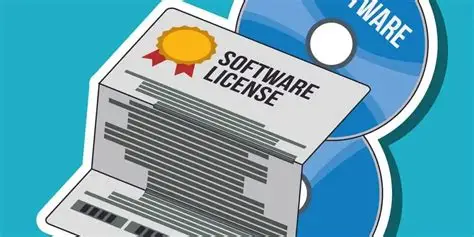
What Is a Software License?
Most people never read one.
They scroll.
Click.
Accept.
Install.
Move on.
The software launches.
The task gets completed.
The transaction appears finished.
Yet hidden beneath that seemingly routine process sits one of the most important legal mechanisms in modern commerce.
The software license.
It governs how billions of people interact with technology every day.
It determines who can use software.
How they can use it.
Where they can use it.
Whether they can modify it.
Whether they can redistribute it.
Whether they actually own anything at all.
That last point often surprises people.
For decades, consumers purchased boxes containing disks, manuals, and activation keys.
The experience felt like ownership.
Legally, it usually wasn't.
The software industry built itself around a different model.
A model centered not on transferring ownership but on granting permission.
That permission is the software license.
Understanding software licenses is no longer a niche concern reserved for lawyers and IT departments.
Software now influences nearly every industry, profession, and business model.
The license attached to that software shapes rights, obligations, risks, and opportunities.
Far more than most users realize.
What Is a Software License?
A software license is a legal agreement that defines how software may be used.
The license grants rights.
It also imposes restrictions.
Most importantly, it clarifies the relationship between the software creator and the software user.
Contrary to popular belief, purchasing software rarely means acquiring ownership of the software itself.
Instead, users receive permission to use it under specified conditions.
Those conditions may address:
- Installation limits
- User access
- Modification rights
- Redistribution rights
- Commercial usage
- Geographic restrictions
The details vary.
The principle remains remarkably consistent.
A software license is fundamentally a permission structure.
Not an ownership transfer.
Why Software Licensing Exists
At first glance, software licensing can seem unnecessarily complicated.
Why not simply sell software outright?
The answer lies in the nature of software itself.
Unlike physical products, software can be copied almost infinitely.
A single file can become millions of identical copies.
Without legal protections, software creators would struggle to maintain control over their work.
Licensing addresses that challenge.
Protecting Intellectual Property
Software represents intellectual property.
The underlying code is protected by copyright law.
Licenses establish the rules governing access and usage.
Creating Revenue Models
Licensing also enables monetization.
Different licensing structures support different business strategies.
Some emphasize recurring revenue.
Others prioritize broad adoption.
Managing Risk
Licenses clarify responsibilities.
They establish boundaries.
They define expectations.
This legal clarity benefits both creators and users.
The Misconception About Ownership
One of the most persistent misunderstandings in technology concerns ownership.
People frequently believe they own software because they paid for it.
In many cases, they do not.
They own a license.
The distinction matters.
Ownership
Ownership generally allows unrestricted control over an asset.
The owner may transfer, modify, or dispose of it.
Licensing
Licensing grants specific rights.
Only those rights.
Nothing more.
The software company retains ownership of the underlying intellectual property.
The user receives permission.
This framework has shaped the software industry for decades.
It remains central today.
The Evolution of Software Licensing
Software licensing has changed dramatically over time.
The underlying concept remains stable.
The delivery methods have transformed.
Perpetual Licensing
Historically, software often relied on perpetual licenses.
Customers paid once.
Usage rights continued indefinitely.
This model dominated for many years.
Subscription Licensing
Modern software increasingly follows subscription models.
Users pay recurring fees.
Access continues while payments continue.
The shift altered software economics significantly.
Cloud Licensing
Software delivered through cloud platforms introduced additional complexity.
Users frequently access functionality without installing software directly.
Licensing adapted accordingly.
The result is a more dynamic licensing landscape than ever before.
Common Types of Software Licenses
Not all software licenses serve the same purpose.
Different models support different objectives.
Proprietary Licenses
Proprietary software remains under the control of its creator.
Users receive limited rights.
Source code typically remains inaccessible.
Examples often include commercial business software.
Open Source Licenses
Open source licenses allow varying degrees of access to source code.
Users may often:
- View code
- Modify code
- Redistribute code
Specific rights depend on the license involved.
Freeware Licenses
Freeware permits usage without direct payment.
The software remains copyrighted.
Free does not necessarily mean unrestricted.
Enterprise Licenses
Organizations frequently negotiate custom licensing arrangements.
These agreements may address:
- User volumes
- Compliance requirements
- Support obligations
Enterprise licensing often becomes highly specialized.
Comparing Common Software License Types
| License Type | Cost Structure | Source Code Access | Modification Rights | Typical Use Case |
|---|---|---|---|---|
| Proprietary License | Purchase or subscription | No | Limited | Commercial software |
| Open Source License | Often free | Yes | Yes | Development environments |
| Freeware License | Free | No | Limited | Consumer software |
| Enterprise License | Negotiated | Variable | Variable | Large organizations |
| Subscription License | Recurring payments | No | Limited | SaaS platforms |
| Perpetual License | One-time payment | No | Limited | Traditional software |
| Freemium License | Free with upgrades | No | Limited | Consumer applications |
| Site License | Fixed organizational fee | No | Limited | Educational institutions |
Each structure reflects different priorities.
Control.
Accessibility.
Revenue.
Adoption.
The licensing model often reveals the underlying business strategy.
Software Licenses and Compliance
Many organizations underestimate the importance of license compliance.
Until problems emerge.
License Audits
Software vendors frequently conduct audits.
These reviews verify compliance with licensing terms.
Organizations using software beyond authorized limits may face penalties.
Unauthorized Installations
A common compliance issue involves deploying software beyond licensed quantities.
Even accidental violations can create legal and financial consequences.
Employee Behavior
Compliance risks often originate from routine actions.
An unauthorized installation.
A shared account.
A misunderstood agreement.
Governance matters more than many organizations initially assume.
Open Source Licensing: A Different Philosophy
Open source licensing deserves particular attention.
Its influence extends throughout modern technology.
Many of the systems powering businesses today incorporate open source software.
At first glance, open source appears simple.
The code is available.
Anyone can use it.
Reality is more nuanced.
Different licenses create different obligations.
Permissive Licenses
Permissive licenses generally allow broad flexibility.
Modification and redistribution rights are extensive.
Copyleft Licenses
Copyleft licenses often require derivative works to remain open under similar terms.
The distinction can significantly affect business decisions.
Open source licensing is not the absence of rules.
It is a different set of rules.
A Lesson I Learned During a Software Procurement Review
Several years ago, I participated in discussions surrounding a large software deployment.
The conversation initially focused on features.
Functionality.
Pricing.
Integration.
The familiar considerations.
Licensing appeared secondary.
Almost administrative.
Until someone began reviewing the actual agreement.
Suddenly the discussion changed.
User limits were more restrictive than expected.
Expansion costs differed from assumptions.
Certain integrations required additional licensing.
The software itself remained attractive.
Yet the license fundamentally altered the economics.
What stayed with me afterward was a simple observation.
Organizations often evaluate software.
They spend far less time evaluating the license governing that software.
The license ultimately shapes the business relationship.
Ignoring it can become expensive.
Sometimes unexpectedly so.
Why Software Licensing Matters to Businesses
Software has evolved from a support function into a strategic asset.
Licensing therefore influences more than compliance.
It influences competitiveness.
Cost Management
Licensing structures directly affect technology budgets.
Subscription models create different financial profiles than perpetual licenses.
Scalability
Growth often triggers licensing implications.
Organizations expanding rapidly may encounter unexpected costs.
Risk Reduction
Strong licensing governance reduces legal exposure.
It also improves operational predictability.
Vendor Relationships
Licenses define long-term relationships between organizations and software providers.
Understanding those relationships creates leverage.
Misunderstanding them creates vulnerability.
The Future of Software Licensing
Software licensing continues evolving alongside technology itself.
Artificial intelligence.
Cloud computing.
Platform ecosystems.
Usage-based pricing.
Each introduces new considerations.
The traditional model of licensing software per device or per user increasingly coexists with more sophisticated structures.
Some agreements now measure:
- Transactions
- Processing volume
- API usage
- Data consumption
Licensing models become more flexible as software becomes more interconnected.
Yet the underlying principle remains unchanged.
Access is governed through permission.
Not ownership.
Common Mistakes Users Make With Software Licenses
Several patterns emerge repeatedly.
Assuming Ownership
Paying for software does not necessarily confer ownership rights.
Ignoring Restrictions
Terms governing usage often matter significantly.
Particularly for businesses.
Overlooking Renewal Terms
Automatic renewals can create unexpected obligations.
Failing to Monitor Compliance
Growth frequently introduces licensing complications.
Organizations should review software inventories regularly.
Treating Licensing as a Legal Formality
Licensing affects operations, budgets, scalability, and risk.
Its importance extends well beyond legal departments.
Conclusion: Software Licenses Are Really About Control
What is a software license?
Legally, it is a contractual agreement.
Operationally, it governs software usage.
Commercially, it enables software companies to monetize intellectual property.
Yet those definitions only capture part of the story.
Software licenses are ultimately about control.
Control over intellectual property.
Control over distribution.
Control over commercialization.
Control over how technology moves through organizations and markets.
The software itself may perform remarkable functions.
Automate processes.
Analyze data.
Connect systems.
Improve productivity.
But the license determines the terms under which those capabilities become available.
It shapes rights.
Responsibilities.
Limitations.
Opportunities.
Most users never read the license.
Many businesses underestimate it.
Yet the license quietly governs one of the most important relationships in modern commerce.
The relationship between those who create technology and those who depend upon it.
And as software becomes increasingly central to economic activity, understanding that relationship becomes increasingly valuable.
- Arts
- Business
- Computers
- الألعاب
- Health
- الرئيسية
- Kids and Teens
- مال
- News
- Personal Development
- Recreation
- Regional
- Reference
- Science
- Shopping
- Society
- Sports
- Бизнес
- Деньги
- Дом
- Досуг
- Здоровье
- Игры
- Искусство
- Источники информации
- Компьютеры
- Личное развитие
- Наука
- Новости и СМИ
- Общество
- Покупки
- Спорт
- Страны и регионы
- World

 English
 Russian
 French
 Spanish
 Portuguese
 Deutsch
 Turkish
 Dutch
Dutch
 Italiano
 Romaian
 Portuguese (Brazil)
 Greek
Greek