
Why is creative thinking important in business?
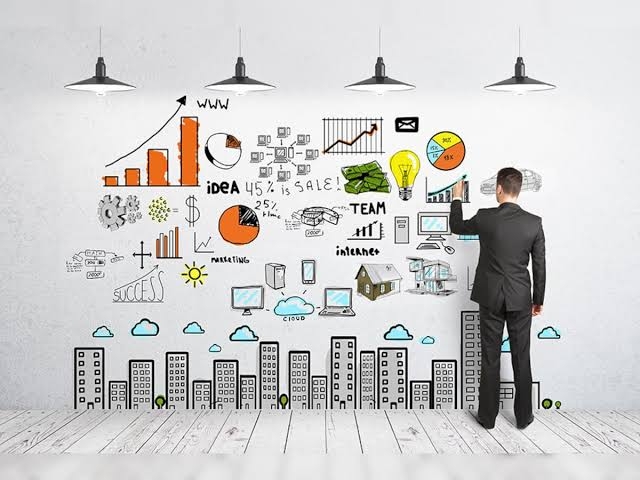
Why Is Creative Thinking Important in Business?
The Quiet Misunderstanding Behind “Business Thinking”
In many organizations, creativity is treated like decoration.
Something added at the end.
A layer of polish.
A marketing function.
A branding exercise.
A way to make something ordinary feel more appealing.
But this framing misses something fundamental.
Creative thinking is not an accessory to business.
It is one of its core operating systems.
Not because it produces aesthetics.
But because it determines how problems are seen in the first place.
And how a problem is seen often determines what solutions are even possible.
Creative Thinking Is Not Ideation. It Is Reframing
Most people associate creativity in business with ideas:
-
new products
-
new campaigns
-
new features
-
new strategies
But the deeper function is earlier than that.
Creative thinking reshapes the structure of perception.
It asks:
-
What problem are we actually solving?
-
What assumptions are hidden in this definition?
-
What would this look like if the constraints were different?
-
What are we not noticing because we’ve normalized it?
Before any idea appears, there is reframing.
And reframing changes everything that follows.
A Table: Conventional vs Creative Business Thinking
| Dimension | Conventional Thinking | Creative Thinking |
|---|---|---|
| Problem framing | Fixed and assumed | Questioned and restructured |
| Solution path | Linear optimization | Exploratory recombination |
| Risk approach | Minimization | Strategic experimentation |
| Market view | Static categories | Fluid interpretations |
| Innovation style | Incremental | Non-linear |
| Decision logic | Efficiency-first | Possibility-first |
| Competitive stance | Reactive | Re-defining the game |
Most businesses operate in the left column by default.
The strongest ones learn how to move between both.
The First Insight: Markets Do Not Reward Optimization Alone
Efficiency matters.
But efficiency alone rarely creates differentiation.
Because competitors can replicate efficiency.
What is harder to replicate is perception.
How you define:
-
what customers want
-
what problems matter
-
what category you belong to
-
what experience you are actually offering
Creative thinking operates here.
At the level before execution.
Where meaning is shaped.
A Personal Observation About Business Problems That Were Misunderstood
There was a situation where a team was trying to improve a product feature.
The work was disciplined.
Metrics were tracked.
Iterations were made.
But results plateaued.
Nothing changed meaningfully.
Eventually, a simple question shifted everything:
“What if this feature is solving the wrong problem entirely?”
That question did not improve execution.
It changed direction.
And direction is more powerful than refinement.
Within weeks, the focus shifted to a different user need.
Not optimization.
Reframing.
And suddenly progress reappeared.
Not because the team worked harder.
But because they were working on something more accurate.
The Second Insight: Most Business Problems Are Framing Problems
In many cases, businesses do not fail because they cannot solve problems.
They fail because they are solving the wrong version of the problem.
Creative thinking intervenes at this level:
-
It dissolves assumptions
-
It questions inherited definitions
-
It challenges category boundaries
-
It reveals hidden constraints
This is not abstraction.
It is precision at a deeper layer.
The Third Insight: Innovation Is Often Misunderstood as Invention
In business, innovation is often equated with novelty.
Something new.
Something unseen.
But in practice, many impactful innovations are:
-
recombinations of existing elements
-
shifts in sequencing
-
reframing of user experience
-
simplification of complexity
-
removal of unnecessary structure
Creative thinking is not always about adding.
Often, it is about subtracting.
Or rearranging what already exists in a more meaningful way.
A Table: Incremental vs Creative Innovation
| Factor | Incremental Innovation | Creative Innovation |
|---|---|---|
| Change type | Small improvements | Structural shifts |
| Risk level | Low | Moderate to high |
| Market impact | Gradual | Disruptive potential |
| Resource demand | Predictable | Variable |
| Visibility | Often subtle | Often obvious in hindsight |
| Replicability | High | Lower |
Both matter.
But they operate at different depths.
The Fourth Insight: Creative Thinking Expands What a Business Believes Is Possible
Every organization operates within a mental map:
-
what is possible
-
what is risky
-
what is acceptable
-
what is realistic
Over time, this map becomes rigid.
Creative thinking expands it.
Not by ignoring constraints.
But by reinterpreting them.
Many breakthroughs happen not when constraints are removed, but when they are seen differently.
The Fifth Insight: Customers Do Not Always Know What They Want
This is often misunderstood.
It is not about ignoring customers.
It is about recognizing that expressed desire is shaped by existing frameworks.
Creative thinking allows businesses to see:
-
unspoken needs
-
emerging behaviors
-
contradictions in feedback
-
gaps between expectation and experience
Customers describe symptoms.
Creative thinking helps identify underlying structure.
A Personal Observation About Misread Customer Feedback
There was a period where a team relied heavily on direct feedback to guide decisions.
The feedback was clear.
Consistent.
Actionable.
But improvements based on it had diminishing returns.
Later, by observing actual behavior rather than reported preference, a different pattern emerged.
What people said they wanted was not always aligned with what they responded to.
This gap became the source of a new direction.
Not by ignoring users.
But by observing more deeply.
The Sixth Insight: Creativity Reduces Long-Term Risk
This sounds counterintuitive.
Creative thinking is often associated with uncertainty.
But in business terms, lack of creativity creates a different risk:
-
stagnation
-
commoditization
-
loss of relevance
-
inability to adapt
Creative thinking introduces variability early.
Which reduces structural risk later.
Because it prevents organizations from locking into outdated assumptions.
The Seventh Insight: Competitive Advantage Often Comes From Perception, Not Resources
Many businesses assume advantage comes from:
-
capital
-
scale
-
distribution
-
technology
But in saturated markets, those advantages are often shared.
What is not easily shared is perception:
-
how a problem is defined
-
how a user experience is framed
-
how value is interpreted
-
how category boundaries are drawn
Creative thinking operates in this invisible layer.
Where differentiation is first imagined before it becomes real.
A Table: Resource Advantage vs Perceptual Advantage
| Dimension | Resource Advantage | Perceptual Advantage |
|---|---|---|
| Ease of replication | High | Low |
| Sustainability | Moderate | High potential |
| Competitive moat | External | Internal |
| Dependency | Infrastructure | Thinking model |
| Speed of change | Slow | Potentially fast |
| Long-term impact | Variable | Often decisive |
Businesses often overestimate the first and underestimate the second.
The Eighth Insight: Creative Thinking Improves Decision Quality
Not by making decisions more complex.
But by improving the framing before decisions are made.
Better questions lead to better answers.
Creative thinking improves:
-
what is considered
-
what is ignored
-
what is prioritized
-
what is assumed
It operates upstream of decision-making.
Which makes its impact cumulative.
The Ninth Insight: Most Strategic Failures Are Perception Failures
When businesses fail strategically, it is rarely due to execution alone.
More often:
-
the market was misread
-
the opportunity was misdefined
-
the user need was oversimplified
-
the category was misunderstood
Creative thinking reduces these failures by expanding interpretive range.
A Personal Observation About Strategy That Changed After Reframing
There was a planning process where the team focused heavily on execution paths.
Roadmaps.
Timelines.
Resources.
Everything was structured and logical.
But progress felt constrained.
Eventually, a shift occurred.
Instead of asking “how do we execute this plan?”
The question became:
“What are we actually trying to make real?”
That change in framing altered everything.
Not execution.
Direction.
The Final Insight: Creative Thinking Is Not a Department. It Is a Way of Seeing
In many businesses, creativity is assigned to roles:
-
marketing
-
design
-
innovation teams
But creative thinking is not confined to function.
It is a mode of attention.
It can exist in:
-
strategy
-
operations
-
product development
-
leadership
-
customer research
Wherever perception is active, creative thinking is active.
Conclusion: Why Creative Thinking Matters More Than It Appears
Why is creative thinking important in business?
Because business is not only about execution.
It is about interpretation.
And interpretation determines:
-
what problems are solved
-
what opportunities are seen
-
what strategies are formed
-
what markets are entered
-
what futures become possible
Creative thinking is not about producing more ideas.
It is about seeing differently enough that better ideas become possible in the first place.
Not optimization.
Not repetition.
But perception.
And in business, perception is not secondary to strategy.
It is where strategy begins.
- Arts
- Business
- Computers
- Games
- Health
- Home
- Kids and Teens
- Money
- News
- Personal Development
- Recreation
- Regional
- Reference
- Science
- Shopping
- Society
- Sports
- Бизнес
- Деньги
- Дом
- Досуг
- Здоровье
- Игры
- Искусство
- Источники информации
- Компьютеры
- Личное развитие
- Наука
- Новости и СМИ
- Общество
- Покупки
- Спорт
- Страны и регионы
- World

 Russian
 French
 Spanish
 Portuguese
 Deutsch
 Turkish
 Dutch
Dutch
 Italiano
 Arabic
 Romaian
 Portuguese (Brazil)
 Greek
Greek