
How Do Platform Businesses Scale?
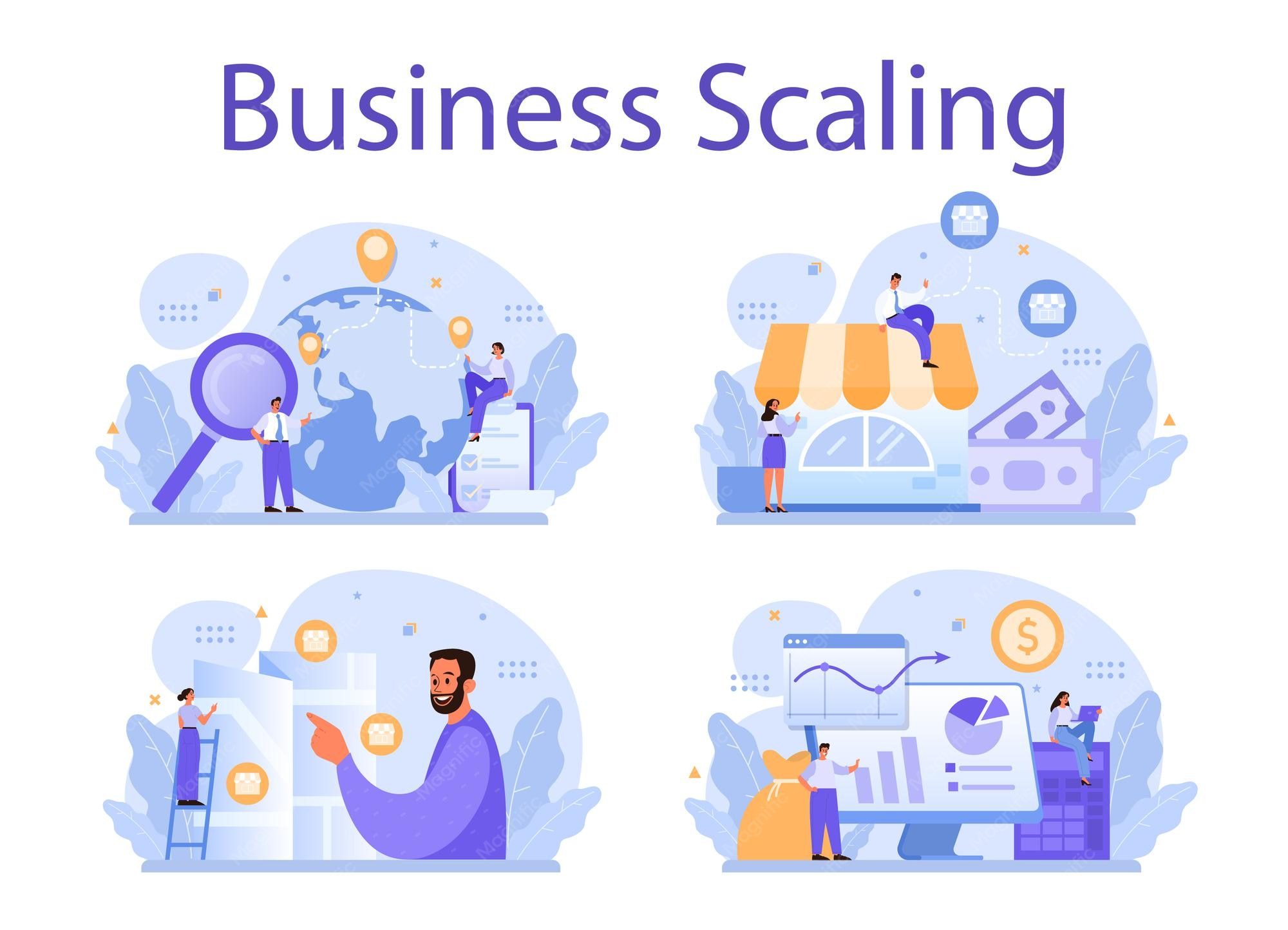
Most businesses grow by adding more.
More employees.
More inventory.
More locations.
More equipment.
Growth, in many traditional organizations, is often a process of accumulation.
Platform businesses operate differently.
Sometimes dramatically differently.
A platform can add thousands of users without adding thousands of employees.
It can facilitate millions of transactions without purchasing millions of products.
It can expand globally without building physical infrastructure in every market it enters.
That ability has fascinated investors, entrepreneurs, and executives for decades.
Yet platform scaling is frequently misunderstood.
Many observers assume technology alone explains it.
Technology matters.
But technology is not the reason platform businesses scale.
The real explanation lies elsewhere.
Participation.
Network effects.
Liquidity.
Trust.
The most successful platform businesses scale because they become increasingly valuable as more people use them.
That creates a fundamentally different growth engine.
And understanding that engine explains why some platforms become dominant while others disappear.
Platform Businesses Scale Through Participation
Traditional businesses often create value internally.
Platform businesses create value through interactions.
The Platform Facilitates Rather Than Produces
A platform typically connects groups.
Examples include:
- Buyers and sellers
- Drivers and passengers
- Hosts and guests
- Creators and audiences
The platform itself often facilitates exchange rather than producing the product being exchanged.
Growth Comes From Activity
Every new participant potentially increases marketplace value.
The business becomes stronger as interaction increases.
This creates unusual scalability characteristics.
Network Effects Are the Foundation of Scale
No concept is more important to platform growth than network effects.
Every New User Can Increase Value
In many businesses, additional customers simply generate additional revenue.
In platform businesses, additional customers often generate additional value for other customers.
That distinction changes everything.
Value Compounds
A platform with ten users may offer limited utility.
A platform with ten million users may become indispensable.
The platform becomes more attractive because people are already there.
Participation creates gravity.
Platforms Benefit From Increasing Returns
Traditional growth often becomes more expensive over time.
Platforms can experience the opposite.
Additional Users Improve Economics
Many digital platforms can accommodate substantial user growth without proportional cost increases.
The cost structure behaves differently.
Revenue may rise faster than expenses.
Scale Creates Efficiency
As participation expands:
- Matching improves
- Discovery improves
- Data quality improves
The ecosystem becomes stronger.
Liquidity Accelerates Growth
Participation alone is insufficient.
Activity matters.
Liquidity Measures Marketplace Health
Liquidity reflects how efficiently participants interact.
A marketplace with many inactive users may appear large.
A marketplace with active users creates actual value.
Transactions Matter
Users remain engaged when they achieve desired outcomes.
Buyers find products.
Sellers find customers.
Providers find clients.
Liquidity transforms participation into utility.
Platform Businesses Often Scale Asset-Light
One reason platforms attract attention is their capital efficiency.
Ownership Becomes Less Important
Many successful platforms do not own the assets flowing through their ecosystems.
They coordinate access.
Examples include:
- Accommodation platforms
- Transportation platforms
- Marketplace platforms
The platform scales without acquiring every underlying asset.
Flexibility Improves
Asset-light structures often enable:
- Faster expansion
- Lower capital requirements
- Greater adaptability
This creates powerful growth dynamics.
Data Becomes a Growth Engine
Every interaction generates information.
Every click.
Every search.
Every transaction.
Better Data Improves Matching
As platforms grow, they learn.
Patterns emerge.
Recommendations improve.
Search becomes more relevant.
User Experiences Improve
Improved experiences encourage:
- Greater engagement
- Higher retention
- Increased participation
Data strengthens growth.
Growth generates more data.
The cycle becomes self-reinforcing.
Trust Enables Scale
Without trust, platforms struggle.
Regardless of technology.
Platforms Frequently Connect Strangers
Users often interact with people they have never met.
Trust becomes essential.
Trust Systems Create Confidence
Common mechanisms include:
- Reviews
- Ratings
- Verification processes
- Guarantees
Trust reduces uncertainty.
Reduced uncertainty increases activity.
Activity fuels scale.
Comparing Traditional Businesses and Platform Businesses
| Factor | Traditional Business | Platform Business |
|---|---|---|
| Value Creation | Internal production | Facilitated interaction |
| Growth Driver | Sales expansion | Participation growth |
| Asset Requirements | Often significant | Often asset-light |
| Scalability | Frequently linear | Potentially exponential |
| Customer Role | Consumer | Participant |
| Network Effects | Limited | Often significant |
| Data Utilization | Operational support | Core growth mechanism |
| Competitive Advantage | Products and assets | Ecosystem strength |
These differences explain why platform economics often look unusual compared to traditional models.
The Cold Start Problem Must Be Solved First
Scaling sounds attractive.
Getting started is much harder.
Empty Platforms Create Little Value
Participants rarely join ecosystems lacking activity.
Buyers want sellers.
Sellers want buyers.
Creators want audiences.
Audiences want creators.
The challenge becomes obvious.
Growth Requires Initial Momentum
Successful platforms frequently begin by:
- Targeting specific niches
- Focusing geographically
- Solving highly specific problems
Focus often precedes scale.
User Retention Matters More Than Acquisition
Many businesses obsess over acquisition.
Platforms must think differently.
Acquisition Without Retention Creates Weak Growth
New users create little value if they leave quickly.
Retention determines ecosystem strength.
Strong Retention Strengthens Network Effects
When users remain active:
- Interactions increase
- Trust develops
- Liquidity improves
The platform becomes increasingly attractive.
Ecosystems Scale Better Than Products
Products solve problems.
Ecosystems create environments.
Platforms Create Ongoing Relationships
Participants often interact repeatedly.
These interactions generate long-term engagement.
Ecosystem Value Expands Over Time
Each new participant can contribute additional value.
The platform evolves beyond its original purpose.
This is one reason successful platforms often expand into adjacent markets.
Monetization Usually Follows Participation
Many entrepreneurs reverse this sequence.
That creates problems.
Participation Creates Revenue Opportunities
Without activity:
- Advertising lacks value
- Transaction fees remain minimal
- Premium services struggle
Revenue follows participation.
Not the reverse.
Strong Ecosystems Create Multiple Revenue Streams
Platforms often monetize through:
- Commissions
- Subscriptions
- Advertising
- Premium features
The strongest ecosystems support multiple models simultaneously.
A Lesson I Learned Watching a Platform Scale
Several years ago, I worked with a company building a specialized marketplace platform.
The founders were convinced technology would drive growth.
They invested heavily in features.
Automation.
Advanced functionality.
The platform was impressive.
Growth remained slow.
Eventually, a different realization emerged.
Users were not joining because of technology.
They were joining because of outcomes.
Once the company focused on improving marketplace liquidity rather than adding features, activity increased.
Participants found what they needed faster.
Transactions increased.
Retention improved.
Growth accelerated.
The lesson was remarkably simple.
Platforms do not scale because they become more sophisticated.
They scale because they become more useful.
The distinction matters.
A great deal.
Governance Becomes Increasingly Important
Growth introduces complexity.
Complexity requires structure.
Rules Protect Ecosystem Quality
As participation expands, governance becomes essential.
Platforms often establish:
- Community standards
- Quality controls
- Enforcement mechanisms
These systems preserve trust.
Unchecked Growth Creates Risk
Scale without governance often damages platform value.
Quality deteriorates.
Trust declines.
Engagement weakens.
Healthy platforms balance growth with discipline.
Competitive Advantages Deepen With Scale
Successful platforms often become harder to challenge over time.
Participation Creates Defensibility
Competitors may replicate features.
Replicating ecosystems is much harder.
Switching Costs Increase
Users accumulate:
- Reviews
- Ratings
- Histories
- Relationships
These assets create persistence.
The platform becomes embedded in participant behavior.
The Future of Platform Scaling
Platform businesses continue evolving.
Artificial intelligence improves recommendations.
Automation improves matching.
Global connectivity expands participation opportunities.
Yet despite technological advancement, the core principles remain surprisingly stable.
Platforms still depend upon:
- Participation
- Liquidity
- Trust
- Network effects
Technology enhances these forces.
It does not replace them.
Conclusion: Platform Businesses Scale Because Value Becomes Collective
Many businesses grow by producing more.
Platform businesses grow by connecting more.
That distinction appears subtle.
It is transformational.
Every additional participant can increase value for everyone else.
Every interaction strengthens the ecosystem.
Every successful match improves platform utility.
The platform becomes larger.
But more importantly, it becomes better.
That is what makes platform scaling so powerful.
Growth does not simply add volume.
It often improves the product itself.
And that creates a remarkable outcome.
The most successful platform businesses eventually reach a point where users are no longer attracted solely by the platform.
They are attracted by the other participants already there.
At that moment, growth becomes less about technology.
And more about community.
Less about infrastructure.
And more about interaction.
Because ultimately, platform businesses scale not through assets.
They scale through people.
- Arts
- Business
- Computers
- Giochi
- Health
- Home
- Kids and Teens
- Money
- News
- Personal Development
- Recreation
- Regional
- Reference
- Science
- Shopping
- Society
- Sports
- Бизнес
- Деньги
- Дом
- Досуг
- Здоровье
- Игры
- Искусство
- Источники информации
- Компьютеры
- Личное развитие
- Наука
- Новости и СМИ
- Общество
- Покупки
- Спорт
- Страны и регионы
- World

 English
 Russian
 French
 Spanish
 Portuguese
 Deutsch
 Turkish
 Dutch
Dutch
 Arabic
 Romaian
 Portuguese (Brazil)
 Greek
Greek