
How Do I Solve the Chicken-and-Egg Problem on a Marketplace?
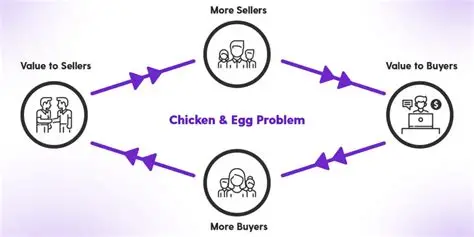
Few business challenges sound as innocent as the chicken-and-egg problem.
The phrase itself feels almost playful.
Harmless.
Academic.
Something discussed over coffee rather than in boardrooms.
Marketplace founders quickly discover otherwise.
Because behind that familiar expression lies one of the most stubborn obstacles in platform economics.
Buyers want sellers.
Sellers want buyers.
Neither side wants to arrive first.
Both sides wait.
Growth stalls.
Momentum disappears.
Investors become impatient.
Founders become frustrated.
And promising marketplaces quietly fade into obscurity.
The uncomfortable reality is that many marketplaces do not fail because of technology.
They do not fail because of branding.
They do not fail because of funding.
They fail because they never solve participation.
And participation is ultimately what the chicken-and-egg problem represents.
The challenge is not launching a marketplace.
The challenge is convincing people to use it before everyone else is already using it.
That paradox sits at the heart of every successful marketplace story.
Understanding the Real Problem
The chicken-and-egg problem is frequently misunderstood.
It Is Not a Traffic Problem
Many founders assume they simply need more users.
More advertising.
More visibility.
More awareness.
Often they do not.
It Is a Value Problem
Marketplaces create value through interaction.
A buyer gains value when sellers exist.
A seller gains value when buyers exist.
Without interaction, the platform remains incomplete.
This is what makes marketplaces fundamentally different from traditional businesses.
Why Traditional Growth Strategies Often Fail
Many growth playbooks assume a straightforward customer journey.
Marketplaces operate differently.
Single-Sided Businesses Have Simpler Dynamics
A retailer attracts customers.
A software company attracts users.
A publisher attracts readers.
Marketplaces Require Simultaneous Participation
Two distinct groups must participate.
Frequently more than two.
Each group depends on the other.
Growth therefore becomes interdependent.
This dependency creates friction.
The First Solution: Pick a Side
One of the most common mistakes is attempting to grow both sides equally.
Balance Sounds Logical
In practice, balance often creates paralysis.
Focus Creates Momentum
Successful marketplaces frequently prioritize one side first.
They solve participation sequentially rather than simultaneously.
This approach feels counterintuitive.
It works remarkably well.
Supply-First Strategies
Many marketplaces begin with sellers.
Or providers.
Or inventory.
Buyers Expect Choice
An empty marketplace discourages exploration.
Visitors leave quickly.
Inventory Creates Opportunity
When buyers arrive and discover meaningful options, transactions become possible.
Supply-first strategies remain among the most common solutions.
For good reason.
Demand-First Strategies
Not every marketplace follows the same path.
Existing Audiences Create Leverage
Some founders already possess demand.
Examples include:
- Media businesses
- Communities
- Industry networks
Demand Attracts Supply
Sellers naturally follow opportunity.
A concentrated audience can become highly attractive.
Demand-first approaches succeed when audience strength already exists.
Concentrate Before Expanding
Many founders think broadly.
Successful marketplaces often think narrowly.
Geographic Focus Creates Density
Launching nationally sounds ambitious.
Launching locally often works better.
Density Creates Liquidity
Liquidity emerges when participants can find one another easily.
Concentrated marketplaces generate activity faster.
Activity generates trust.
Trust generates growth.
Become the Marketplace Yourself
This approach feels strange initially.
Yet it has helped launch numerous successful platforms.
Fake the Platform, Not the Value
This distinction matters.
The objective is not deception.
The objective is participation.
Manual Matching Works
Founders often personally connect:
- Buyers and sellers
- Clients and providers
- Renters and owners
The technology becomes secondary.
Transactions become primary.
Create Supply Manually
Early marketplace growth is frequently unscalable.
That is perfectly acceptable.
Manual Recruitment Creates Quality
Phone calls.
Emails.
Direct outreach.
Personal relationships.
These methods remain surprisingly effective.
Early Participants Matter Disproportionately
The first sellers establish marketplace quality.
Quality influences retention.
Retention influences growth.
Offer Incentives Strategically
Incentives can accelerate participation.
Early Activity Matters
Examples include:
- Free listings
- Reduced commissions
- Buyer credits
Incentives Should Create Habits
Temporary activity alone provides limited value.
Long-term participation matters more.
The objective is behavior formation.
Not artificial growth.
Remove Friction Relentlessly
Marketplace growth often depends on simplicity.
Every Extra Step Creates Risk
Registration.
Verification.
Listing creation.
Payment setup.
Complexity discourages participation.
Reduce Effort
The easier participation becomes, the easier liquidity emerges.
Small improvements frequently produce meaningful results.
Comparing Marketplace Cold-Start Strategies
| Strategy | Primary Focus | Advantages | Challenges |
|---|---|---|---|
| Supply First | Inventory | Better buyer experience | Seller acquisition effort |
| Demand First | Audience | Attractive to suppliers | Requires existing demand |
| Geographic Focus | Density | Faster liquidity | Limited scope initially |
| Manual Matching | Transactions | Immediate learning | Difficult to scale |
| Incentive Programs | Participation | Accelerates growth | Can become expensive |
| Partnerships | Distribution | Faster audience access | Dependency risk |
| Community Building | Trust | Long-term strength | Slower execution |
No single strategy solves every marketplace challenge.
The strongest platforms often combine multiple approaches.
Build Trust Earlier Than You Think Necessary
Many founders focus on growth first.
Trust deserves equal attention.
Trust Accelerates Participation
Participants hesitate when uncertainty increases.
Trust Systems Include
- Reviews
- Ratings
- Verification
- Clear policies
Trust reduces perceived risk.
Reduced risk increases participation.
The relationship is powerful.
Focus on Transactions, Not Users
Marketplace founders frequently celebrate registrations.
The metric deserves caution.
Registrations Can Mislead
Thousands of users may generate little value.
Transactions Reveal Reality
A marketplace with fewer users and more successful exchanges is often healthier.
Liquidity matters more than traffic.
Always.
Solve One Problem Extremely Well
Many marketplaces attempt to serve everyone.
Few succeed.
Narrow Focus Creates Clarity
Participants immediately understand value.
Clarity Improves Adoption
Specialized marketplaces often outperform broader competitors initially.
Because focus creates relevance.
And relevance creates participation.
Partnerships Can Shortcut the Problem
Building audiences from scratch is difficult.
Partnerships provide alternatives.
Existing Communities Create Access
Associations.
Industry groups.
Local organizations.
Professional networks.
Credibility Transfers
Trust often moves through relationships.
Strategic partnerships accelerate adoption by leveraging existing trust.
Use Content as an Acquisition Engine
Content can help solve participation challenges.
Content Attracts Demand
Educational resources create visibility.
Content Creates Authority
Authority increases credibility.
Credibility increases participation.
The effects compound over time.
A Lesson I Learned Watching a Marketplace Struggle
Several years ago, I observed a marketplace team wrestling with early growth.
The platform looked impressive.
The branding was polished.
Traffic was respectable.
Transactions remained disappointing.
Leadership focused almost exclusively on user acquisition.
More advertising followed.
More promotions followed.
Traffic increased.
Results barely moved.
Eventually the team identified the true problem.
Participants arrived.
Failed to find meaningful opportunities quickly.
Then left.
The marketplace had concentrated on attracting users.
It had neglected creating successful interactions.
Everything changed once the team focused on helping participants complete transactions during their first experience.
Retention improved.
Referrals increased.
Growth accelerated.
The lesson was straightforward.
The chicken-and-egg problem is rarely solved through awareness alone.
It is solved through outcomes.
Measure Liquidity Obsessively
Liquidity is often the answer hidden inside marketplace growth questions.
What Is Liquidity?
Liquidity measures how effectively participants find value.
Useful Indicators Include
- Transaction rates
- Response times
- Match success rates
Liquidity reveals marketplace health better than many traditional metrics.
Avoid Premature Scale
Growth creates excitement.
Excitement can create mistakes.
Expansion Dilutes Activity
New categories.
New regions.
New audiences.
Each expansion reduces concentration.
Concentration Creates Strength
Strong local liquidity frequently outperforms weak national presence.
Patience often wins.
Build Network Effects Deliberately
Network effects rarely emerge automatically.
Participants Create Value
Each additional participant should improve the marketplace.
Participation Drives Growth
More buyers attract sellers.
More sellers attract buyers.
Eventually the cycle becomes self-reinforcing.
That moment changes everything.
But reaching it requires intentional effort.
The Future of Solving the Chicken-and-Egg Problem
Technology continues improving.
Artificial intelligence enhances matching.
Automation simplifies onboarding.
Analytics improve decision-making.
Yet the underlying challenge remains remarkably consistent.
People still join marketplaces for the same reasons.
Opportunity.
Convenience.
Trust.
Value.
Technology may accelerate participation.
It rarely replaces the need for participation.
Conclusion: The Chicken-and-Egg Problem Is Really a Liquidity Problem
Marketplace founders often spend months trying to answer a seemingly impossible question.
Which comes first?
The buyers?
Or the sellers?
The answer is frequently neither.
The answer is liquidity.
Because participants do not join marketplaces simply because others are present.
They join because value is present.
The strongest marketplaces understand this distinction.
They focus less on audience size and more on successful interactions.
Less on traffic and more on outcomes.
Less on scale and more on density.
Eventually, enough successful exchanges occur.
Trust increases.
Participation expands.
Network effects emerge.
And what once appeared impossible begins to feel inevitable.
But it never begins with everyone.
It begins with a small number of participants achieving meaningful value repeatedly.
Solve that problem first.
The chicken and the egg tend to figure themselves out afterward.
- Arts
- Business
- Computers
- Jogos
- Health
- Início
- Kids and Teens
- Money
- News
- Personal Development
- Recreation
- Regional
- Reference
- Science
- Shopping
- Society
- Sports
- Бизнес
- Деньги
- Дом
- Досуг
- Здоровье
- Игры
- Искусство
- Источники информации
- Компьютеры
- Личное развитие
- Наука
- Новости и СМИ
- Общество
- Покупки
- Спорт
- Страны и регионы
- World

 English
 Russian
 French
 Spanish
 Portuguese
 Deutsch
 Turkish
 Dutch
Dutch
 Italiano
 Arabic
 Romaian
 Greek
Greek