
What Is FBA (Fulfillment by Amazon)?
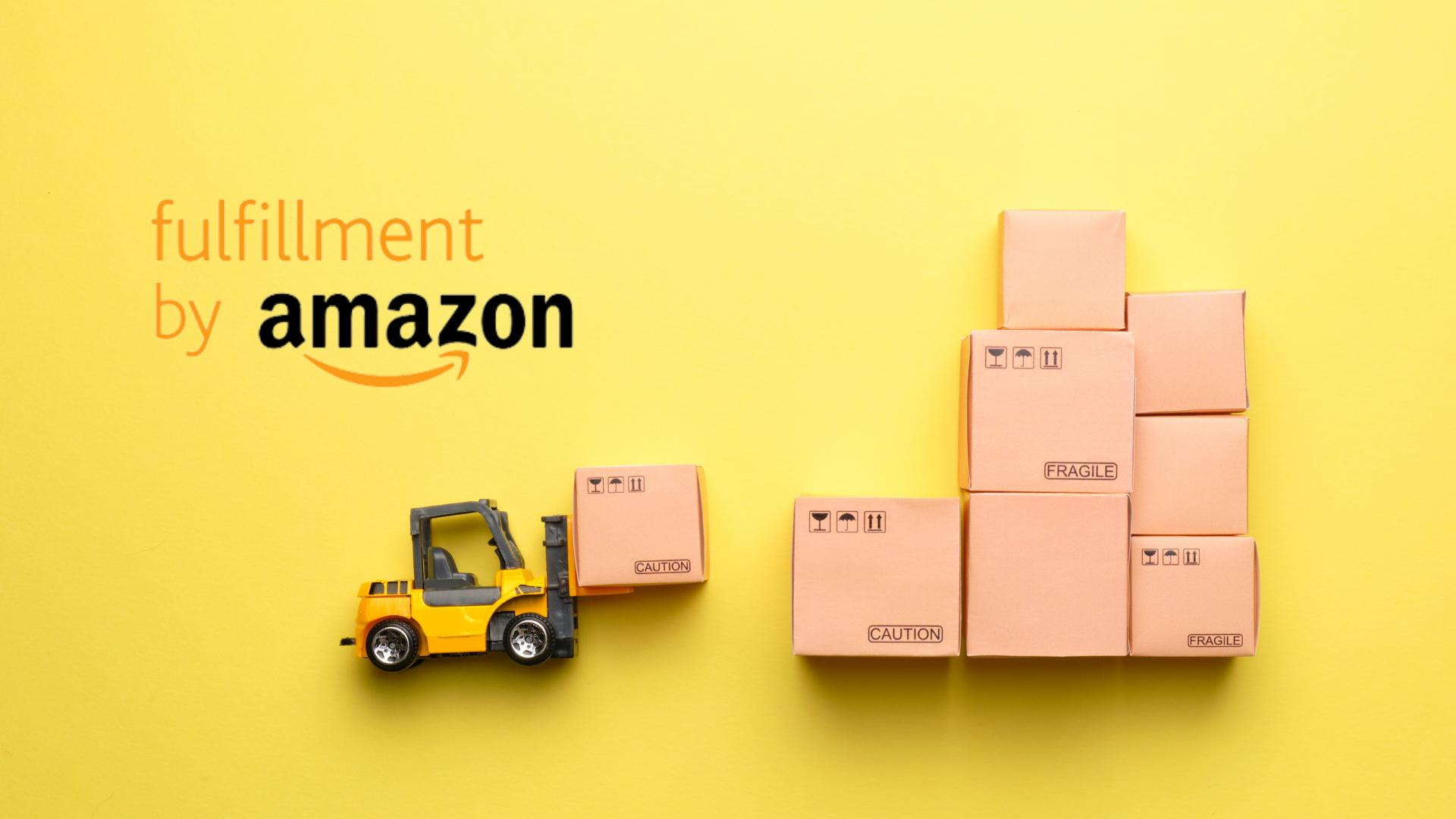
A cardboard box arrives at a front door in Chicago.
Another appears on a porch in Phoenix.
A third lands in a suburban neighborhood outside Atlanta.
Different customers.
Different products.
Different sellers.
Yet the experience feels remarkably similar.
Fast delivery.
Reliable tracking.
Predictable service.
The familiar smile printed on the package often masks an important reality.
Many of those products are not sold by Amazon at all.
They belong to independent businesses.
Entrepreneurs.
Manufacturers.
Private-label brands.
Small companies operating from garages.
Growing organizations with global ambitions.
What connects them is a logistics system known as Fulfillment by Amazon.
Or FBA.
It has become one of the most influential forces in modern ecommerce.
Not because it helps businesses sell products.
Many platforms do that.
Its significance comes from something deeper.
FBA helps businesses outsource complexity.
And in commerce, complexity is often the most expensive thing a company owns.
Understanding FBA Starts With a Simple Idea
At its core, FBA is surprisingly straightforward.
A seller sends inventory to Amazon.
Amazon stores it.
When customers place orders, Amazon picks, packs, ships, tracks, and often manages returns.
The seller focuses on sourcing, branding, marketing, and product development.
Amazon handles logistics.
That is the simplified version.
The practical reality contains considerably more nuance.
But the underlying concept remains elegant.
Instead of building a warehouse network, sellers rent access to one.
Why Fulfillment Became the Battleground of Ecommerce
Selling products online is easier than it once was.
Fulfilling them efficiently is not.
The rise of ecommerce changed customer expectations dramatically.
Consumers now expect:
- Fast delivery
- Reliable tracking
- Accurate inventory
- Simple returns
- Consistent service
Meeting those expectations requires infrastructure.
Significant infrastructure.
Warehouses.
Software.
Transportation networks.
Operational processes.
Most small businesses cannot build those capabilities independently.
FBA emerged as a solution to that challenge.
Not by eliminating complexity.
By absorbing it.
How FBA Actually Works
The mechanics are surprisingly systematic.
Every step follows a carefully designed process.
Step 1: Inventory Is Sent to Amazon
The journey begins with inventory.
Sellers prepare products according to Amazon's requirements.
Products are then shipped to Amazon fulfillment centers.
Once received, inventory enters Amazon's logistics network.
At that point, storage responsibility largely shifts to Amazon.
Step 2: Inventory Is Distributed
Many sellers imagine their inventory sitting neatly inside a single warehouse.
That is often not the case.
Amazon may distribute inventory across multiple fulfillment centers.
The objective is straightforward.
Place products closer to potential customers.
Distance affects delivery speed.
Delivery speed influences purchasing behavior.
Step 3: Customer Places an Order
A customer purchases the product.
The order enters Amazon's fulfillment system.
Software determines which fulfillment center should process the order.
The nearest location often receives priority.
Efficiency drives decision-making.
Step 4: Picking and Packing
Warehouse personnel or automated systems retrieve the product.
The item is packed according to shipping requirements.
Labels are generated.
Tracking begins.
The product enters the shipping network.
Step 5: Delivery and Returns
Amazon coordinates final delivery.
If a return occurs, Amazon frequently manages that process as well.
For many sellers, this operational burden disappears almost entirely.
That convenience explains much of FBA's popularity.
The Real Value of FBA
Many discussions focus on shipping.
That misses the larger story.
FBA's greatest value often lies elsewhere.
Access to Scale
Building logistics infrastructure is expensive.
Building it globally is exponentially more expensive.
FBA provides immediate access to capabilities that would otherwise require years of investment.
Operational Simplicity
Operations consume attention.
Attention is finite.
The less time a business spends managing fulfillment, the more time it can spend improving products and acquiring customers.
Customer Confidence
Consumers trust predictable experiences.
FBA products often benefit from that trust.
Trust influences conversions.
Conversions influence revenue.
The relationship is direct.
Comparing FBA With Other Fulfillment Models
| Fulfillment Model | Inventory Storage | Shipping Responsibility | Returns Handling | Seller Control | Operational Complexity |
|---|---|---|---|---|---|
| FBA | Amazon | Amazon | Amazon | Moderate | Low |
| Seller Fulfilled | Seller | Seller | Seller | High | High |
| Third-Party Logistics (3PL) | Logistics Provider | Logistics Provider | Shared | Moderate | Moderate |
| Dropshipping | Supplier | Supplier | Supplier | Low | Low |
| Hybrid Fulfillment | Shared | Shared | Shared | Moderate | Moderate |
Every model offers advantages.
Every model creates compromises.
FBA is no exception.
Why Sellers Are Drawn to FBA
The attraction becomes obvious once logistics challenges emerge.
Faster Delivery
Amazon's fulfillment network was built around speed.
Many sellers simply cannot match those delivery timelines independently.
Speed influences customer decisions.
Sometimes dramatically.
Prime Eligibility
Products fulfilled through FBA frequently qualify for Prime.
Prime customers often prefer products that can be delivered quickly.
That visibility can increase sales opportunities.
Reduced Operational Burden
Packaging tape.
Shipping labels.
Warehouse staffing.
Carrier negotiations.
Inventory routing.
These responsibilities consume resources.
FBA removes much of that workload.
For many entrepreneurs, that trade-off is attractive.
The Costs Behind the Convenience
Convenience is rarely free.
FBA introduces its own economics.
Fulfillment Fees
Amazon charges fees for:
- Picking
- Packing
- Shipping
- Handling
These charges vary based on product characteristics.
Size matters.
Weight matters.
Storage requirements matter.
Storage Fees
Inventory occupies space.
Space has value.
Amazon charges storage fees based on inventory volume and duration.
Products that sit unsold become increasingly expensive.
Long-Term Storage Risk
One of the least discussed aspects of FBA involves inventory discipline.
Slow-moving products create costs.
Inventory that fails to sell can gradually erode profitability.
Efficiency matters.
Forecasting matters.
Product selection matters.
A Lesson I Learned Watching a Brand Grow Through FBA
Several years ago, I worked with a small consumer products company.
At the time, the business operated from a modest warehouse.
Orders arrived steadily.
Growth looked healthy.
Then demand accelerated.
What initially appeared exciting quickly became stressful.
Shipping delays increased.
Inventory management became chaotic.
Customer service requests multiplied.
The founders spent more time solving logistics problems than improving products.
Eventually they transitioned much of their operation to FBA.
The change was immediate.
Not because sales suddenly exploded.
Because operational bandwidth returned.
The founders could focus on product strategy again.
That experience taught me something important.
The true value of fulfillment systems is not merely efficiency.
It is attention.
Where a business directs attention often determines how quickly it grows.
FBA Is Not a Universal Solution
The enthusiasm surrounding FBA occasionally creates unrealistic expectations.
It is a tool.
Not a miracle.
Products With Thin Margins
Certain products struggle under FBA fee structures.
Low-margin goods require careful analysis.
Convenience does not automatically equal profitability.
Oversized Products
Large items can generate substantial fulfillment costs.
Storage expenses may also increase significantly.
Not every product category aligns perfectly with FBA economics.
Brand Control Concerns
Some businesses value direct control over customer experiences.
Packaging customization.
Personalized inserts.
Unique branding elements.
FBA limits certain aspects of that control.
For some organizations, that matters.
Inventory Management Still Matters
A common misconception suggests FBA eliminates inventory management.
It does not.
Inventory still belongs to the seller.
Forecasting Remains Essential
Businesses must anticipate demand accurately.
Excess inventory increases costs.
Insufficient inventory creates stockouts.
Both scenarios reduce profitability.
Restocking Becomes Strategic
Inventory replenishment requires ongoing attention.
Running out of stock can affect:
- Revenue
- Product rankings
- Customer visibility
Fulfillment becomes easier.
Inventory planning does not disappear.
The Hidden Relationship Between FBA and Trust
Trust is rarely discussed in operational conversations.
It should be.
Because FBA is fundamentally a trust infrastructure.
Predictability Creates Confidence
Customers appreciate consistency.
Reliable delivery experiences reinforce confidence.
Confidence encourages future purchases.
Trust Scales
A local business may personally earn customer trust.
Scaling that trust across thousands of orders becomes harder.
FBA helps standardize customer experiences.
Standardization often strengthens trust.
FBA and Competitive Advantage
One of the more interesting questions involves differentiation.
If everyone uses the same fulfillment network, how does anyone gain an advantage?
The answer is surprisingly simple.
Fulfillment is not the business.
It enables the business.
Competitive advantage still emerges through:
- Product quality
- Branding
- Customer understanding
- Innovation
- Marketing
FBA creates operational stability.
What companies build on top of that stability remains their responsibility.
The Future of FBA
Amazon continues expanding its logistics capabilities.
Automation increases.
Delivery networks become more sophisticated.
Inventory positioning becomes more intelligent.
Technology improves efficiency.
Yet the broader purpose remains unchanged.
Move products from sellers to customers quickly and reliably.
The mechanisms evolve.
The objective remains remarkably stable.
Why FBA Changed Ecommerce
Many business innovations improve individual functions.
FBA influenced an entire ecosystem.
Before FBA, scaling logistics often required significant operational investment.
After FBA, businesses could access enterprise-level fulfillment without building enterprise-level infrastructure.
That shift lowered barriers.
New businesses emerged.
Smaller brands gained reach.
Competition intensified.
The ecommerce landscape became more dynamic.
Not because fulfillment became easier.
Because fulfillment became accessible.
Conclusion: FBA Is Really About Leverage
People often describe FBA as a shipping service.
That description is technically accurate.
It is strategically incomplete.
FBA is a leverage system.
It allows businesses to access logistics capabilities far larger than themselves.
Warehouses they do not own.
Transportation networks they did not build.
Infrastructure they could not easily replicate.
That leverage creates opportunity.
It also creates dependence.
Both realities deserve acknowledgment.
The smartest businesses understand the distinction.
They recognize FBA as an operational asset rather than a business model.
A powerful tool.
An influential one.
But still a tool.
Because fulfillment may determine whether customers receive products efficiently.
Yet the products themselves, the brands behind them, and the value they create remain the true drivers of long-term success.
FBA simply helps those ideas travel farther.
- Arts
- Business
- Computers
- Oyunlar
- Health
- Home
- Kids and Teens
- Money
- News
- Personal Development
- Recreation
- Regional
- Reference
- Science
- Shopping
- Society
- Sports
- Бизнес
- Деньги
- Дом
- Досуг
- Здоровье
- Игры
- Искусство
- Источники информации
- Компьютеры
- Личное развитие
- Наука
- Новости и СМИ
- Общество
- Покупки
- Спорт
- Страны и регионы
- World

 English
 Russian
 French
 Spanish
 Portuguese
 Deutsch
 Dutch
Dutch
 Italiano
 Arabic
 Romaian
 Portuguese (Brazil)
 Greek
Greek