
Why Is IaaS Important?
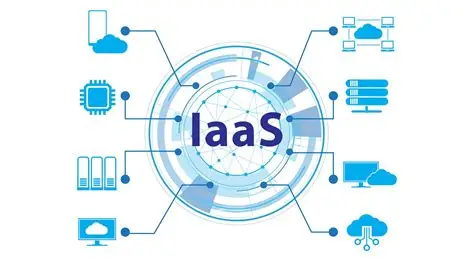
The Infrastructure Nobody Notices—Until It Fails
A few years ago, I sat in a conference room watching a leadership team debate whether they should replace aging servers or move critical workloads to the cloud. The discussion had already consumed months. Quotes had been requested, budgets revised, and contingency plans drafted.
Then somebody asked a deceptively simple question:
“What exactly are we paying for when we buy infrastructure?”
The room went quiet.
Not because the answer was complicated. Quite the opposite. The answer exposed how much effort organizations devote to managing the machinery beneath their business rather than the business itself.
That realization sits at the heart of Infrastructure as a Service (IaaS).
Most organizations do not exist to maintain servers. They exist to manufacture products, deliver healthcare, process financial transactions, educate students, or serve customers. Yet for decades, businesses invested enormous amounts of money, time, and expertise into infrastructure ownership.
IaaS changed that equation.
Rather than purchasing, housing, maintaining, and replacing physical hardware, companies can access computing resources on demand. Servers, storage, networking, and processing power become services instead of assets.
The importance of IaaS is not merely technical. It is economic, strategic, and increasingly competitive.
What Is IaaS?
Infrastructure as a Service is a cloud computing model in which a provider delivers virtualized computing resources through the internet.
Instead of buying physical infrastructure, organizations rent resources as needed.
Typical IaaS offerings include:
- Virtual machines
- Cloud storage
- Networking resources
- Load balancers
- Firewalls
- Backup systems
- Disaster recovery environments
Providers such as Amazon Web Services (AWS), Microsoft Azure, and Google Cloud Platform maintain the physical infrastructure while customers manage applications, operating systems, and data.
Think of it this way: owning infrastructure is like buying an entire power plant because you need electricity. IaaS is paying for the electricity you consume.
The distinction sounds obvious. Its consequences are enormous.
Why IaaS Matters More Than Ever
The importance of IaaS becomes clearer when viewed against the demands modern businesses face.
Markets move faster.
Customer expectations rise.
Data volumes explode.
Software development cycles shrink.
Infrastructure that once lasted five years can become restrictive within twelve months.
Organizations need flexibility. IaaS provides it.
1. Scalability Without Guesswork
Traditional infrastructure planning often resembles educated gambling.
A company estimates future demand, purchases hardware accordingly, and hopes forecasts prove accurate.
Buy too little, and systems struggle under traffic spikes.
Buy too much, and expensive resources sit idle.
IaaS changes the model entirely.
Resources can scale up during periods of heavy demand and scale down when activity decreases.
An e-commerce retailer preparing for Black Friday no longer needs to purchase permanent infrastructure for a temporary surge. Additional computing capacity can be activated when needed and released afterward.
The result is operational agility that physical infrastructure rarely delivers.
2. Lower Capital Expenditure
Infrastructure ownership requires significant upfront investment.
Organizations traditionally paid for:
- Servers
- Storage arrays
- Networking equipment
- Data center space
- Cooling systems
- Backup hardware
- Maintenance contracts
These expenses arrive before any business value is generated.
IaaS converts large capital expenditures into operational expenses.
Instead of spending hundreds of thousands—or millions—on infrastructure purchases, companies pay for consumption.
This shift improves cash flow and reduces financial risk.
For startups especially, the difference can be transformative. A young company can launch globally without building a data center or purchasing enterprise-grade hardware.
3. Faster Deployment
Speed has become a competitive advantage.
Launching a new application once required procurement cycles, hardware installation, networking configuration, and extensive testing.
That process could take weeks or months.
With IaaS, infrastructure can be provisioned within minutes.
Development teams gain immediate access to environments required for testing, deployment, and experimentation.
A business opportunity identified on Monday can potentially be supported by production-ready infrastructure before Friday.
That pace alters how organizations innovate.
The Strategic Value of IaaS
Technical discussions often focus on servers and storage. Yet the most important benefits of IaaS tend to emerge at the strategic level.
Infrastructure Becomes Elastic
Business conditions rarely remain stable.
Growth accelerates.
Markets contract.
Acquisitions occur.
New products launch unexpectedly.
Infrastructure that adapts to changing conditions becomes a strategic asset.
Elasticity allows organizations to align technology spending with actual demand rather than projected demand.
That distinction matters because projections are frequently wrong.
Global Reach Becomes Accessible
Building infrastructure across multiple geographic regions used to require substantial investment.
Today, organizations can deploy workloads closer to customers using cloud regions distributed worldwide.
A software company headquartered in Texas can serve users in Europe, Asia, and South America without constructing facilities in each location.
The infrastructure already exists.
Businesses simply consume it.
Innovation Accelerates
Innovation often stalls when technical teams spend excessive time maintaining infrastructure.
Every hour devoted to hardware replacement is an hour not spent developing products.
Every server upgrade delays another strategic initiative.
IaaS shifts responsibility for infrastructure management to specialized providers.
Internal teams can focus on delivering business value.
That redirection of talent frequently produces greater long-term returns than any individual cost reduction.
IaaS vs Traditional Infrastructure
The differences become easier to understand through direct comparison.
| Factor | Traditional Infrastructure | IaaS |
|---|---|---|
| Initial Cost | High upfront investment | Minimal upfront investment |
| Scalability | Limited by purchased hardware | On-demand expansion |
| Deployment Speed | Weeks or months | Minutes or hours |
| Maintenance | Internal responsibility | Provider-managed hardware |
| Geographic Reach | Requires physical expansion | Global availability |
| Resource Utilization | Often underused | Pay for actual consumption |
| Disaster Recovery | Expensive secondary facilities | Built-in cloud options |
| Flexibility | Relatively rigid | Highly adaptable |
| Technology Refresh | Periodic replacement cycles | Continuously updated infrastructure |
| Business Agility | Slower response times | Rapid adaptation |
The table illustrates a broader trend: infrastructure is shifting from ownership to access.
The same transition transformed software through SaaS and media through streaming services.
Infrastructure is following the same path.
Reliability and Business Continuity
One of the least glamorous reasons IaaS matters is also one of the most important.
Things break.
Servers fail.
Storage devices malfunction.
Networks experience outages.
Natural disasters occur.
The question is not whether disruption will happen. The question is whether an organization can continue operating when it does.
Major cloud providers invest billions of dollars into redundancy, fault tolerance, monitoring, and resilience.
Most individual businesses simply cannot match that scale.
IaaS enables organizations to benefit from enterprise-grade infrastructure reliability without building it themselves.
For many companies, this improves uptime while simultaneously reducing operational complexity.
That combination is remarkably difficult to achieve through traditional infrastructure ownership.
Security: A Frequently Misunderstood Advantage
Critics sometimes assume cloud infrastructure is inherently less secure because resources exist outside organizational premises.
Reality is more nuanced.
Security depends less on physical location and more on expertise, controls, monitoring, and governance.
Leading IaaS providers employ large teams of security specialists focused exclusively on infrastructure protection.
They implement:
- Advanced threat detection
- Continuous monitoring
- Identity management systems
- Encryption capabilities
- Compliance frameworks
- Vulnerability management programs
Organizations remain responsible for securing applications and data, but the foundational infrastructure often benefits from stronger protection than many businesses could independently maintain.
Security does not become automatic.
It becomes more achievable.
The Lesson Many Organizations Learn Too Late
My own perspective on IaaS changed after watching several organizations approach infrastructure modernization.
The companies that struggled most were not necessarily the ones with outdated technology.
They were the ones emotionally attached to ownership.
Servers represented investment.
Data centers represented control.
Physical hardware felt tangible.
Cloud infrastructure felt abstract.
Yet over time, a pattern emerged.
The organizations achieving the fastest growth spent less energy managing infrastructure and more energy improving customer experiences.
Their competitive advantage did not come from owning servers.
It came from what they built on top of those servers.
That distinction sounds subtle. It is not.
It separates technology as an operational burden from technology as a business enabler.
The Future of Infrastructure Is Consumption-Based
The rise of artificial intelligence, machine learning, edge computing, and data-intensive applications is increasing infrastructure demands rather than reducing them.
Organizations need more computing power than ever before.
At the same time, few want to expand their hardware footprint indefinitely.
IaaS addresses this contradiction elegantly.
Businesses gain access to virtually unlimited resources without assuming ownership of the underlying infrastructure.
The model aligns technology consumption with business requirements.
As digital workloads become more unpredictable, that flexibility becomes increasingly valuable.
Conclusion: IaaS Is Not About Servers
The most common mistake in discussions about Infrastructure as a Service is focusing exclusively on infrastructure.
Servers, storage systems, networking equipment, and virtual machines matter—but they are not the central story.
The real significance of IaaS lies elsewhere.
It allows organizations to redirect capital, accelerate innovation, improve resilience, expand globally, and respond faster to changing conditions. It turns infrastructure from a fixed constraint into a flexible resource.
Perhaps the most provocative aspect of IaaS is that its greatest success often goes unnoticed. When infrastructure becomes truly effective, people stop talking about it. They focus instead on products, customers, growth, and opportunity.
And that may be the strongest argument for IaaS: the less attention a business must devote to infrastructure, the more attention it can devote to everything that actually differentiates it.
- Arts
- Business
- Computers
- Игры
- Health
- Главная
- Kids and Teens
- Деньги
- News
- Personal Development
- Recreation
- Regional
- Reference
- Science
- Shopping
- Society
- Sports
- Бизнес
- Деньги
- Дом
- Досуг
- Здоровье
- Игры
- Искусство
- Источники информации
- Компьютеры
- Личное развитие
- Наука
- Новости и СМИ
- Общество
- Покупки
- Спорт
- Страны и регионы
- World

 English
 French
 Spanish
 Portuguese
 Deutsch
 Turkish
 Dutch
Dutch
 Italiano
 Arabic
 Romaian
 Portuguese (Brazil)
 Greek
Greek