
What are the characteristics of creative people?
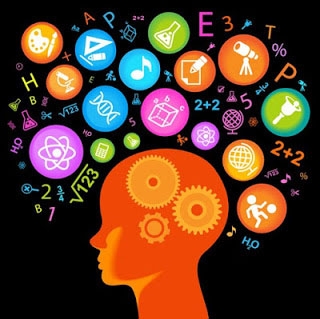
What Are the Characteristics of Creative People?
A creative person walks into the same room as everyone else.
The furniture is identical.
The lighting is identical.
The conversations are identical.
And yet somehow they leave with something different.
A question nobody asked.
A pattern nobody noticed.
An idea nobody considered.
From the outside, creativity can appear mysterious.
Almost supernatural.
As though certain people were granted access to a hidden frequency unavailable to everyone else.
This explanation is appealing.
It is also incomplete.
The more time you spend observing highly creative individuals, the less they resemble magicians and the more they resemble attentive explorers.
They are not necessarily seeing a different world.
They are seeing the same world differently.
This distinction matters.
Because if creativity were merely a gift, there would be little to learn.
If creativity is influenced by habits, perspectives, behaviors, and ways of thinking, then its characteristics become valuable clues.
Not clues about who is creative.
Clues about how creativity operates.
The goal of this conversation is not to place creative people on a pedestal.
It is to examine the qualities that repeatedly appear among them.
The patterns beneath the originality.
The mindset beneath the output.
The invisible characteristics that make creative thinking possible.
The Biggest Myth About Creative People
Many people assume creative individuals possess endless ideas.
A constant stream of inspiration.
An inexhaustible supply of originality.
The reality is less dramatic.
Creative people do not necessarily generate more ideas.
They often generate more possibilities.
There is a difference.
An idea can feel fixed.
A possibility remains open.
Creative thinkers tend to resist premature conclusions.
They linger in uncertainty longer than most people.
Where others seek immediate answers, they often continue asking questions.
This tolerance for ambiguity becomes one of their greatest strengths.
Because originality frequently emerges before certainty arrives.
Creativity Begins With Curiosity
If one characteristic appears more consistently than any other, it is curiosity.
Not intelligence.
Not talent.
Curiosity.
Creative people remain interested.
They investigate ordinary things with unusual attention.
A conversation becomes a question.
A problem becomes an opportunity.
A contradiction becomes an invitation.
Curiosity extends engagement.
Most people stop exploring after finding an acceptable answer.
Creative people often continue.
Not because they need more information.
Because they suspect something else may be hidden beneath the obvious.
Curiosity keeps possibility alive.
And possibility is where creativity lives.
They Notice What Others Ignore
Observation is an underrated creative skill.
Many people associate creativity with expression.
Writing.
Painting.
Designing.
Performing.
Yet expression usually begins with perception.
Creative individuals frequently notice details others overlook.
Subtle patterns.
Behavioral inconsistencies.
Unexpected relationships.
Small shifts.
Hidden tensions.
The world constantly offers information.
Attention determines what becomes visible.
The difference between an ordinary observation and a creative breakthrough is often the depth of attention applied.
They Are Comfortable With Uncertainty
Most people seek resolution.
Creative people often tolerate uncertainty surprisingly well.
This doesn't mean they enjoy confusion.
It means they understand its value.
Innovation rarely emerges from complete certainty.
New ideas require exploration.
Exploration requires ambiguity.
A creative thinker may hold multiple possibilities simultaneously without rushing toward a conclusion.
This creates space.
And space allows unexpected connections to form.
The ability to remain inside unanswered questions often separates creative thinkers from conventional ones.
A Comparison of Creative Characteristics
| Characteristic | How It Appears | Creative Benefit | Potential Challenge |
|---|---|---|---|
| Curiosity | Asking questions | Generates possibilities | Can create distraction |
| Observation | Noticing details | Reveals opportunities | Information overload |
| Open-Mindedness | Exploring alternatives | Encourages innovation | Delayed decisions |
| Persistence | Continuing despite setbacks | Produces breakthroughs | Risk of burnout |
| Imagination | Seeing possibilities | Drives originality | Can become unrealistic |
| Courage | Taking creative risks | Enables innovation | Exposure to criticism |
| Flexibility | Adapting perspectives | Improves problem-solving | Lack of consistency |
| Self-Awareness | Reflecting deeply | Enhances growth | Overthinking |
| Playfulness | Experimenting freely | Encourages discovery | Appears unproductive |
| Independence | Thinking differently | Supports originality | Social resistance |
What stands out is that many creative strengths contain corresponding vulnerabilities.
Creativity is rarely neat.
Its advantages often arrive paired with complications.
They Ask Better Questions
Creative people are not always defined by extraordinary answers.
Often they are defined by extraordinary questions.
Questions shape perception.
A different question creates a different reality.
Most people ask:
"How can this be improved?"
Creative thinkers may ask:
"Why does this exist at all?"
Or:
"What assumption are we making?"
Or:
"What happens if we remove the thing everyone believes is necessary?"
The quality of thinking frequently depends upon the quality of inquiry.
Creative people understand this instinctively.
Questions become tools.
Ways of opening doors.
They Collect Experiences
Creative individuals tend to gather material constantly.
Not always intentionally.
Books.
Conversations.
Travel.
Observations.
Music.
Art.
History.
Science.
Psychology.
Architecture.
Nature.
The collection process matters because creativity thrives on connection.
The more diverse the inputs, the greater the opportunity for unexpected combinations.
Many breakthrough ideas emerge when two unrelated concepts meet.
Creative people increase the likelihood of these encounters by exposing themselves to varied experiences.
They Embrace Play
Playfulness appears repeatedly among highly creative individuals.
Not immaturity.
Playfulness.
The willingness to experiment without immediate objectives.
To explore without demanding results.
To remain curious without requiring certainty.
Play removes pressure.
Pressure often narrows thinking.
Play expands it.
Many innovative ideas begin as seemingly unimportant explorations.
An experiment.
A question.
A mistake.
A creative person often treats these moments as invitations rather than interruptions.
They Challenge Assumptions
Assumptions are invisible until questioned.
This is what makes them powerful.
Creative people develop a habit of examining what others accept automatically.
Why is this done this way?
Why must this remain unchanged?
Who decided this rule exists?
The questions may appear simple.
Their consequences can be significant.
Innovation frequently begins when assumptions become visible.
Creative thinkers possess a remarkable willingness to challenge what appears obvious.
My Lesson About Creative People
Years ago, I had the opportunity to work alongside several individuals widely considered creative.
I expected dramatic personalities.
Constant inspiration.
Endless originality.
Instead, I noticed something surprising.
Most of them spent more time observing than expressing.
They listened carefully.
Asked unusual questions.
Collected details.
Paid attention to things others dismissed.
One conversation changed my perspective completely.
Someone I admired creatively spent nearly an hour discussing a seemingly insignificant observation.
At first, it felt trivial.
Later, that observation became the foundation for an entirely new idea.
The lesson stayed with me.
Creativity often begins long before creation.
It begins with attention.
The final work receives recognition.
The observation that inspired it often goes unnoticed.
They Are Willing to Be Wrong
Creativity requires experimentation.
Experimentation guarantees mistakes.
This creates an interesting challenge.
People who fear being wrong frequently avoid exploring unconventional ideas.
Creative individuals appear more comfortable with failure.
Not because they enjoy it.
Because they view it differently.
A failed experiment still provides information.
An unsuccessful idea still reveals something.
Creativity benefits from iteration.
Iteration requires tolerance for imperfection.
The willingness to be wrong creates opportunities to discover what is right.
They Connect Unrelated Things
One hallmark of creative thinking is associative ability.
The capacity to connect concepts that appear unrelated.
A musician borrows from mathematics.
An entrepreneur learns from biology.
A designer studies nature.
A scientist examines art.
Creative people often think across categories rather than within them.
This cross-disciplinary perspective creates unexpected combinations.
Many original ideas are not entirely new.
They are familiar elements arranged in unfamiliar ways.
They Possess Internal Motivation
Creative individuals frequently create because they are interested.
Not because they are rewarded.
Not because they are instructed.
Not because they are required.
The motivation comes from engagement itself.
This internal drive becomes important during difficult periods.
External rewards fluctuate.
Curiosity remains available.
People motivated by genuine interest often persist longer.
And persistence plays a major role in creative achievement.
They Value Solitude
Not always.
Not exclusively.
But often.
Creative thinking requires periods of reflection.
Moments where observations can connect.
Questions can evolve.
Ideas can develop.
Solitude creates space for this process.
The purpose is not isolation.
The purpose is attention.
Without occasional distance from noise, deeper thoughts struggle to emerge.
Creative people frequently protect these moments intentionally.
They Are Both Disciplined and Flexible
This combination appears contradictory.
It isn't.
Many creative individuals maintain consistent practices.
Writing schedules.
Creative rituals.
Observation habits.
Yet within those structures, they remain flexible.
Open to surprises.
Willing to adapt.
Responsive to unexpected opportunities.
Discipline provides continuity.
Flexibility provides innovation.
The partnership between the two is often where creativity flourishes.
They Think Beyond Immediate Answers
Most people stop exploring once a satisfactory solution appears.
Creative thinkers often continue.
What else is possible?
What alternatives exist?
What remains unexplored?
This tendency produces unusual outcomes.
Creative people frequently uncover opportunities invisible to those satisfied with first answers.
Their thinking extends beyond resolution.
Into possibility.
They Remain Beginners
This characteristic may be the most fascinating.
Many creative people preserve a beginner's mindset regardless of expertise.
They continue learning.
Questioning.
Exploring.
The danger of expertise is certainty.
Certainty can reduce curiosity.
Creative thinkers resist this trap.
They understand that knowledge provides advantages.
They also understand it can create blind spots.
Remaining open allows discovery to continue.
Creativity's Hidden Contradictions
Creative individuals often embody apparent contradictions.
Confident yet uncertain.
Disciplined yet playful.
Focused yet exploratory.
Independent yet collaborative.
Practical yet imaginative.
The complexity matters.
Creativity rarely emerges from extremes.
It frequently emerges from balance.
The ability to move between opposing qualities rather than becoming trapped inside one.
This flexibility allows adaptation.
Adaptation fuels innovation.
What Creative People Are Not
It is equally important to understand what creative people are not.
They are not always artists.
They are not always extroverts.
They are not always geniuses.
They are not always productive.
They are not always unconventional.
Creativity takes many forms.
A scientist.
A teacher.
A parent.
A founder.
A student.
A leader.
The characteristics may appear differently across contexts.
The underlying principles remain surprisingly similar.
Conclusion: Creative People Protect Possibility
When people ask about the characteristics of creative individuals, they often expect a list of traits.
Curiosity.
Imagination.
Observation.
Persistence.
All of these matter.
Yet beneath them lies something deeper.
Creative people protect possibility.
They resist premature conclusions.
They remain interested.
They question assumptions.
They notice details.
They allow uncertainty to exist long enough for something unexpected to emerge.
This does not make them superior.
It makes them available.
Available to ideas.
Available to connections.
Available to discoveries.
The world presents possibilities continuously.
Most disappear unnoticed.
Creative people have developed habits of attention that allow more of those possibilities to survive.
Perhaps that is the defining characteristic after all.
Not extraordinary intelligence.
Not rare talent.
Not constant inspiration.
A willingness to remain open.
To continue looking.
To continue questioning.
To continue imagining alternatives long after everyone else believes the answer has already been found.
And in that openness, creativity finds room to breathe.
- Arts
- Business
- Computers
- Spiele
- Health
- Startseite
- Kids and Teens
- Geld
- News
- Personal Development
- Recreation
- Regional
- Reference
- Science
- Shopping
- Society
- Sports
- Бизнес
- Деньги
- Дом
- Досуг
- Здоровье
- Игры
- Искусство
- Источники информации
- Компьютеры
- Личное развитие
- Наука
- Новости и СМИ
- Общество
- Покупки
- Спорт
- Страны и регионы
- World

 English
 Russian
 French
 Spanish
 Portuguese
 Turkish
 Dutch
Dutch
 Italiano
 Arabic
 Romaian
 Portuguese (Brazil)
 Greek
Greek