
Can I Cancel a Membership Anytime? The Question That Reveals How Memberships Really Work
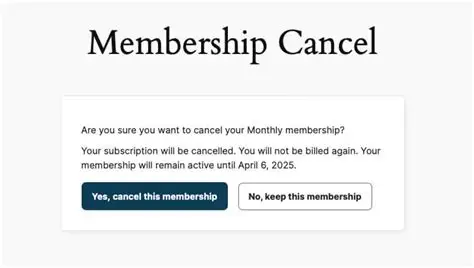
Few questions sound more straightforward.
Can I cancel a membership anytime?
On the surface, the answer appears simple.
Read the terms.
Check the contract.
Look for the cancellation policy.
Done.
Yet this question reveals something much larger than administrative procedures.
Because when members ask about cancellation, they are often asking something deeper.
How much freedom do I have?
How much commitment am I making?
What happens if my needs change?
And perhaps most importantly:
What kind of relationship is this?
The answer depends on the membership.
Some allow cancellation with a single click.
Others require notice periods.
Some involve annual commitments.
Others operate month-to-month.
Yet the most interesting aspect of cancellation is not legal.
It is psychological.
Because membership exists in a space between freedom and commitment.
Too much friction damages trust.
Too little commitment weakens participation.
The most successful membership organizations understand this delicate balance.
They know that cancellation policies are not merely operational decisions.
They are relationship decisions.
Why People Ask About Cancellation Before Joining
It is remarkable how often prospective members ask about leaving before they join.
At first glance, this seems contradictory.
Why focus on cancellation when considering enrollment?
The answer is uncertainty.
People want flexibility.
They want reassurance.
They want to know they are not entering an arrangement that becomes difficult to escape.
This concern has become increasingly common as recurring payments have spread across industries.
Consumers have experienced forgotten subscriptions.
Unexpected renewals.
Complicated cancellation processes.
Frustrating customer service interactions.
As a result, cancellation policies often serve as trust signals.
Organizations that make cancellation straightforward communicate confidence.
They suggest:
"Stay because you want to, not because you have to."
That message can be surprisingly powerful.
Membership and Commitment
Membership occupies a unique position in the business world.
It requires commitment.
But not excessive commitment.
Consider the paradox.
Organizations want members to remain engaged.
Members want flexibility.
These goals can appear incompatible.
In reality, they often reinforce one another.
When members feel trapped, trust declines.
When members feel empowered, trust increases.
And trust frequently improves retention more effectively than restrictions ever could.
The strongest memberships earn loyalty.
They do not enforce it.
Common Membership Cancellation Models
Not all memberships operate under the same structure.
Different models create different expectations.
Month-to-Month Memberships
These memberships generally provide maximum flexibility.
Members can usually cancel before the next billing cycle.
The commitment remains relatively low.
The organization must continually earn participation.
This model places significant emphasis on ongoing value creation.
Annual Memberships
Annual memberships often require a longer commitment.
Members typically pay upfront for a full year.
Cancellation policies vary.
Some organizations provide prorated refunds.
Others do not.
The rationale is understandable.
Annual commitments improve financial predictability.
They also encourage longer-term engagement.
Contract-Based Memberships
Some memberships include formal contractual obligations.
Fitness centers historically used this approach.
Professional organizations occasionally do as well.
These arrangements often involve specific cancellation conditions.
The commitment level is higher.
Consequently, transparency becomes even more important.
Trial Memberships
Trial memberships allow prospective members to experience value before committing fully.
Cancellation is usually simple during the trial period.
This reduces perceived risk.
It also encourages experimentation.
Comparing Membership Cancellation Structures
| Membership Type | Typical Commitment | Cancellation Flexibility | Member Risk Level | Organizational Predictability |
|---|---|---|---|---|
| Monthly Membership | Low | High | Low | Moderate |
| Quarterly Membership | Moderate | Moderate | Moderate | Good |
| Annual Membership | Higher | Variable | Moderate | Strong |
| Contract-Based Membership | High | Limited | Higher | Very Strong |
| Trial Membership | Minimal | Very High | Very Low | Lower |
This comparison reveals an important truth.
Cancellation flexibility often moves inversely with commitment length.
Neither approach is inherently better.
The effectiveness depends on the value being delivered and the expectations established.
Why Easy Cancellation Often Improves Retention
This sounds counterintuitive.
Shouldn't making cancellation easier increase cancellations?
Not necessarily.
When organizations create barriers to exit, they may retain members temporarily.
But they often damage trust.
Members resent friction.
Negative experiences linger.
Future re-engagement becomes less likely.
By contrast, organizations that make cancellation simple communicate confidence.
They send an implicit message:
"We believe our value will convince you to stay."
That confidence can strengthen the relationship.
Members who know they can leave often feel more comfortable remaining.
Freedom creates trust.
Trust supports retention.
A Lesson I Learned About Membership Retention
Several years ago, I worked with an organization facing declining renewal rates.
Leadership became concerned about member departures.
One proposal quickly gained momentum.
Make cancellation more difficult.
Add additional approval steps.
Require direct conversations before termination.
Extend notice requirements.
The logic seemed obvious.
If leaving became harder, fewer members would leave.
Technically, that happened.
Cancellation numbers declined initially.
Yet something unexpected occurred.
Member satisfaction fell.
Negative feedback increased.
Referrals slowed.
Trust weakened.
The organization had improved short-term retention while damaging long-term loyalty.
Eventually, leadership reversed course.
Cancellation became easier.
Transparency improved.
Exit surveys focused on learning rather than persuasion.
Something remarkable happened.
Trust increased.
Former members returned more frequently.
Overall retention stabilized.
The lesson was unforgettable.
The goal of membership is not preventing departure.
The goal is creating enough value that departure feels unnecessary.
Why Members Actually Cancel
Organizations often assume price drives cancellations.
Sometimes it does.
Frequently, other factors play larger roles.
Life Changes
Careers shift.
Families grow.
Priorities evolve.
Financial situations change.
Membership may simply no longer fit current circumstances.
Declining Engagement
Members stop participating.
They attend fewer events.
Use fewer resources.
Interact less frequently.
Eventually, cancellation becomes a logical consequence of disengagement.
Unclear Value
Members struggle to connect participation with meaningful outcomes.
Benefits exist.
Impact remains unclear.
This creates vulnerability.
Better Alternatives
Competing organizations emerge.
Needs change.
Member expectations evolve.
Alternatives become more attractive.
Understanding these drivers is critical.
Because most cancellations originate long before formal cancellation requests appear.
The Difference Between Leaving and Quitting
Membership organizations often treat cancellation as a final event.
Many members do not see it that way.
For some, cancellation is temporary.
Circumstances change.
Budgets shift.
Priorities evolve.
The relationship pauses.
This distinction matters.
Former members are not necessarily lost members.
Organizations that maintain goodwill frequently welcome people back.
Organizations that create frustration often lose them permanently.
The cancellation experience influences future engagement more than many leaders realize.
A graceful exit can preserve a valuable relationship.
The Hidden Cost of Retention Tactics
Some organizations become obsessed with retention metrics.
The concern is understandable.
Retention drives revenue.
Predictability.
Growth.
Yet aggressive retention tactics can create unintended consequences.
Excessive cancellation barriers often lead to:
- Lower trust
- Reduced referrals
- Negative reviews
- Customer frustration
- Brand damage
Retention achieved through friction is fundamentally different from retention achieved through value.
One creates resistance.
The other creates loyalty.
The distinction matters.
What Members Should Look For Before Joining
Prospective members should evaluate cancellation policies carefully.
Not because they plan to leave.
Because transparency reveals organizational values.
Important questions include:
- Is cancellation clearly explained?
- Are refund policies transparent?
- Are notice requirements reasonable?
- Can cancellation be completed easily?
- Does the organization communicate expectations clearly?
Organizations that answer these questions openly often create stronger member experiences overall.
Transparency tends to reflect broader operational integrity.
The Future of Membership Cancellation
Consumer expectations continue evolving.
Increasingly, people expect:
- Transparent terms
- Simple cancellation processes
- Digital self-service options
- Clear renewal reminders
- Flexible participation models
Organizations are adapting accordingly.
Many now recognize that trust creates stronger retention than restrictions.
Technology makes cancellation easier.
Ironically, that often places greater pressure on organizations to deliver genuine value.
When leaving becomes effortless, staying must become compelling.
That is a healthy dynamic.
Conclusion: The Best Memberships Make Cancellation Irrelevant
The question "Can I cancel a membership anytime?" is important.
Contracts matter.
Policies matter.
Transparency matters.
Yet the most successful membership organizations focus on a different question altogether.
Why would someone want to stay?
Because cancellation policies can protect relationships.
They cannot create them.
Only value can do that.
Only trust can do that.
Only meaningful outcomes can do that.
The strongest memberships understand a simple truth.
People should remain members because participation improves their lives—not because cancellation is difficult.
And perhaps that is the ultimate test of any membership model.
If members are free to leave at any moment, would they still choose to stay?
Organizations that can answer yes have built something far more valuable than a retention strategy.
They have built trust.
- Arts
- Business
- Computers
- Games
- Health
- Home
- Kids and Teens
- Money
- News
- Personal Development
- Recreation
- Regional
- Reference
- Science
- Shopping
- Society
- Sports
- Бизнес
- Деньги
- Дом
- Досуг
- Здоровье
- Игры
- Искусство
- Источники информации
- Компьютеры
- Личное развитие
- Наука
- Новости и СМИ
- Общество
- Покупки
- Спорт
- Страны и регионы
- World

 Russian
 French
 Spanish
 Portuguese
 Deutsch
 Turkish
 Dutch
Dutch
 Italiano
 Arabic
 Romaian
 Portuguese (Brazil)
 Greek
Greek