
What Is the Difference Between Recurring Memberships and One-Time Purchases?
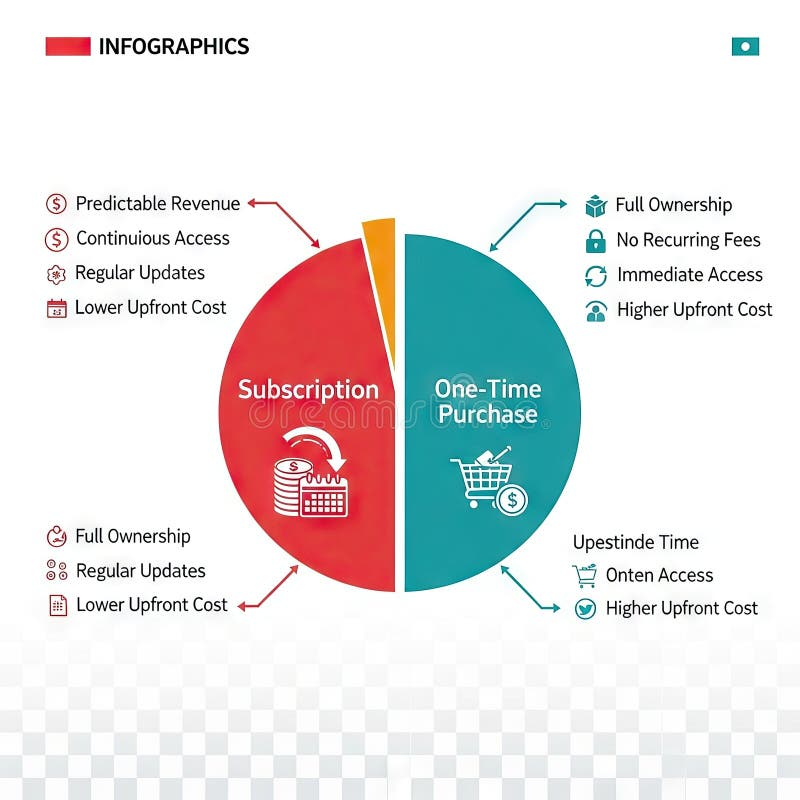
Every organization eventually confronts the same strategic question.
Should we sell a product?
Or should we build an ongoing relationship?
At first, the decision appears financial.
One model generates immediate revenue.
The other creates recurring income.
Simple enough.
Yet beneath the accounting lies a far more consequential distinction.
One-time purchases and recurring memberships represent fundamentally different philosophies about how organizations create value.
A one-time purchase answers a single need.
A recurring membership supports an ongoing journey.
One concludes with a transaction.
The other begins with one.
This difference influences everything.
Marketing.
Customer experience.
Revenue forecasting.
Product design.
Customer success.
Even organizational culture.
Companies often believe they are choosing between payment models.
In reality, they are choosing between relationship models.
And relationships have remarkably different economics than transactions.
The strongest membership organizations understand this instinctively.
Their objective is not simply to convince someone to buy.
It is to create enough continuing value that people choose to stay.
That subtle shift—from selling to serving—changes the entire business model.
Why the Two Models Are Often Confused
From a distance, recurring memberships and one-time purchases can look surprisingly similar.
Money changes hands.
A customer receives value.
Business continues.
But the resemblance fades quickly.
Imagine buying a book.
You pay once.
The transaction ends.
Now imagine joining a professional association.
You pay annually.
But every month brings something new.
Educational resources.
Networking opportunities.
Events.
Community discussions.
Professional recognition.
The relationship evolves.
The value accumulates.
One purchase solves an immediate problem.
Membership supports continuous progress.
That distinction is easy to overlook—and expensive to ignore.
Understanding the One-Time Purchase Model
A one-time purchase is exactly what the name suggests.
The customer pays once in exchange for a clearly defined product or service.
Examples include:
- Buying a book
- Purchasing furniture
- Hiring a consultant for a specific project
- Paying for a single training course
- Purchasing conference tickets
The transaction has a beginning and an end.
Success depends largely on delivering immediate value.
Customers evaluate questions like:
- Was the quality worth the price?
- Did the product perform as expected?
- Would I buy again?
Future purchases are possible.
They are not assumed.
Each sale begins almost from scratch.
Understanding the Recurring Membership Model
Recurring memberships operate differently.
Rather than delivering value once, organizations continually create new reasons for members to remain engaged.
Members pay on a recurring basis—monthly, quarterly, or annually—in exchange for ongoing access, participation, services, or community.
Membership value often includes:
- Educational content
- Professional development
- Networking
- Exclusive resources
- Events
- Community interaction
- Advocacy
- Personalized support
Importantly, value is not consumed all at once.
It unfolds over time.
Membership becomes less about a single purchase and more about a continuing experience.
The Difference Between Selling and Serving
One of the clearest distinctions lies in organizational mindset.
Organizations selling one-time products often focus on acquisition.
How do we generate another sale?
Membership organizations focus on continuity.
How do we continue earning trust?
These questions produce different behaviors.
Transactional businesses optimize conversions.
Membership businesses optimize relationships.
Neither approach is inherently superior.
Each serves different strategic objectives.
The challenge arises when organizations apply transactional thinking to recurring relationships.
A Lesson I Learned About Customer Value
Several years ago, I worked with a company transitioning from selling standalone educational courses to offering an annual membership.
Leadership expected immediate financial improvement.
The logic seemed obvious.
Recurring revenue would replace unpredictable course sales.
The transition, however, proved more complicated.
Members joined enthusiastically.
Many left after several months.
The content remained excellent.
The problem wasn't quality.
The organization had continued thinking like a course provider rather than a membership organization.
Courses delivered value once.
Membership required delivering value continuously.
Once the organization shifted its focus toward ongoing engagement—live discussions, peer interaction, fresh resources, and member success—the economics changed dramatically.
Renewals improved.
Referrals increased.
Revenue became more predictable.
The lesson stayed with me.
Recurring payments do not create recurring value.
Organizations must earn every renewal.
Comparing Recurring Memberships and One-Time Purchases
The distinctions become clearer when viewed side by side.
| Business Dimension | Recurring Membership | One-Time Purchase |
|---|---|---|
| Revenue Pattern | Recurring | Single transaction |
| Customer Relationship | Ongoing | Transactional |
| Primary Objective | Long-term retention | Immediate sale |
| Success Metric | Lifetime value | Revenue per transaction |
| Customer Engagement | Continuous | Limited after purchase |
| Product Evolution | Ongoing | Often complete at delivery |
| Revenue Predictability | High | Variable |
| Customer Feedback Cycle | Continuous | Periodic |
| Marketing Focus | Acquisition and retention | Primarily acquisition |
| Business Risk | Churn | Sales volatility |
This comparison highlights an important reality.
Membership organizations never stop selling.
They simply sell through continued value creation instead of repeated acquisition.
Why Recurring Memberships Create Different Economics
One-time purchases generate immediate cash flow.
Recurring memberships generate cumulative value.
Consider two businesses.
One sells a $500 product once.
The other charges $50 per month.
Initially, the one-time purchase appears more attractive.
But if the member remains for twelve months, total revenue reaches $600.
If the relationship continues for several years, lifetime value expands significantly.
This is why recurring businesses pay so much attention to retention.
Time becomes a profit multiplier.
Every renewal strengthens financial performance.
The Hidden Power of Lifetime Value
Lifetime value changes strategic thinking.
Organizations begin asking different questions.
Instead of asking:
"How do we increase today's sale?"
They ask:
"How do we create value that lasts for years?"
This shift affects product design, customer support, marketing, and operations.
Every interaction becomes an opportunity to strengthen the relationship.
Members are no longer viewed simply as buyers.
They become long-term partners in the organization's success.
Why One-Time Purchases Still Matter
Recurring memberships often receive considerable attention.
Yet one-time purchases remain highly effective in many situations.
They work particularly well when:
The Need Is Temporary
A customer solving a single problem may not require an ongoing relationship.
Products Have Clear Completion Points
Furniture.
Equipment.
Books.
Many purchases naturally conclude after delivery.
Simplicity Matters
Some customers prefer straightforward transactions without continuing commitments.
There is nothing inherently inferior about this model.
The appropriate approach depends entirely on customer needs.
Why Membership Requires Constant Innovation
Membership organizations cannot rely on yesterday's value.
Every renewal asks the same silent question:
"Why should I continue?"
That question creates healthy pressure.
Organizations must continuously improve.
New programming.
Better experiences.
Stronger communities.
Relevant education.
Meaningful engagement.
Membership businesses succeed by remaining useful long after enrollment.
Value cannot remain static.
Engagement Is the Real Product
Many organizations believe they sell content, services, or resources.
Membership organizations increasingly recognize something different.
Their real product is engagement.
Content attracts.
Community retains.
Participation strengthens commitment.
Relationships deepen loyalty.
When members actively participate, they become invested.
And invested members tend to remain.
This explains why successful membership organizations dedicate substantial resources to member engagement.
Engagement is not simply an operational objective.
It is an economic strategy.
Can Businesses Combine Both Models?
Absolutely.
Many successful organizations operate hybrid models.
A company may sell:
- Individual courses
- Books
- Conferences
- Consulting services
Alongside a recurring membership.
The one-time offerings introduce customers to the organization.
Membership extends the relationship.
This progression often creates a natural customer journey.
Buy.
Experience value.
Join.
Participate.
Remain.
Each stage builds upon the previous one.
The Future Belongs to Ongoing Relationships
Customer expectations continue evolving.
People increasingly seek continuous support rather than isolated transactions.
Professional development never truly ends.
Health requires ongoing attention.
Business growth demands continuous learning.
Communities create lasting value.
These realities favor recurring relationship models.
Not because subscriptions or memberships are fashionable.
Because many customer problems are ongoing.
Organizations capable of solving ongoing problems naturally create recurring opportunities.
The Question That Changes Everything
When deciding between recurring memberships and one-time purchases, organizations often focus on pricing structures.
Monthly versus annual.
Subscription versus purchase.
Recurring versus transactional.
Those decisions matter.
But they are secondary.
The more important question is this:
Is the value we create finished after one interaction, or does it continue growing over time?
If value concludes with delivery, a one-time purchase may be the ideal model.
If value compounds through continued learning, relationships, participation, or progress, a recurring membership becomes far more compelling.
The distinction is profound.
One-time purchases create moments of value.
Recurring memberships create journeys of value.
One rewards excellent delivery.
The other rewards sustained relevance.
Both can become profitable.
Both can delight customers.
But only one asks organizations to earn trust again and again.
That challenge is demanding.
It is also precisely what makes recurring memberships so powerful.
Because when an organization consistently helps people grow, succeed, connect, or belong, renewal becomes less about another payment.
It becomes a natural continuation of a relationship that members no longer want to lose.
- Arts
- Business
- Computers
- Jogos
- Health
- Início
- Kids and Teens
- Money
- News
- Personal Development
- Recreation
- Regional
- Reference
- Science
- Shopping
- Society
- Sports
- Бизнес
- Деньги
- Дом
- Досуг
- Здоровье
- Игры
- Искусство
- Источники информации
- Компьютеры
- Личное развитие
- Наука
- Новости и СМИ
- Общество
- Покупки
- Спорт
- Страны и регионы
- World

 English
 Russian
 French
 Spanish
 Portuguese
 Deutsch
 Turkish
 Dutch
Dutch
 Italiano
 Arabic
 Romaian
 Greek
Greek