
How Do I Cancel a Membership?
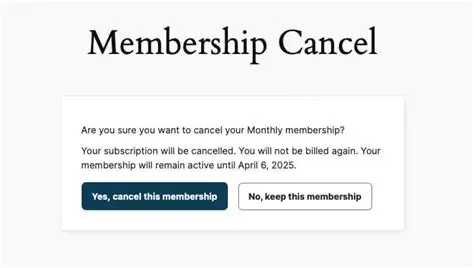
At first glance, canceling a membership seems simple.
Click a button.
Send an email.
Call customer support.
Receive confirmation.
Done.
Yet anyone who has managed a membership organization—or belonged to one—knows the story is rarely that straightforward.
For members, cancellation represents a decision.
For organizations, it represents a moment of truth.
How an organization handles that moment says as much about its values as the experience of joining.
Some organizations make cancellation confusing.
Others make it inconvenient.
A few unintentionally communicate that leaving is easier than staying.
The strongest membership organizations take a different approach.
They understand a surprising principle:
A respectful cancellation experience often strengthens long-term trust.
That may sound counterintuitive.
Why would an organization invest in making it easier for members to leave?
Because membership is built on choice.
People stay because they continue receiving value—not because they cannot find the cancellation button.
Ironically, organizations that respect member autonomy frequently earn stronger loyalty over time.
Canceling a membership should not feel like escaping a contract.
It should feel like concluding a relationship with professionalism, transparency, and mutual respect.
What Does It Mean to Cancel a Membership?
Membership cancellation is the process by which a member ends an ongoing relationship with an organization and stops future renewals or recurring payments.
Depending on the organization's policies, cancellation may:
- End benefits immediately
- Continue access until the current billing period expires
- Stop automatic renewals while preserving current membership
- Allow future reactivation
Every organization defines these terms differently.
That is why members should always understand the cancellation policy before joining.
Clear expectations reduce misunderstandings later.
Why Members Cancel
Organizations often assume cancellations reflect dissatisfaction.
Sometimes they do.
Often they do not.
People leave memberships for many reasons.
Some are entirely outside the organization's control.
Common reasons include:
- Budget changes
- Career transitions
- Retirement
- Relocation
- Reduced need
- Time constraints
- Changing priorities
- Employer reimbursement changes
Others relate directly to the membership experience.
For example:
- Limited engagement
- Benefits no longer feel relevant
- Poor communication
- Complicated user experience
- Better alternatives
Understanding the difference matters.
Organizations cannot solve every reason for cancellation.
They can improve many of them.
The Typical Membership Cancellation Process
Although every organization operates differently, most cancellation experiences follow a similar sequence.
Step 1: Member Requests Cancellation
Members typically initiate cancellation through one of several methods:
- Online account settings
- Customer support
- Telephone
- Mobile application
- Written request
The easier the process, the more confidence members generally feel toward the organization.
Step 2: Membership Status Review
Organizations confirm:
- Membership level
- Renewal date
- Outstanding balances
- Active benefits
- Automatic renewal status
This ensures the cancellation proceeds accurately.
Step 3: Confirmation
Members should receive written confirmation explaining:
- Cancellation date
- Remaining access period
- Billing status
- Renewal termination
- Contact information
Confirmation prevents future confusion.
Step 4: Relationship Continues—or Ends
Some organizations maintain limited communication after cancellation.
Others invite former members to return later.
Membership may end.
The relationship does not necessarily disappear.
Automatic Renewals and Cancellation
Many memberships renew automatically.
This often creates confusion.
Canceling automatic renewal does not always mean immediate loss of membership.
Instead, it frequently means:
Current membership remains active until the paid period concludes.
Future payments stop.
Understanding this distinction helps members avoid unnecessary concern.
Organizations should explain it clearly.
A Lesson I Learned About Member Departures
Several years ago, I worked with an association experiencing unusually high cancellation rates.
Leadership focused heavily on retention campaigns.
Discounts.
Special offers.
Extended memberships.
Some improvements occurred.
Yet something more interesting emerged during exit interviews.
Many departing members expressed appreciation for the organization.
They simply no longer needed the services.
Others mentioned changing careers.
Some had retired.
Several even planned to return later.
The organization's cancellation process, however, felt surprisingly defensive.
Members encountered multiple persuasive messages before reaching the cancellation confirmation.
The experience unintentionally created frustration.
Eventually, the organization redesigned the process.
Cancellation became straightforward.
Members received sincere appreciation for their participation.
They were invited to remain connected through newsletters and future events.
An unexpected outcome followed.
Former members began returning more frequently.
The lesson stayed with me.
People remember how organizations treat them at the end of relationships.
Sometimes that memory becomes the beginning of another one.
Comparing Common Cancellation Policies
Organizations adopt different approaches depending on their membership structure.
| Cancellation Policy | Member Experience | Organizational Considerations |
|---|---|---|
| Immediate Cancellation | Access ends immediately | Simple administration, reduced future obligations |
| End-of-Billing-Period Cancellation | Access continues through paid term | Most common approach, balances fairness and convenience |
| Annual Membership Expiration | Membership remains until renewal date | Common for associations and nonprofits |
| Refund-Based Cancellation | Partial or full refunds may apply | Requires clearly defined policies |
| Trial Cancellation | Members cancel before trial converts to paid membership | Encourages exploration while maintaining transparency |
The best approach depends on organizational mission, financial structure, and member expectations.
Why Easy Cancellation Can Improve Retention
This idea often surprises membership leaders.
Making cancellation difficult rarely creates genuine loyalty.
Instead, it often creates resentment.
Members who feel trapped seldom become enthusiastic advocates.
Organizations demonstrating confidence in their value proposition send a different message.
They trust members to remain because the experience continues delivering meaningful benefits.
That confidence frequently strengthens long-term relationships.
Exit Surveys: Listening Instead of Guessing
Cancellation presents an opportunity to learn.
Simple exit surveys often reveal valuable insights.
Helpful questions include:
- Why are you leaving?
- Which benefits did you value most?
- What could we improve?
- Would you consider returning?
- May we stay in touch?
Patterns emerge over time.
Organizations can distinguish isolated situations from recurring challenges.
Listening transforms departures into strategic information.
Common Mistakes Organizations Make
Membership cancellations deserve thoughtful design.
Several mistakes repeatedly undermine the experience.
Making Cancellation Difficult
Hidden links.
Multiple phone calls.
Lengthy waiting periods.
Confusing policies.
These obstacles rarely change minds.
They simply damage trust.
Ignoring Feedback
Every departing member represents an opportunity to learn.
Organizations collecting feedback—but never acting on it—miss valuable insights.
Ending the Relationship Completely
Former members remain part of the broader community.
Occasional updates, educational resources, or invitations may encourage future re-engagement.
Assuming Every Cancellation Is Preventable
Some departures are natural.
Organizations should distinguish between avoidable churn and expected transitions.
The Future of Membership Cancellations
Customer expectations continue evolving.
Increasingly, members expect:
- Self-service account management
- Transparent policies
- Immediate confirmation
- Clear billing information
- Respectful communication
Organizations responding thoughtfully strengthen their reputations—even when memberships end.
Technology simplifies the mechanics.
Empathy shapes the experience.
Membership Is Built on Trust
Perhaps the most important idea surrounding cancellation has little to do with software or billing.
It concerns trust.
Members willingly join organizations they believe will continue creating value.
That trust should remain intact whether membership lasts three months or thirty years.
Organizations honoring member decisions demonstrate confidence.
Confidence communicates integrity.
Integrity strengthens reputation.
Former members often become future members, donors, volunteers, advocates, or referrals.
How organizations manage departures influences every one of those possibilities.
The Question Every Organization Should Ask
Many membership leaders ask:
"How can we reduce cancellations?"
A worthwhile question.
Yet another deserves equal attention.
How can we ensure that every member—whether staying or leaving—feels respected throughout the relationship?
The answer changes the conversation.
Cancellation becomes less about preventing departures and more about preserving trust.
Strong organizations work tirelessly to create value worth renewing.
They also recognize that every member's circumstances eventually change.
Some will leave.
Some will return.
Many will recommend the organization long after their membership ends.
Membership is not measured solely by how many people join.
Or even by how many renew.
It is measured by the quality of the relationships organizations build throughout every stage of the member journey—including the final one.
When cancellation reflects transparency, professionalism, and appreciation, it ceases to be merely an administrative process.
It becomes one more expression of the organization's commitment to serving people well, whether they remain members today or choose to belong again tomorrow.
- Arts
- Business
- Computers
- Jeux
- Health
- Domicile
- Kids and Teens
- Argent
- News
- Personal Development
- Recreation
- Regional
- Reference
- Science
- Shopping
- Society
- Sports
- Бизнес
- Деньги
- Дом
- Досуг
- Здоровье
- Игры
- Искусство
- Источники информации
- Компьютеры
- Личное развитие
- Наука
- Новости и СМИ
- Общество
- Покупки
- Спорт
- Страны и регионы
- World

 English
 Russian
 Spanish
 Portuguese
 Deutsch
 Turkish
 Dutch
Dutch
 Italiano
 Arabic
 Romaian
 Portuguese (Brazil)
 Greek
Greek