
How do I evaluate alternatives?
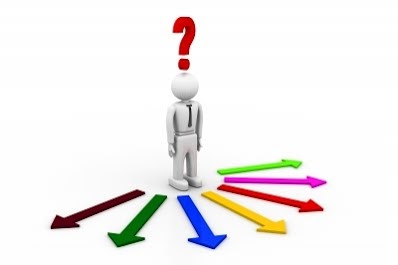
The Geometry of the Open Room
We view the process of evaluating alternatives as an exercise in cold, clinical logistics. We treat our lives as a series of multiple-choice questions. We lay the options out on the table like a hand of cards, scanning for the one that promises the highest yield, the lowest risk, or the most elegant trajectory. We assume that if we stare at the choices long enough, the "right" one will eventually reveal itself through the sheer force of our scrutiny.
But the room is not a laboratory. You are not a technician. And life is not a series of discrete options waiting to be ranked.
When you try to evaluate alternatives, you are already operating from a place of separation. You are standing outside of yourself, treating your own experience as a third-party asset. You are looking for a justification to move, rather than waiting for the move to happen through you.
   [ THE VOID OF POTENTIAL ] (The Pure Signal)
                 │
                 ▼
   [ THE ANALYSIS ] <─── The ego’s attempt to manufacture certainty from fear.
                 │
                 ▼  (The Fragmentation of the Self)
   [ THE RANKED LIST ]
                 │
                 ▼
   [ THE STAGNANT SPIRIT ] ──► You have processed the options, but you have missed the truth.
If you are stuck between paths, it is not because you lack data. It is because you are unwilling to accept the inherent loss that accompanies any choice. Every "yes" is a quiet ending. To evaluate alternatives is not to find the best one; it is to find the one you are willing to honor with your life.
The Geography of the Mental Audit
We believe that intelligence is the ability to map the landscape of possibilities. We admire the thinker who can list the pros and cons, the one who can demonstrate a rigorous, defensible process. But this is the work of a librarian, not a creator.
The Horizontal Tension (The Search for the Anchor)
Before you start the audit, check the motive. What is the fear that requires you to build a system for this choice?
-
The audit of the safety net: Are you evaluating alternatives to find the best path, or are you evaluating them to ensure you have a defensible reason for why things went wrong? We use "due diligence" as a shield. We want to be able to say, "I did the research." This is a defense, not a strategy.
-
The friction of the counter-narrative: The alternatives you see are not the alternatives that exist. They are the alternatives you are capable of seeing. Your vision is limited by your own history, your own trauma, and your own comfort. To truly evaluate, you must first acknowledge that your current list is a mirror, not a map.
The Vertical Extraction (The Deep Descent)
To evaluate truly, you must abandon the ledger and return to the silence.
-
The silent audit: Take your options into the quiet. Do not write them down. Do not compare them. Sit with each one, individually, as if it were the only path in existence. Observe your body. Notice the tension or the release. Your physical presence is the only metric that isn't a lie.
-
The subtraction of the secondary metric: We are trained to ask, "What is the return on investment?" This is a transactional question. It belongs to the machine. The living question is: "What is the return on my spirit?" If you commit to this path, will you become more of who you are, or will you become a more refined version of what you think others need you to be?
A Lesson from the Muted Session
Years ago, I worked with a musician who was agonizing over two different production directions. One path was safe, commercially proven, and guaranteed to keep his label happy. The other path was raw, challenging, and deeply personal, but it carried the risk of total isolation.
He had a massive whiteboard covered in notes. He had spreadsheets. He had solicited the opinions of everyone in his orbit. He had optimized his options to the point of erasure.
"I need to evaluate these alternatives one last time," he told me. "I need to ensure I’m not missing a blind spot."
"Your blind spot is that you’re treating this like a business proposal," I said. "You’re asking the world to decide your art for you. You’re terrified of being the one to own the failure."
I told him to leave the room. I told him to pick the path that made him feel the most vulnerable, not the one that made him feel the most secure. I told him that if he chose the "correct" path, he would always wonder what would have happened if he had chosen the other. But if he chose the path of his own truth, even if it failed, he would have no regrets.
He chose the harder path. It wasn't "better" by any standard metric. It was often difficult. But it was his. He stopped evaluating, and he started creating.
[ The Comparative Loop ] ──► Optimize for Approval / Protect the Reputation / The Deadened Work
[ The Sovereign Choice ]   ──► Align with the Truth / Own the Consequence / The Living Work
He learned that the evaluation was just a form of procrastination. The music didn't need to be evaluated; it needed to be lived.
The Landscape of the Sovereign Discernor
Discernment is the practice of moving through the world with an understanding that the most vital choices are not found in the options—they are found in the chooser.
| The Arena | The Standardized Technocrat | The Vertical Auditor | The Sovereign Discernor |
| The Primary Metric | Yield; how does this option maximize the desired outcome? | Integrity; does this choice serve the wholeness of the life? | Resonance; is this choice a reflection of the nature of the reality? |
| The Internal Speed | High-velocity; the race to eliminate the risk and find the "right" move. | Interrupted; the creation of a deliberate vacuum between the stimulus and the choice. | A metronomic stillness that waits for the light to clarify the move. |
| The Operational Tool | Addition. Bringing more opinions, more data, and more fear into the room. | Subtraction. Clearing the table until only the irreducible bone of the truth remains. | An effortless presence that sees the move because it has stopped fighting the terrain. |
| The Human Hazard | Becoming a high-fidelity echo of a narrative that is functionally empty. | Turning into a skeptic who disassembles the process but loses the spirit. | The realization that the decision must serve the spirit, not the ego of the manager. |
The Fortress of the Certified Illusion
There is a clean, sophisticated failure that waits for the person who masters the art of "evaluating alternatives." They can give you a perfect presentation on why their choice was the most logical. They can rationalize every hesitation with surgical precision.
They feel smart because they are "aware of the alternatives." They feel safe because they have "accounted for the risks." But they are never actually living. They are merely curating their own experience from behind the glass of their own processes.
   [ THE METRIC CLERK ]      ──► Catalogs the options ──► Asks "Is it optimal?"  ──► The Grid of Iron
   [ THE ISOLATED THEORY ]   ──► Debates the process  ──► Asks "Who agrees?"    ──► The Stagnant Water
   [ THE SOVEREIGN WITNESS ] ──► Touches the material ──► Asks "What is true?"  ──► The Clear Ground
If you only use your evaluation to optimize the safety of your current position, you are not choosing. You are simply becoming a more efficient operator of someone else’s narrow, frightened vision. You are using your intellect to build a more comfortable prison cell for the truth.
The Cleansing of the Room
We do not manufacture the truth. We merely wash the soot off the window so the light can show us where the floorboards are honest.
The institutions will continue to offer you an endless menu of convenient, logic-looking choices. They will tell you that the path of the evaluation is the path of the wise. They will tell you that the rigor of your process is the measure of your intelligence.
The decision to practice true, sovereign discernment is a radical act of spiritual hygiene.
It is the choice to step into the room and exist without the armor of the process. It is the decision to lay down your need to be "analytical" at the threshold, to look at the alternatives until the noise of your own expectations runs out of fuel, and to wait for the move that arrives from the marrow of your own bones rather than the manual of the status quo. Trust the silent weight of your own direct presence, drop the obligation to evaluate the options, and let the false structures of the reasoning dissolve in the sun.
- Arts
- Business
- Computers
- Jogos
- Health
- Início
- Kids and Teens
- Money
- News
- Personal Development
- Recreation
- Regional
- Reference
- Science
- Shopping
- Society
- Sports
- Бизнес
- Деньги
- Дом
- Досуг
- Здоровье
- Игры
- Искусство
- Источники информации
- Компьютеры
- Личное развитие
- Наука
- Новости и СМИ
- Общество
- Покупки
- Спорт
- Страны и регионы
- World

 English
 Russian
 French
 Spanish
 Deutsch
 Turkish
 Dutch
Dutch
 Italiano
 Arabic
 Romaian
 Portuguese (Brazil)
 Greek
Greek