
How does stress affect judgment?
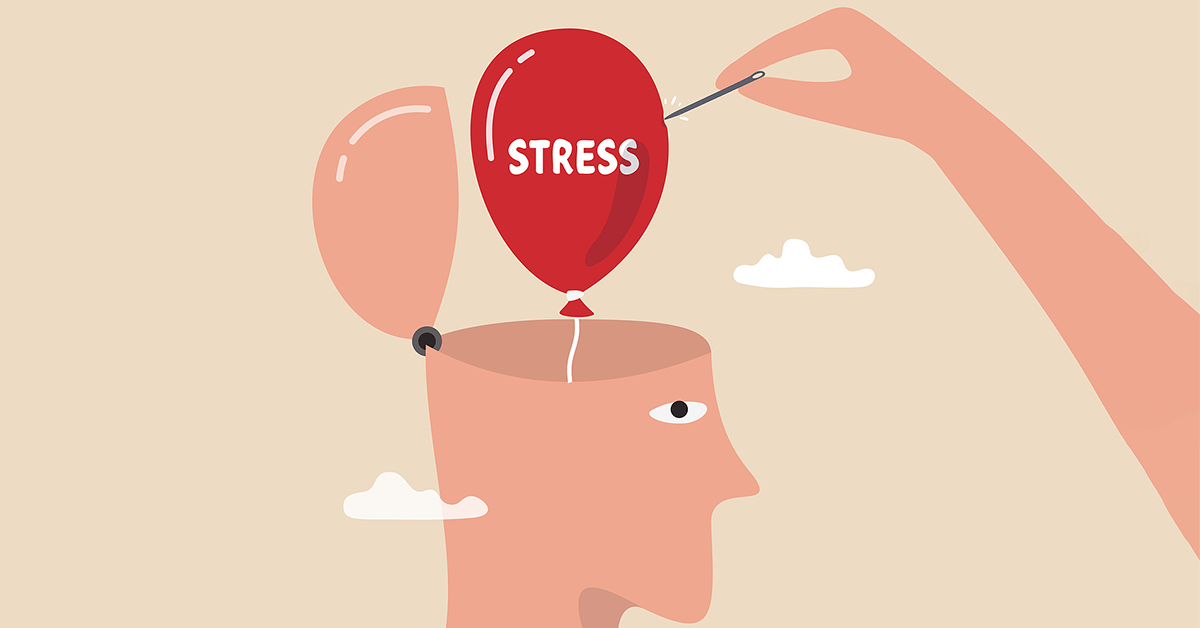
How Does Stress Affect Judgment? Why Pressure Changes the Way We Think
There is a curious paradox about stress.
When pressure rises, we often feel compelled to think faster. Deadlines tighten, uncertainty grows, and consequences become more significant. The natural response is to accelerate decision-making. We assume urgency demands speed.
Yet the very conditions that convince us to decide more quickly frequently reduce our ability to judge well.
This contradiction explains why experienced executives authorize flawed investments during crises, why skilled physicians occasionally overlook obvious diagnoses in overcrowded emergency rooms, why investors panic during market downturns, and why ordinary people make choices they later struggle to explain.
Stress does not merely influence our emotions.
It changes the way we process information.
That distinction deserves careful attention because most important decisions occur under some degree of pressure. Rarely do we enjoy perfect information, unlimited time, and complete emotional detachment. Instead, we decide while balancing competing priorities, limited resources, conflicting opinions, and uncertain outcomes.
Several years ago, I participated in a strategic review where every participant agreed that an immediate decision was essential. Market conditions had shifted rapidly, competitors were moving aggressively, and postponing action appeared risky. Throughout the discussion, I noticed something unusual. The more urgent the conversation became, the narrower our thinking appeared. Alternative explanations disappeared. Nuanced discussions gave way to binary choices.
We eventually paused the meeting until the following morning.
Nothing about the external situation changed overnight.
Our reasoning did.
Fresh conversations introduced possibilities that none of us had considered under pressure. The delay did not eliminate uncertainty, but it reduced something equally important: the cognitive narrowing produced by stress.
That experience reshaped my understanding of decision-making. The greatest danger during stressful situations is often not insufficient information. It is diminished perspective.
Stress Is a Feature, Not a Flaw
Stress is frequently portrayed as an obstacle that should be eliminated.
Biology suggests otherwise.
Stress evolved because it improves survival during immediate threats.
When confronted with danger, the body redirects resources toward rapid action. Heart rate increases. Attention sharpens. Energy becomes readily available. Distractions fade.
For escaping predators or responding to physical emergencies, these changes are remarkably effective.
Modern decisions rarely resemble those environments.
Strategic planning, financial investments, negotiations, medical diagnoses, and leadership decisions demand reflection rather than immediate reaction.
The biological system remains largely unchanged.
The challenges have changed dramatically.
How Stress Changes the Brain
Stress affects several cognitive processes simultaneously.
Attention becomes selective.
Memory retrieval becomes less reliable.
Working memory loses capacity.
The brain increasingly favors familiar patterns over deliberate analysis.
These adaptations help during emergencies because familiar responses require less mental effort.
They become problematic when circumstances demand creativity or careful reasoning.
Rather than evaluating multiple possibilities, stressed individuals often settle quickly on the first explanation that appears plausible.
This tendency creates confidence.
It does not necessarily create accuracy.
Stress Encourages Mental Shortcuts
Every complex decision requires balancing competing information.
Stress reduces our willingness to perform that balancing act.
Instead, the brain increasingly relies upon heuristics—mental shortcuts that simplify complexity.
These shortcuts are useful.
They are also imperfect.
Under pressure, people become more likely to:
-
Accept initial impressions without sufficient verification.
-
Seek evidence confirming existing beliefs.
-
Ignore contradictory information.
-
Overestimate immediate threats.
-
Underestimate long-term consequences.
None of these tendencies reflects reduced intelligence.
They reflect predictable adaptations to cognitive overload.
Different Levels of Stress Produce Different Effects
Stress is not uniformly harmful. Moderate pressure can sharpen focus, while excessive pressure narrows thinking and reduces flexibility.
| Stress Level | Typical Cognitive Effect | Likely Decision Outcome | Helpful Response |
|---|---|---|---|
| Low | Limited urgency, broad attention | Slow progress and delayed action | Set meaningful deadlines |
| Moderate | Improved focus and motivation | Better execution of familiar tasks | Maintain structured decision processes |
| High | Narrow attention and reduced working memory | Increased reliance on intuition | Slow irreversible decisions |
| Extreme | Cognitive overload and emotional reasoning | Higher probability of significant errors | Reduce pressure before deciding |
The relationship resembles a curve rather than a straight line.
Some pressure improves performance.
Too much pressure undermines judgment.
Stress Magnifies Cognitive Biases
Stress rarely creates new thinking errors.
Instead, it amplifies existing ones.
Confirmation Bias
Under pressure, people search more aggressively for evidence supporting their first conclusion because reconsideration requires additional cognitive effort.
Anchoring
Initial information becomes even more influential.
The first estimate, diagnosis, or explanation often dominates subsequent thinking.
Availability Bias
Recent or emotionally vivid events appear increasingly representative.
Rare but memorable risks receive disproportionate attention.
Loss Aversion
Stress heightens sensitivity to potential losses.
People become reluctant to abandon failing strategies because immediate losses feel psychologically larger than future gains.
The combined effect is subtle.
Judgment appears faster.
Reasoning often becomes narrower.
Time Pressure Creates the Illusion of Necessity
Deadlines exert remarkable psychological influence.
When time becomes scarce, speed itself begins to resemble competence.
Yet many decisions do not deteriorate because insufficient time exists.
They deteriorate because people stop asking useful questions.
One additional question can dramatically improve reasoning.
"What alternative explanation deserves consideration?"
The question requires little time.
It frequently expands perspective.
Emotional States Shape Risk Perception
Stress influences not only reasoning but also perception.
The same situation appears different depending upon emotional state.
An anxious investor interprets market volatility as impending disaster.
A calm investor interprets identical information as temporary uncertainty.
Neither emotion changes reality.
Both influence interpretation.
This explains why identical facts frequently produce different decisions among equally experienced individuals.
My Most Valuable Lesson About Stress
One of the most important decisions I have participated in occurred during an unusually demanding period.
The pressure felt overwhelming.
Every conversation emphasized urgency.
Every recommendation sounded definitive.
At one point, someone suggested postponing the final decision by twenty-four hours.
The proposal initially seemed irresponsible.
Looking back, it proved invaluable.
By the following day, several assumptions that had appeared self-evident no longer survived careful examination.
Nothing about the external facts had changed.
Our cognitive state had.
That experience permanently altered my approach to important decisions.
Whenever circumstances create extraordinary urgency, I now ask whether the urgency originates from reality—or from the emotional atmosphere surrounding it.
The distinction matters more often than we realize.
Stress Reduces Curiosity
Curiosity requires mental flexibility.
Stress encourages certainty.
This creates an unfortunate trade-off.
As pressure increases, people ask fewer exploratory questions.
Instead of investigating possibilities, they search for confirmation.
The objective quietly shifts from understanding reality to resolving uncertainty.
Complex problems rarely reward this approach.
Group Decisions Under Pressure
Stress influences organizations as much as individuals.
During crises, hierarchical structures often become stronger.
Senior voices dominate discussions.
Junior employees hesitate to express disagreement.
Consensus develops rapidly.
Alternative viewpoints disappear.
The organization appears decisive.
It may simply be converging prematurely.
Healthy teams create deliberate opportunities for dissent precisely when pressure is highest.
Practical Strategies for Better Judgment Under Stress
Stress cannot always be reduced.
Decision quality can often be improved.
Create Decision Checklists
Structured questions reduce reliance on memory during high-pressure situations.
Separate Facts From Interpretations
Write observable evidence before discussing explanations.
This prevents assumptions from becoming accepted as facts.
Delay Irreversible Choices
If consequences are permanent, modest delays frequently improve judgment substantially.
Encourage Independent Thinking
Collect individual assessments before group discussion begins.
This reduces conformity and preserves diverse perspectives.
Prepare Before Crises Occur
Organizations with predefined decision frameworks perform better because stress influences execution less when processes already exist.
Stress Does Not Eliminate Rationality
One important misconception deserves correction.
Stress does not transform rational people into irrational ones.
Instead, it changes which mental processes receive priority.
Fast thinking replaces deliberate analysis.
Familiar solutions replace creative exploration.
Immediate concerns outweigh distant consequences.
Understanding these tendencies allows individuals and organizations to compensate rather than react automatically.
Better Decisions Begin Before Stress Arrives
Perhaps the most effective strategy involves preparation rather than reaction.
Develop habits while calm.
Clarify principles before crises.
Establish decision criteria before uncertainty appears.
These practices reduce the influence of emotional states because they preserve reasoning when attention becomes limited.
Preparation does not eliminate pressure.
It prevents pressure from becoming the sole architect of judgment.
Conclusion: Stress Changes Judgment More Quietly Than We Realize
Stress rarely announces itself as a threat to reasoning. Instead, it disguises itself as urgency, confidence, or decisiveness. That subtlety explains why intelligent, experienced people continue making poor decisions under pressure despite possessing abundant knowledge.
The objective is not to eliminate stress. That would neither be realistic nor desirable. Moderate pressure sharpens attention, increases motivation, and supports effective action. The challenge begins when pressure narrows perspective, discourages curiosity, and encourages certainty unsupported by evidence.
Better decision-makers recognize this shift before it influences their conclusions. They pause when possible. They question assumptions that appear obvious. They invite disagreement instead of mistaking consensus for accuracy. Most importantly, they understand that the quality of a decision depends not only on the available information but also on the mental state of the person interpreting it.
Stress changes judgment.
Awareness changes how we respond to stress.
That difference often determines whether pressure becomes a source of clarity—or a source of costly mistakes.
- Arts
- Business
- Computers
- Игры
- Health
- Главная
- Kids and Teens
- Деньги
- News
- Personal Development
- Recreation
- Regional
- Reference
- Science
- Shopping
- Society
- Sports
- Бизнес
- Деньги
- Дом
- Досуг
- Здоровье
- Игры
- Искусство
- Источники информации
- Компьютеры
- Личное развитие
- Наука
- Новости и СМИ
- Общество
- Покупки
- Спорт
- Страны и регионы
- World

 English
 French
 Spanish
 Portuguese
 Deutsch
 Turkish
 Dutch
Dutch
 Italiano
 Arabic
 Romaian
 Portuguese (Brazil)
 Greek
Greek