
How do I avoid analysis paralysis?
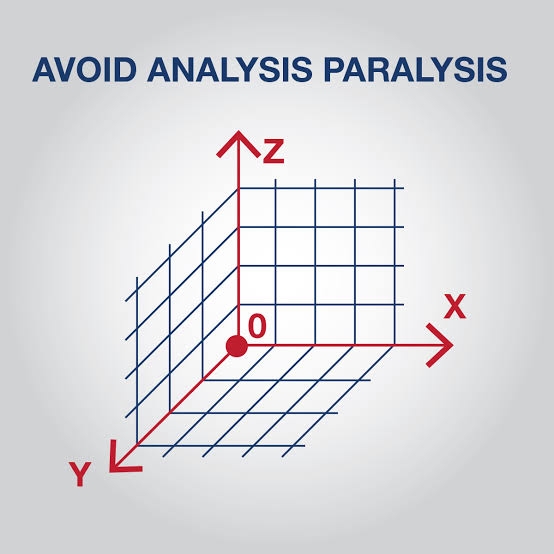
The Architecture of Perpetual Deliberation
We view the moment of choice as a high-stakes investigation. We sit at the desk, surrounded by spreadsheets and projections, convinced that if we can only aggregate enough data—if we can conduct one more study, interview one more stakeholder, or refine our projection by one more decimal point—we will finally pierce the veil of the future. We treat the ambiguity of our situation not as a fundamental property of the world, but as a temporary failure of our own research department.
It is a beautiful, persistent, and entirely fallacious narrative.
In the high-stakes theater of strategy, the "analysis" is rarely the solution to the paralysis. It is, more often than not, the primary ingredient. When we believe we are "waiting for more information," we are not being analytical. We are engaged in a sophisticated, bureaucratized form of emotional avoidance. We are not solving for truth; we are solving for comfort.
As someone who has spent decades auditing the machinery of strategic failure, I have learned that the quality of a decision is rarely tied to the volume of information processed. It is tied to the procedural rigor applied to the information you already possess. If you find yourself in the grip of paralysis, you are not suffering from a deficit of data. You are suffering from an excess of cognitive fragility.
The Procedural Failure of the Data-Driven Delusion
We have cultivated a culture that prizes the aesthetic of diligence. When a decision is presented, the reflexive response is to commission more analysis. We wait. We deliberate. We request more granular reporting. We are convinced that we are practicing "due diligence."
This is not diligence. It is the tactical acquisition of safety.
The Illusion of the Comprehensive View
By expanding the data set, we are merely expanding the stage upon which we can perform our own cognitive biases. We are not uncovering the truth; we are delaying the moment of accountability. We are creating a buffer between our desire to act and the terrifying reality that all meaningful action is, fundamentally, a gamble.
The Decoupling of Decision and Reality
I recall a board meeting for a multinational firm that was agonizing over a market entry into a volatile, emerging sector. They had spent millions on a consulting engagement that provided a three-hundred-page document detailing every conceivable risk. The document was a masterpiece of analytical thoroughness.
But it was useless. It was useless because it assumed that the market would wait for the board's comfort. By the time the board had "analyzed" the report, the first-mover advantage had vanished. They didn't need more data. They needed a process that could distill the essential, structural risks from the background noise, and then they needed the courage to act in the presence of the remaining, irreducible uncertainty.
The Taxonomy of Strategic Paralysis
To decide in the presence of doubt is to master the audit of your own assumptions. We must categorize the ways in which our "search for clarity" becomes a tool for our own deception.
| The Failure Mode | The Procedural Symptom | The Structural Fix |
| The Analysis-Paralysis | Indefinite delay in the name of "further research." | Implement a "Decision Deadline"—the time cost of delay must be calculated as a risk. |
| Availability Heuristic | Over-reliance on the most recent, most vivid information point. | Conduct a "Base-Rate Audit"—what is the statistical norm for this type of venture? |
| The False Precision | Treating subjective estimates as if they were hard, empirical facts. | Adopt "Probabilistic Range Estimation"—never use a single number; always use a range of probabilities. |
| Confirmation Bias | Focusing on information that validates the pre-ordained conclusion. | Institutionalize a "Disconfirming Inquiry"—ask specifically for data that challenges the thesis. |
Designing for Intellectual Humility
If we accept that the human mind is structurally ill-equipped for the interpretation of complex, incomplete information, we must shift our methodology. We are no longer the ones seeking the "right" answer. We are the architects of the decision-making environment.
The Power of the "Vanishing Option" Audit
When you feel that you cannot decide because you "don't know enough," you are trapped in a zero-sum game. You are framing the choice as A vs. B. Instead, ask: "What would I do if I had to decide in one hour?" This is not a request for a rushed guess. It is a procedural forcing function. It strips away the performative, time-consuming research and reveals the irreducible core of the decision.
The Art of the "Kill Switch"
The fear of analysis paralysis is the fear of being wrong. To mitigate this, you must shift from a "permanent commitment" mindset to an "experimental" mindset. Frame your decision not as a terminal act, but as a hypothesis with a built-in exit. What is the specific data point that, if observed in three months, would force you to reverse your course? By defining the exit in advance, you make the decision to act not only safer but logically superior to the decision to wait.
A Lesson in Structural Neutrality
I was once involved in an audit for a venture that was being hailed as the industry's next great paradigm shift. The team was exceptional—top-tier talent, significant venture backing, and a flawless deck.
I asked the lead partner one question: "What is the single most important variable you are currently guessing?"
The room went silent. They hadn't thought about the variables; they had only thought about the proofs. We spent the next six hours mapping out exactly how their "guess" could be tested with a small-scale, low-cost experiment. By the end of the session, the project wasn't abandoned, but it was fundamentally altered. We removed the fragility. We built in the contingencies.
That moment of realization—that we were currently blind to the fact that we were simply guessing—is the single most important lesson I can offer: The goal of the process is not to build a bulletproof argument in the face of uncertainty. The goal is to construct a decision that is robust to the fact that you will always be guessing.
The Provocative Conclusion: Are You Deciding, or Justifying?
The next time your organization is faced with a high-stakes pivot in the face of incomplete data, look at the room. Are people trying to find the truth, or are they trying to justify the delay? Are they asking "What is the smallest experiment we can run to reduce this uncertainty?" or are they asking "What more data can we collect to increase our comfort?"
If you cannot identify the exact point where you will pivot based on the new information, you are not making a decision. You are merely performing a ritual.
True strategic leadership is the art of institutionalizing doubt. It is the practice of systematically identifying where your model breaks, where your optimism blinds you, and where the weight of your own past commitments distorts your present judgment. We are not, and we never will be, rational actors. But we can be procedurally disciplined. We can build systems that account for our inherent, predictable fallibility.
The data is not the truth. It is a map of our own current ignorance. Treat it as such, and you might just survive the next turn in the road.
- Arts
- Business
- Computers
- Spiele
- Health
- Startseite
- Kids and Teens
- Geld
- News
- Personal Development
- Recreation
- Regional
- Reference
- Science
- Shopping
- Society
- Sports
- Бизнес
- Деньги
- Дом
- Досуг
- Здоровье
- Игры
- Искусство
- Источники информации
- Компьютеры
- Личное развитие
- Наука
- Новости и СМИ
- Общество
- Покупки
- Спорт
- Страны и регионы
- World

 English
 Russian
 French
 Spanish
 Portuguese
 Turkish
 Dutch
Dutch
 Italiano
 Arabic
 Romaian
 Portuguese (Brazil)
 Greek
Greek