
What Problems Does PaaS Solve?
The Hidden Cost of Building Everything Yourself
I remember sitting in a conference room with a software founder who had just celebrated closing a major enterprise customer. The mood should have been triumphant. Instead, the engineering team looked exhausted.
Their roadmap wasn't full of innovative features. It was packed with infrastructure work. Server provisioning. Database maintenance. Scaling issues. Security patches. Environment inconsistencies. Continuous deployment headaches.
One engineer finally said something that stayed with me:
"We're spending more time supporting the platform than building the product."
That sentence captures one of the biggest misunderstandings in software development. Organizations often assume they're investing in innovation when, in reality, they're investing in plumbing.
This is precisely the problem Platform as a Service (PaaS) was designed to solve.
PaaS isn't simply another cloud offering. It's a shift in where developers spend their attention. Instead of asking, "How do we keep our infrastructure running?" the better question becomes, "What could we build if infrastructure stopped consuming our best talent?"
That distinction changes everything.
What Is PaaS?
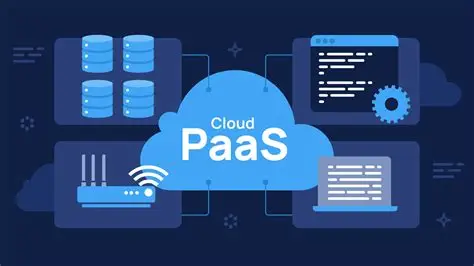
Platform as a Service provides developers with a complete cloud-based environment for building, deploying, testing, and managing applications without requiring them to maintain the underlying infrastructure.
Think about software development as constructing a building.
With traditional infrastructure, every company starts by pouring concrete, installing plumbing, wiring electricity, and building the foundation before designing rooms.
PaaS assumes the foundation already exists.
Developers can immediately begin designing experiences that customers actually notice.
That shift may sound incremental. It rarely is.
The Core Problems PaaS Solves
1. Infrastructure Stops Stealing Engineering Time
Every engineering hour has an opportunity cost.
When developers configure operating systems, install middleware, update runtime environments, or troubleshoot servers, they're solving problems customers never asked them to solve.
Infrastructure work is necessary.
It just isn't differentiating.
PaaS removes much of that burden by managing:
- Operating systems
- Runtime environments
- Middleware
- Storage
- Networking
- Security updates
- Infrastructure scaling
- Platform monitoring
The result isn't fewer engineers.
It's more engineering focused on customer value.
That's an important distinction.
2. Development Cycles Become Noticeably Faster
One of the least appreciated costs in software development isn't coding.
It's waiting.
Waiting for environments.
Waiting for approvals.
Waiting for infrastructure.
Waiting for deployments.
Those delays compound across dozens—or hundreds—of developers.
PaaS compresses many of these delays into automated workflows.
Instead of spending days provisioning environments, teams can often launch applications within minutes.
The cumulative effect is surprisingly large.
Small reductions in friction repeated hundreds of times each month create significant gains in delivery speed.
3. Scaling Becomes Predictable Instead of Stressful
Success creates its own technical problems.
Traffic spikes.
Unexpected customer growth.
Seasonal demand.
Product launches.
Traditional infrastructure often requires capacity planning months ahead of demand.
Provision too little, and applications fail.
Provision too much, and expensive resources sit idle.
PaaS platforms typically provide elastic scaling that adjusts automatically as workloads change.
This transforms scaling from a high-risk operational exercise into an expected platform capability.
Developers stop worrying about whether systems can survive success.
4. Deployment Becomes Less Risky
Every deployment introduces uncertainty.
Will dependencies conflict?
Will production match staging?
Will configuration differences break the application?
These aren't hypothetical questions.
Many software outages originate from inconsistencies between environments rather than flaws in application code.
PaaS standardizes deployment environments across development, testing, staging, and production.
Consistency reduces surprises.
Less variability usually means fewer deployment failures.
5. Security Moves Closer to the Platform
Security is rarely a one-time project.
It's an ongoing discipline.
Operating system updates.
Runtime patches.
Access controls.
Encryption.
Compliance.
Identity management.
Organizations that maintain their own infrastructure inherit responsibility for every one of these layers.
PaaS providers assume responsibility for many platform-level security tasks while developers continue securing the application itself.
Responsibility doesn't disappear.
It simply shifts toward specialists managing the underlying platform at scale.
6. Collaboration Improves Across Teams
One lesson I've learned from working with growing organizations is that technical complexity almost always becomes organizational complexity.
Developers depend on operations.
Operations depend on security.
Security depends on compliance.
Compliance depends on documentation.
The result isn't simply more work.
It's more coordination.
PaaS creates standardized workflows that reduce handoffs between departments.
Instead of reinventing deployment processes for every project, teams work from a common platform.
Standardization doesn't eliminate collaboration.
It makes collaboration more productive.
7. Costs Become More Predictable
Buying infrastructure traditionally required forecasting future demand.
Forecasting technology growth is notoriously difficult.
Companies often purchased excess capacity simply to avoid running out later.
Cloud platforms—and particularly PaaS offerings—replace much of that uncertainty with usage-based pricing.
Organizations pay closer to what they actually consume.
More importantly, finance teams gain greater visibility into infrastructure costs, making budgeting easier.
Predictability has value beyond accounting.
It supports better strategic planning.
PaaS vs. Traditional Infrastructure
| Category | Traditional Infrastructure | Platform as a Service |
|---|---|---|
| Server Management | Managed internally | Managed by provider |
| Environment Setup | Manual configuration | Automated |
| Application Deployment | Often complex | Streamlined |
| Scalability | Manual provisioning | Automatic scaling |
| Maintenance | Internal responsibility | Provider-managed |
| Software Updates | Organization-managed | Platform-managed |
| Developer Focus | Infrastructure plus applications | Primarily applications |
| Time to Market | Longer implementation cycles | Faster releases |
| Operational Overhead | High | Lower |
| Resource Utilization | Frequently overprovisioned | Dynamic allocation |
The comparison reveals something interesting.
Most advantages aren't about adding new capabilities.
They're about removing unnecessary work.
That distinction matters because organizations rarely compete on infrastructure management.
They compete on customer experiences.
When PaaS Delivers the Greatest Value
PaaS isn't universally the right answer.
Organizations with highly specialized infrastructure requirements or strict regulatory constraints may still prefer greater infrastructure control.
But PaaS often creates substantial value for:
Startup Teams
Small engineering teams can deliver products without hiring infrastructure specialists immediately.
Growing SaaS Companies
Rapid customer growth becomes easier to manage through automated scaling.
Enterprise Innovation Teams
Internal product groups can experiment faster without waiting for infrastructure approvals.
Independent Software Vendors
Product development receives more attention than platform administration.
The common thread isn't company size.
It's focus.
Organizations gain the most when they prefer building products over maintaining infrastructure.
The Strategic Benefit That Often Gets Overlooked
People often evaluate PaaS through a technical lens.
That's understandable.
After all, it's a technology platform.
But the larger benefit may actually be organizational.
Every company has finite attention.
Leadership meetings.
Engineering planning.
Budget discussions.
Hiring priorities.
Operational reviews.
Infrastructure quietly consumes enormous amounts of organizational attention.
When much of that responsibility moves to a managed platform, something interesting happens.
Leadership conversations shift.
Instead of asking:
"How do we improve deployment reliability?"
The discussion becomes:
"What should we build next?"
That may be the most valuable transition PaaS enables.
Not because infrastructure disappears.
Because it fades into the background where it belongs.
Lessons Learned from Watching Teams Grow
Over the years, I've noticed a pattern.
The highest-performing engineering organizations rarely obsess over infrastructure for its own sake.
They obsess over customer outcomes.
Infrastructure matters because it enables those outcomes—not because it is the outcome.
Early in my career, I admired technical elegance above almost everything else. Building custom systems felt like craftsmanship. There was real satisfaction in assembling every layer yourself.
Eventually, experience changed my perspective.
The teams moving fastest weren't necessarily writing more code.
They were writing less undifferentiated code.
They were eliminating repetitive operational work.
They were intentionally deciding which problems deserved their expertise—and which problems someone else had already solved exceptionally well.
That lesson extends well beyond cloud computing.
The organizations that scale most effectively aren't those doing everything themselves.
They're the ones that understand where their unique value truly lives.
Conclusion
Platform as a Service solves far more than infrastructure management.
It reduces operational overhead, accelerates software delivery, simplifies scaling, strengthens deployment consistency, supports security, improves collaboration, and creates more predictable costs.
But underneath all of those benefits lies a deeper shift.
PaaS changes what developers spend their days thinking about.
Instead of maintaining servers, they build products.
Instead of troubleshooting environments, they solve customer problems.
Instead of investing energy in undifferentiated work, they focus on innovation.
And perhaps that's the most important question every technology leader should ask:
If your smartest engineers no longer had to manage infrastructure, what could they create instead?
- Arts
- Business
- Computers
- Jeux
- Health
- Domicile
- Kids and Teens
- Argent
- News
- Personal Development
- Recreation
- Regional
- Reference
- Science
- Shopping
- Society
- Sports
- Бизнес
- Деньги
- Дом
- Досуг
- Здоровье
- Игры
- Искусство
- Источники информации
- Компьютеры
- Личное развитие
- Наука
- Новости и СМИ
- Общество
- Покупки
- Спорт
- Страны и регионы
- World

 English
 Russian
 Spanish
 Portuguese
 Deutsch
 Turkish
 Dutch
Dutch
 Italiano
 Arabic
 Romaian
 Portuguese (Brazil)
 Greek
Greek