
When Should I Choose PaaS Instead of SaaS?
The Moment a "Simple" Software Purchase Became Something Bigger
A few years ago, I sat down with the leadership team of a rapidly growing company. They weren't debating whether to move to the cloud. That decision had already been made.
Instead, they were wrestling with a more nuanced question.
One department wanted to purchase an off-the-shelf software solution. The engineering team wanted to build something internally. Finance wanted to understand the long-term cost. Operations wanted reliability. Product leaders wanted flexibility because they believed the customer experience would evolve quickly.
At first glance, it looked like a disagreement about technology.
It wasn't.
It was a disagreement about differentiation.
That meeting reinforced a lesson I've encountered repeatedly: organizations rarely struggle because they lack technology. They struggle because they haven't decided which problems deserve custom solutions and which are better solved by proven software.
That's exactly where the distinction between Platform as a Service (PaaS) and Software as a Service (SaaS) becomes meaningful.
The question isn't simply, "Which cloud model is better?"
It's, "When is building something uniquely yours worth more than buying something that already exists?"
Understanding the Difference Before Making the Choice
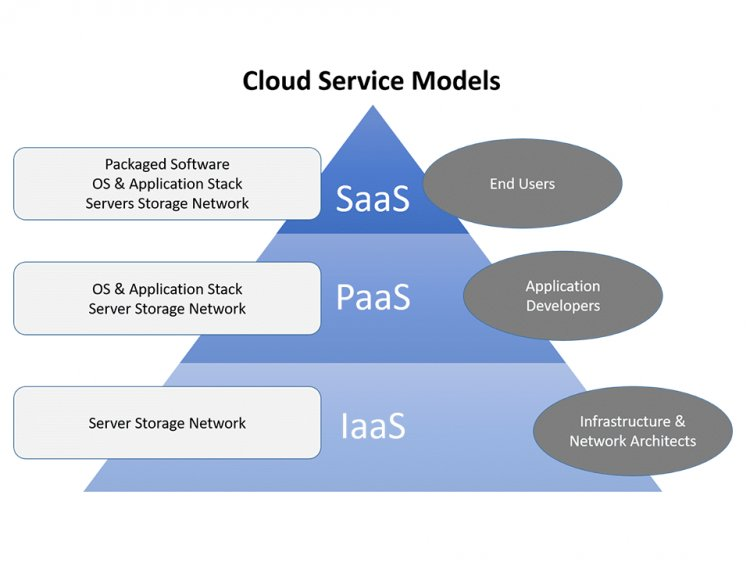
PaaS and SaaS both live under the umbrella of cloud computing, yet they serve entirely different purposes.
Software as a Service (SaaS) delivers finished applications that users can access immediately. The provider manages the infrastructure, maintenance, updates, security, and ongoing operations.
Platform as a Service (PaaS) provides developers with the tools, runtime environment, infrastructure, and deployment capabilities needed to build, test, and manage custom applications.
One is designed for users.
The other is designed for builders.
Understanding that distinction changes how organizations evaluate technology investments.
The Better Question Isn't "Can We Build It?"
Many organizations ask whether they can build a custom application.
That's usually the wrong question.
Modern development platforms make building software more accessible than ever.
The better question is this:
Will building our own solution create lasting business value that commercially available software cannot?
If the answer is no, SaaS is often the smarter investment.
If the answer is yes, PaaS deserves serious consideration.
That shift in perspective moves the conversation away from technical capability and toward strategic value.
Situations Where PaaS Makes More Sense Than SaaS
1. Your Business Process Is Your Competitive Advantage
Every organization has processes.
Only some of those processes create differentiation.
If your workflow closely resembles thousands of other companies, purchasing SaaS typically makes sense.
But suppose your customer onboarding process, pricing engine, logistics workflow, or service delivery model represents a meaningful competitive advantage.
In that case, forcing those capabilities into standardized software may limit innovation.
PaaS allows development teams to create software that reflects how the business actually operates rather than adapting the business to fit existing software.
Sometimes flexibility creates more value than convenience.
2. Off-the-Shelf Software Requires Too Many Workarounds
I've watched organizations purchase sophisticated SaaS platforms only to spend months creating manual processes around them.
Employees exported spreadsheets.
Teams copied information between systems.
Developers built custom integrations simply to compensate for missing functionality.
Eventually someone asked an uncomfortable question.
"If we're customizing everything anyway, why didn't we build exactly what we needed?"
That's an important signal.
When workarounds become more complex than the original problem, PaaS often becomes the better long-term investment.
3. Your Product Is the Business
For software companies, the application isn't merely an internal tool.
It is the business.
A SaaS provider cannot deliver the unique customer experience that defines your product.
A development platform, however, provides the infrastructure and services needed to create that experience without requiring your team to manage servers, operating systems, or deployment pipelines.
In these cases, PaaS enables innovation without distracting developers with infrastructure management.
4. You Need Rapid Iteration
Markets change.
Customer expectations evolve.
New opportunities appear unexpectedly.
Organizations building digital products often release updates weekly—or even daily.
Waiting for a software vendor to prioritize requested features can slow innovation.
With PaaS, development teams control the product roadmap.
Features can be designed, tested, and deployed according to customer feedback rather than vendor release schedules.
That level of responsiveness can become a strategic advantage.
5. Integration Is Central to Your Operations
Businesses rarely operate with a single application.
Customer data may flow between CRM systems, marketing platforms, inventory software, payment gateways, analytics tools, and internal databases.
When these integrations become unusually sophisticated, standardized SaaS solutions sometimes struggle to accommodate unique requirements.
PaaS offers developers the flexibility to create applications that connect systems in ways specifically aligned with organizational needs.
When SaaS Is Still the Better Choice
Choosing PaaS doesn't automatically make an organization more innovative.
Sometimes innovation comes from refusing to reinvent what already works.
SaaS often remains the better option when:
The Need Is Common
Email, accounting, payroll, project management, and collaboration tools rarely justify custom development.
Speed Matters More Than Customization
Organizations can often deploy SaaS applications within days instead of spending months building alternatives.
Internal Development Resources Are Limited
Building software requires ongoing investment—not only during development but throughout maintenance, enhancement, testing, and support.
Compliance and Maintenance Are Better Outsourced
Many SaaS providers continuously update their platforms to meet evolving security and compliance expectations, reducing operational burden for customers.
PaaS vs. SaaS: A Practical Comparison
| Decision Factor | PaaS | SaaS |
|---|---|---|
| Primary Purpose | Build custom applications | Use finished applications |
| Target Users | Developers and engineering teams | Business users and employees |
| Customization | Extensive | Configuration-focused |
| Development Required | Yes | No |
| Time to Initial Deployment | Longer | Faster |
| Maintenance | Application managed by customer; platform managed by provider | Managed by provider |
| Infrastructure Responsibility | Mostly provider-managed | Fully provider-managed |
| Flexibility | High | Moderate |
| Best For | Unique business capabilities | Standard business functions |
| Long-Term Strategic Value | High for differentiated products | High for operational efficiency |
One observation stands out from this comparison.
The more unique your requirements become, the more attractive PaaS tends to be.
The more standardized your needs, the stronger the case for SaaS.
A Lesson I Didn't Appreciate Early Enough
Earlier in my career, I often assumed that building custom software signaled ambition.
It felt like ownership.
It felt like control.
Then I watched several organizations spend enormous amounts of time recreating functionality that already existed in mature commercial products.
Their engineering teams weren't solving new customer problems.
They were rebuilding login systems, dashboards, reporting modules, and administrative interfaces.
Meanwhile, competitors focused their developers on the experiences customers actually noticed.
That experience reshaped my thinking.
Today, I see technology investments differently.
The goal isn't to build more software.
The goal is to build only the software that creates unique value.
Everything else deserves careful scrutiny before development begins.
Questions to Ask Before Choosing PaaS
Before selecting a cloud model, leadership teams should challenge themselves with a few practical questions.
- Does this capability directly differentiate our business?
- Would commercially available software satisfy at least 80 percent of our needs?
- How often do we expect requirements to change?
- Do we have developers who can support a custom application over time?
- Will owning the application create measurable competitive value?
Notice that none of these questions focus exclusively on technology.
They're questions about strategy.
Cloud architecture simply follows the strategy.
Can Organizations Use Both?
Absolutely—and many successful organizations do.
A business might rely on SaaS for collaboration, finance, human resources, and customer support while simultaneously using PaaS to build proprietary customer portals, partner platforms, mobile applications, or analytics tools.
This blended approach reflects an important reality.
Not every challenge deserves the same solution.
The strongest technology strategies aren't defined by loyalty to one cloud model.
They're defined by thoughtful alignment between business objectives and technical investments.
Conclusion
So, when should you choose PaaS instead of SaaS?
Choose PaaS when your organization needs to build software that reflects its unique expertise, competitive strengths, or evolving customer experience. It's particularly valuable when flexibility, rapid innovation, deep integration, and product differentiation outweigh the convenience of using an existing application.
Choose SaaS when the problem you're solving is common, well understood, and already addressed by mature software. In those situations, buying often creates more value than building.
Ultimately, this decision has less to do with cloud technology than with organizational focus.
Every engineering hour spent maintaining or creating software represents an investment. The question is whether that investment advances the capabilities that truly distinguish your business.
The organizations that make the best technology decisions aren't necessarily the ones building the most software.
They're the ones with the discipline to recognize which challenges deserve originality—and which are already solved well enough to let their teams concentrate on what matters most.
- Arts
- Business
- Computers
- Oyunlar
- Health
- Home
- Kids and Teens
- Money
- News
- Personal Development
- Recreation
- Regional
- Reference
- Science
- Shopping
- Society
- Sports
- Бизнес
- Деньги
- Дом
- Досуг
- Здоровье
- Игры
- Искусство
- Источники информации
- Компьютеры
- Личное развитие
- Наука
- Новости и СМИ
- Общество
- Покупки
- Спорт
- Страны и регионы
- World

 English
 Russian
 French
 Spanish
 Portuguese
 Deutsch
 Dutch
Dutch
 Italiano
 Arabic
 Romaian
 Portuguese (Brazil)
 Greek
Greek