
How Do CI/CD Pipelines Work with PaaS?
The most dangerous deployment process is the one that works perfectly until it doesn’t.
I learned this while working with a software team that had built a successful application over several years.
The product was growing.
Customers were happy.
The engineering team was productive.
Then came the release.
A routine update.
A small change.
A familiar process.
Someone manually deployed the application. Someone else checked the logs. Another person verified the database changes.
It worked.
Until one day, it didn’t.
A minor configuration difference between environments created unexpected behavior. The team spent hours tracing the problem.
The frustrating part was not the failure.
Failures happen.
The frustrating part was that the process depended on memory, coordination, and luck.
That experience changed how the team thought about software delivery.
They stopped asking:
“How do we deploy this application?”
They started asking:
“How do we make deployment repeatable?”
That question sits at the center of CI/CD.
And it explains why CI/CD pipelines and Platform as a Service environments have become such a powerful combination.
Because PaaS simplifies infrastructure.
CI/CD simplifies delivery.
Together, they transform software deployment from a manual event into a predictable system.
What Is CI/CD?
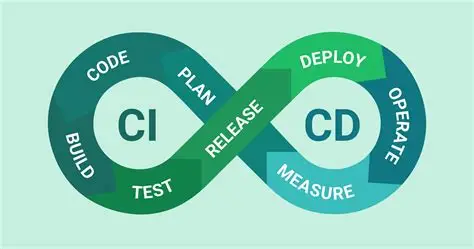
CI/CD stands for Continuous Integration and Continuous Delivery or Continuous Deployment.
The concepts are related, but they solve different problems.
Continuous Integration (CI)
Continuous Integration focuses on integrating code changes frequently.
Instead of developers working independently for weeks and merging large changes later, CI encourages smaller, more frequent updates.
A typical CI process includes:
- Developer commits code
- Repository detects the change
- Automated tests run
- Code quality checks execute
- Build process validates the application
The objective is simple:
Find problems early.
Small problems are easier to solve than large surprises.
Continuous Delivery (CD)
Continuous Delivery extends CI by preparing applications for release.
The application is built, tested, and packaged.
It is ready to deploy.
The organization decides when the release occurs.
Continuous Deployment
Continuous Deployment goes one step further.
Successful changes automatically move into production.
No manual approval.
No scheduled release window.
The pipeline becomes responsible for delivering software continuously.
Why CI/CD and PaaS Work Well Together
At first glance, PaaS and CI/CD may appear to solve similar problems.
Both reduce operational friction.
Both automate processes.
Both improve developer productivity.
But they operate at different layers.
PaaS manages the environment.
CI/CD manages the workflow.
A useful way to think about the relationship:
CI/CD decides when and how software moves.
PaaS decides where and how software runs.
The combination creates a streamlined path from idea to customer experience.
The Typical CI/CD Pipeline with PaaS
Although implementations vary, most PaaS-based CI/CD workflows follow a familiar pattern.
Step 1: Developer Creates a Change
Everything begins with code.
A developer modifies an application.
They add a feature.
Fix a bug.
Improve performance.
Then they commit the changes.
Step 2: Code Is Pushed to a Repository
The repository becomes the trigger point.
Common platforms include:
- GitHub
- GitLab
- Bitbucket
- Azure Repos
The repository stores the application history and initiates automation.
Step 3: Automated Testing Begins
The CI system detects the update.
It runs automated checks.
Examples include:
- Unit tests
- Integration tests
- Security scans
- Dependency checks
- Code analysis
If something fails, the pipeline stops.
This is intentional.
The goal is preventing flawed code from moving forward.
Step 4: The Application Is Built
The platform prepares the application for deployment.
This may involve:
- Installing dependencies
- Compiling code
- Building containers
- Creating deployment artifacts
The result is a version of the application ready to run.
Step 5: The PaaS Environment Receives the Deployment
The PaaS platform takes over.
It handles:
- Runtime configuration
- Infrastructure allocation
- Service startup
- Scaling settings
The application becomes available without developers manually managing servers.
Step 6: Monitoring Begins
Deployment is not the end.
It is the beginning of observation.
Teams monitor:
- Application health
- Error rates
- Performance
- Resource usage
A successful deployment is not merely one that launches.
It is one that continues operating reliably.
CI/CD Integration Across Popular PaaS Platforms
Different PaaS providers approach CI/CD differently.
Some provide built-in workflows.
Others integrate with external automation tools.
CI/CD Support Comparison
| PaaS Platform | CI/CD Approach | Common Integrations | Best Fit |
|---|---|---|---|
| Heroku | Git-based deployment pipelines | GitHub Actions, GitLab CI | Developer-focused teams |
| Render | Automatic deployments from repositories | GitHub, GitLab | Startups and SaaS applications |
| Railway | Repository-driven deployments | GitHub | Rapid development teams |
| Google Cloud Run | Automated container deployment | Cloud Build, GitHub Actions | Cloud-native applications |
| Azure App Service | Enterprise CI/CD workflows | Azure DevOps, GitHub Actions | Enterprise teams |
| AWS Elastic Beanstalk | Pipeline-based deployment | CodePipeline, Jenkins | AWS environments |
| Fly.io | Git and CLI workflows | GitHub Actions | Distributed applications |
| OpenShift | Kubernetes-native pipelines | Tekton, Jenkins | Enterprise platforms |
The technology differs.
The underlying principle remains the same:
Automate the path from code change to running application.
A Lesson Learned from Automating Deployment
One of the most valuable lessons I have seen repeatedly is that teams often automate too late.
They wait until deployment becomes painful.
They wait until releases become stressful.
They wait until manual processes begin slowing growth.
The software team I mentioned earlier eventually built a CI/CD pipeline connected to their PaaS platform.
The first benefit was not speed.
It was confidence.
Developers knew every change followed the same process.
Testing happened automatically.
Deployments became predictable.
New engineers could understand the workflow without relying on tribal knowledge.
The biggest improvement was not technical.
It was organizational.
The team stopped treating deployment as an event.
They started treating it as a system.
The Role of Automated Testing in PaaS Deployments
A CI/CD pipeline is only as valuable as the checks inside it.
Automation without quality control simply creates faster mistakes.
Strong pipelines typically include multiple testing layers.
Unit Testing
Tests individual pieces of application logic.
Integration Testing
Checks whether components work together correctly.
Security Testing
Identifies vulnerabilities and unsafe dependencies.
Performance Testing
Evaluates behavior under expected workloads.
PaaS platforms make deployment easier.
CI/CD ensures that easier deployment does not become careless deployment.
Environment Management in PaaS CI/CD
One challenge appears frequently:
Applications rarely have just one environment.
Most organizations maintain:
- Development
- Testing
- Staging
- Production
A mature CI/CD pipeline manages movement between these environments.
A typical workflow might look like:
Code commit → Development environment → Automated tests → Staging → Production
This approach creates confidence.
Teams can validate changes before customers encounter them.
PaaS platforms help by providing consistent environments.
The same deployment model can often apply across each stage.
How Containers Change CI/CD with PaaS
Containers have strengthened the connection between CI/CD and PaaS.
A pipeline can:
- Build a container image.
- Run security checks.
- Store the image.
- Deploy it to a PaaS environment.
This approach creates consistency across the entire lifecycle.
The same container moves from testing to production.
Fewer surprises.
Clearer accountability.
More predictable outcomes.
Common CI/CD Mistakes with PaaS
Automation does not guarantee success.
Several mistakes appear frequently.
Automating Without Testing
A fast pipeline with weak tests simply creates faster failures.
Ignoring Rollback Strategies
Every deployment process should include a recovery plan.
Things go wrong.
Good systems anticipate that reality.
Overcomplicating Pipelines
Not every application needs dozens of deployment stages.
Complexity should serve a purpose.
Forgetting Security
Dependencies, credentials, and infrastructure settings all require protection.
Security belongs inside the pipeline, not after it.
How CI/CD Changes as Companies Grow
Small teams often begin with simple workflows.
A developer pushes code.
The application deploys.
That may work for a while.
Growth introduces new requirements:
- Multiple developers
- Multiple environments
- Compliance needs
- Faster release cycles
- More complex applications
CI/CD pipelines evolve accordingly.
The goal is not creating the most complicated system.
The goal is creating a system that supports the organization's current reality.
The Strategic Value of CI/CD on PaaS
The conversation around CI/CD often focuses on technical efficiency.
That perspective misses something important.
CI/CD changes how organizations operate.
It reduces friction between ideas and execution.
A developer can improve a product feature and move it toward customers faster.
A business can respond to feedback more quickly.
An organization can experiment with less risk.
The technology enables a cultural shift.
Software delivery becomes continuous improvement rather than occasional release events.
Conclusion: The Best Deployment Process Is the One You Trust
CI/CD pipelines and PaaS platforms solve different parts of the same challenge.
CI/CD creates a reliable path for software changes.
PaaS creates a reliable environment for running software.
Together, they create a delivery model built around consistency, speed, and confidence.
But the most important benefit may not be automation itself.
It is trust.
When developers trust the deployment process, they spend less energy worrying about releases.
When teams trust their systems, they make decisions faster.
When organizations trust their delivery capabilities, they can focus more attention on customers and products.
The future of software delivery is not defined by who deploys the fastest.
It is defined by who can improve continuously without sacrificing reliability.
That is the real promise of combining CI/CD pipelines with PaaS.
- Arts
- Business
- Computers
- Jogos
- Health
- Início
- Kids and Teens
- Money
- News
- Personal Development
- Recreation
- Regional
- Reference
- Science
- Shopping
- Society
- Sports
- Бизнес
- Деньги
- Дом
- Досуг
- Здоровье
- Игры
- Искусство
- Источники информации
- Компьютеры
- Личное развитие
- Наука
- Новости и СМИ
- Общество
- Покупки
- Спорт
- Страны и регионы
- World

 English
 Russian
 French
 Spanish
 Portuguese
 Deutsch
 Turkish
 Dutch
Dutch
 Italiano
 Arabic
 Romaian
 Greek
Greek