
What is concept extraction?
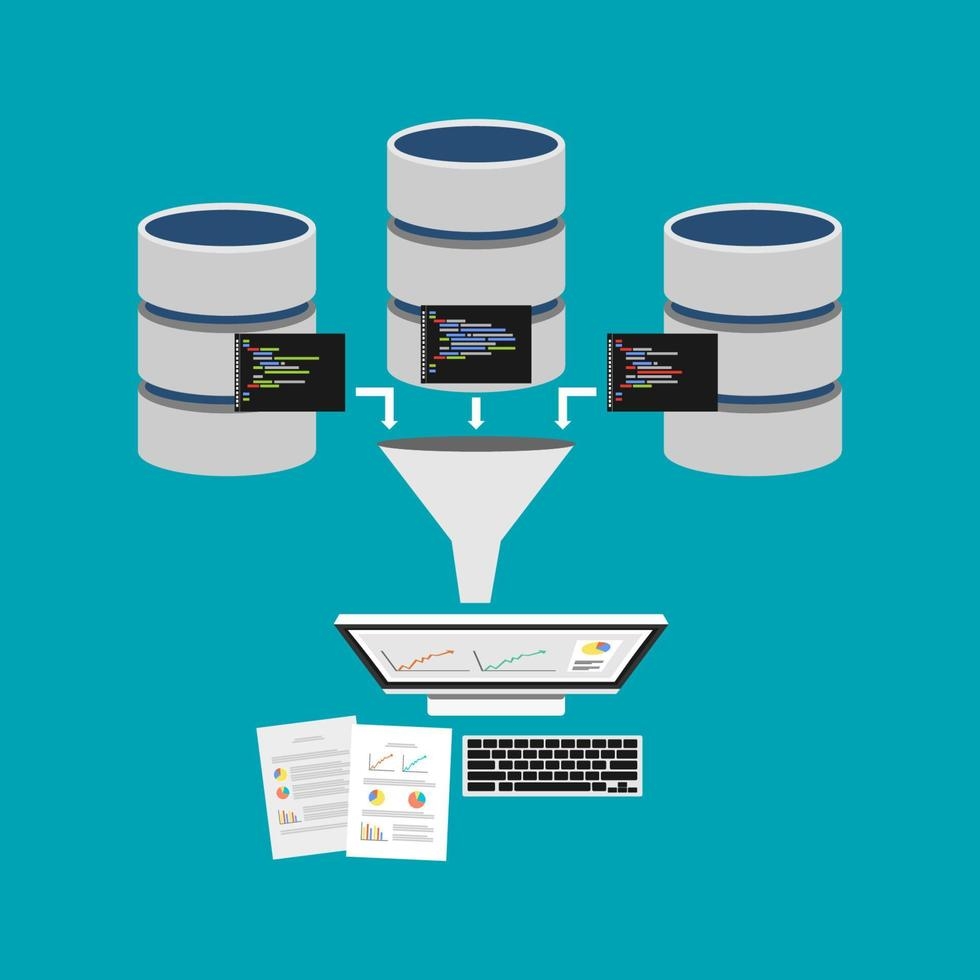
The Architecture of the Intellectual Pivot
The mind is a pattern-making machine. It is designed, with exquisite efficiency, to take the chaos of sensory input and organize it into stable, reliable, and entirely predictable configurations. We call this thinking. But this is not thinking; this is merely the mechanical processing of experience. To truly think—to move beyond the mere arrangement of existing patterns—one must be prepared to do something entirely unnatural.
One must be prepared to strip the pattern down to its bones.
This is the essence of Concept Extraction. It is the deliberate, structural act of looking at an object, a process, or a problem, and peeling away the layers of "what it is" to reveal "what it does." It is the intellectual equivalent of recognizing that the function of a hammer is not "hitting nails," but "the application of force through a lever." Once you have identified the concept, you are no longer limited to the hammer. You can apply that force through any lever you choose.
The Trap of Functional Fixedness
We are conditioned to believe that the world is composed of fixed entities. A chair is for sitting. A bank is for lending. A report is for informing. This is the logic of the status quo. It is an excellent way to maintain order; it is a catastrophic way to innovate.
Functional fixedness is the prison of the mind. We become so attached to the current manifestation of an idea—the specific, tangible "how"—that we become blind to the underlying concept. We stop seeing the function and start worshipping the form.
Concept Extraction breaks this loop. It is the act of looking at the situation and asking: "If I remove the object, the industry, and the history, what remains? What is the core mechanism at play?" By extracting the concept, you move the problem from the realm of the concrete to the realm of the transferable. You are no longer solving for the specific; you are solving for the universal.
The Anatomy of the Extraction
Consider the common problem of "reducing long wait times" at a customer service desk.
A vertical thinker might suggest: Add more staff. Or: Improve the training. These are solutions tied to the form.
A Concept Extractor might ask: What is the concept here?
-
It is not "waiting."
-
It is "the management of idle time."
-
It is "the expectation of value versus the delay of gratification."
Once you have the concept—"the management of idle time"—you stop looking at staff rosters. You look at museums, which manage wait times by creating interest in the queue. You look at theme parks, which create engagement during the delay. You look at software, which uses loading animations to occupy the mind. You have extracted the concept, and in doing so, you have opened the door to a thousand solutions that have nothing to do with "service desks."
The Taxonomy of Conceptual Extraction
To master Concept Extraction is to move beyond the binary of right and wrong. We categorize these extractions by how they rupture our habitual patterns.
| The Extraction Type | The Structural Purpose | The Cognitive Shift |
| Functional Abstraction | To isolate the primary purpose of an object. | Moving from "What is it?" to "What does it achieve?" |
| Mechanism Mapping | To define the logic of how a process functions. | Challenging the assumption that the process is the only way to the goal. |
| Relationship Distillation | To understand the interaction between system components. | Forcing the mind to see the "connective tissue" rather than the parts. |
| Value Identification | To isolate the "why" that creates utility for the user. | Separating the utility from the delivery mechanism. |
Designing for Intellectual Disruption
If we accept that the human mind is a prisoner of its own patterns, we must shift our methodology. We are no longer the ones seeking the "correct" analysis. We are the architects of the potential.
The Power of "Movement"
The most common error people make when introduced to Concept Extraction is stopping at the definition. They define the concept—"the management of idle time"—and then they stop. They have treated the extraction as a destination, rather than a catalyst.
To use Concept Extraction, you must execute "movement." You must take the extracted concept and look for it in entirely different environments. You are not looking for the answer; you are looking for an analogy that has been hiding in the shadow of your logic.
The Art of the "Generic Description"
You must describe your problem in terms so generic that even a child could understand them. If you cannot describe your banking strategy as "a way of moving value across time," you are trapped in banking jargon. The jargon is the barrier. Strip it away. When the problem is generic, the solutions become universal.
A Lesson in Intellectual Abandonment
I recall a consulting engagement with a retail chain facing a collapse in store traffic. The team was obsessed with "in-store experience." They were debating lighting, music, and display layouts. The atmosphere was one of profound, professional exhaustion.
I decided to stop the debate. "Define the concept of the store," I asked.
The responses were predictable: "It’s a place to buy things."
"No," I insisted. "Strip it away. If it’s not a place to buy things, what is it?"
After much resistance, someone ventured: "It’s a curated physical filter for choice."
That was the concept. A "curated physical filter for choice." We stopped looking at store displays. We looked at how libraries curate choice. We looked at how art galleries filter choice. We looked at how algorithmic software filters choice. We realized the store didn't need "better lighting"; it needed to become a "digital-physical hybrid filter" where the physical space acted as a high-fidelity selection interface for the digital catalog.
We solved the crisis, not by thinking harder about "retail," but by thinking about the "curation of choice."
The Provocative Conclusion: Are You Thinking, or Just Processing?
The next time you are faced with a strategic impasse, look at the room. Are people trying to find the truth, or are they trying to find the most acceptable repetition of the past? Are they asking "What is the new way to achieve this?" or are they asking "How can we make the old way work just a little bit better?"
If you cannot identify the underlying concept—the function hidden beneath the form—you are not thinking. You are merely processing. You are playing the pattern-matching game of a machine, rather than the creative game of a human.
True intellectual leadership is the art of the extraction. It is the practice of systematically identifying where your patterns blind you, where your expertise distorts you, and where the weight of your own certainty interferes with your capacity to see what is possible. We are not, and we never will be, neutral observers. But we can be procedurally disciplined.
Concept Extraction is not the opposite of logic. It is the escape hatch from the prison of your own logic. Use it not to find the answer, but to create the space where the answer might finally have the room to emerge.
- Arts
- Business
- Computers
- Games
- Health
- Home
- Kids and Teens
- Money
- News
- Personal Development
- Recreation
- Regional
- Reference
- Science
- Shopping
- Society
- Sports
- Бизнес
- Деньги
- Дом
- Досуг
- Здоровье
- Игры
- Искусство
- Источники информации
- Компьютеры
- Личное развитие
- Наука
- Новости и СМИ
- Общество
- Покупки
- Спорт
- Страны и регионы
- World

 Russian
 French
 Spanish
 Portuguese
 Deutsch
 Turkish
 Dutch
Dutch
 Italiano
 Arabic
 Romaian
 Portuguese (Brazil)
 Greek
Greek