
Can Legacy Applications Run on PaaS?
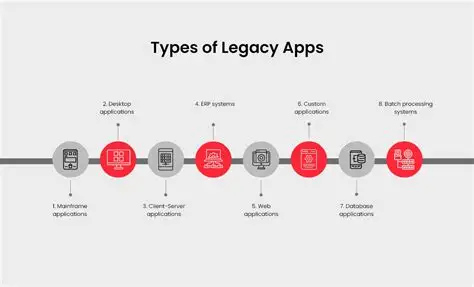
A chief technology officer once showed me a diagram that looked less like a software architecture and more like an archaeological dig.
There were layers everywhere.
A customer database from the early 2000s.
Middleware nobody wanted to touch.
Custom integrations connecting systems that had long outlived their original purpose.
Applications built by employees who had retired years earlier.
The CTO smiled and said something I have heard many times since:
“Everyone tells us to move to the cloud. Nobody tells us what to do with this.”
He pointed at the diagram.
And there it was.
The challenge that quietly sits behind countless digital transformation initiatives.
Not new applications.
Not cloud-native architectures.
Not greenfield development.
Legacy software.
The systems that continue processing transactions, managing inventory, handling customer records, and supporting critical business operations long after their original designers have moved on.
Which raises an important question:
Can legacy applications run on Platform as a Service (PaaS)?
The answer is yes.
But not always in the way organizations initially expect.
Some legacy applications transition surprisingly well.
Others require modification.
A few demand extensive modernization before they can fully benefit from a PaaS environment.
The real story is not whether migration is possible.
It is understanding which legacy applications fit, which require adaptation, and which may be better served by alternative approaches.
Why Legacy Applications Still Matter
Technology conversations often focus on what's new.
Artificial intelligence.
Containers.
Microservices.
Cloud-native architectures.
Yet inside many organizations, the most important applications are often the oldest.
Legacy systems continue to power:
- Financial operations
- Supply chains
- Manufacturing workflows
- Healthcare records
- Government services
- Customer relationship management
These applications persist because they work.
Not perfectly.
Not elegantly.
But reliably.
Organizations rarely replace critical systems simply because newer technologies exist.
They replace them when the business case becomes compelling.
Until then, legacy software remains deeply embedded in operations.
Understanding What "Legacy" Really Means
The term "legacy application" is frequently misunderstood.
Age alone does not make software legacy.
Many mature applications remain well-maintained and highly effective.
A more useful definition focuses on characteristics such as:
- Outdated architecture
- Limited scalability
- Heavy infrastructure dependencies
- Unsupported frameworks
- Complex maintenance requirements
Legacy often reflects operational constraints rather than chronological age.
An application built ten years ago may be easier to modernize than one built three years ago using poorly maintained technology.
Context matters.
Why Organizations Want Legacy Applications on PaaS
The motivation is rarely technological curiosity.
It is usually practical.
Organizations pursue PaaS because they want to reduce operational burden.
Legacy systems often generate exactly the challenges PaaS seeks to address.
These challenges include:
- Server maintenance
- Operating system management
- Infrastructure scaling
- Patch management
- Deployment complexity
PaaS promises a different model.
Less infrastructure management.
More focus on application outcomes.
That promise is understandably attractive.
Especially when legacy environments have become increasingly expensive to maintain.
The Three Common Migration Paths
When evaluating legacy applications for PaaS, organizations generally pursue one of three strategies.
Rehost
Sometimes called "lift and shift."
The application moves with minimal modification.
The goal is speed rather than transformation.
This approach works best when:
- Dependencies are limited
- Runtime compatibility exists
- Infrastructure assumptions remain manageable
Not every legacy application qualifies.
When it does, migration can be relatively straightforward.
Refactor
The application undergoes targeted modifications.
Core functionality remains intact.
Specific components are adjusted to align with the platform.
Examples include:
- Database modernization
- Configuration changes
- API integration updates
Refactoring often strikes a balance between speed and long-term value.
Rebuild
In some cases, modernization becomes unavoidable.
The application is redesigned using contemporary architectures.
This requires greater investment.
It may also deliver greater strategic benefits.
The correct path depends on business objectives, technical constraints, and risk tolerance.
Which Legacy Applications Fit PaaS Best?
Not all legacy workloads are created equal.
Some align naturally with modern PaaS environments.
Others encounter friction.
Strong Candidates
Applications often migrate successfully when they:
- Use supported programming languages
- Have web-based architectures
- Operate independently
- Require moderate scalability
- Maintain manageable dependencies
Examples include:
- Internal portals
- Customer-facing websites
- Business workflow applications
- Reporting systems
- Departmental software
These workloads frequently benefit from simplified deployment and management.
Legacy Application Suitability Comparison
| Legacy Application Type | PaaS Suitability | Typical Migration Complexity |
|---|---|---|
| Internal Business Portals | High | Low |
| Web-Based Customer Applications | High | Moderate |
| Reporting Systems | High | Low |
| CRM Platforms | Moderate to High | Moderate |
| Monolithic Enterprise Applications | Moderate | Moderate to High |
| ERP Systems | Moderate | High |
| Mainframe-Connected Applications | Low to Moderate | High |
| Hardware-Dependent Applications | Low | Very High |
| Real-Time Industrial Systems | Low | Very High |
| Highly Customized Legacy Platforms | Moderate | High |
The pattern reveals an important truth.
Suitability often depends less on age and more on architecture.
Containers Have Changed the Conversation
A decade ago, many organizations viewed legacy migration as an all-or-nothing proposition.
Today, container technology has changed that equation.
Containers allow organizations to package applications with their dependencies.
As a result, legacy workloads that once seemed incompatible may operate effectively within modern environments.
Many PaaS providers now support:
- Docker containers
- Custom runtimes
- Kubernetes integrations
This flexibility significantly expands migration possibilities.
Applications that previously required extensive modification may now transition with far fewer changes.
The Hidden Challenge: Dependencies
When migrations become difficult, dependencies are often the culprit.
Legacy applications frequently rely on:
- Specific operating systems
- Older libraries
- Custom middleware
- Proprietary integrations
- Local file systems
These dependencies create friction.
Not because PaaS lacks capability.
Because the application was designed around assumptions that no longer align with modern platforms.
Understanding dependencies early is essential.
Many migration delays originate here.
A Lesson Learned During a Legacy Modernization Project
Several years ago, I observed a company migrating a mission-critical application to a cloud platform.
Leadership anticipated a relatively straightforward transition.
The application itself appeared stable.
Performance was acceptable.
Documentation existed.
Confidence was high.
Then the team conducted a dependency assessment.
What emerged was surprising.
The application depended on numerous undocumented services, custom scripts, and third-party tools accumulated over more than a decade.
No single dependency appeared problematic.
Collectively, they formed a tangled ecosystem.
Migration became less about moving the application and more about understanding everything surrounding it.
The lesson was powerful.
Organizations often know their applications better than they know their dependencies.
Successful modernization begins with visibility.
Not movement.
Can Monolithic Applications Run on PaaS?
The rise of microservices has led some organizations to assume monolithic applications are incompatible with PaaS.
That assumption is incorrect.
Many monolithic applications run successfully on modern platforms.
In fact, forcing unnecessary architectural change can introduce risk.
PaaS environments frequently support:
- Java monoliths
- .NET applications
- Python applications
- PHP platforms
- Node.js systems
The critical factor is not whether the application is monolithic.
It is whether operational requirements align with platform capabilities.
Architecture matters.
Practicality matters more.
Cost Considerations
Legacy modernization often begins as a technical initiative.
Eventually, economics enter the conversation.
Organizations evaluate:
- Infrastructure costs
- Operational costs
- Staffing requirements
- Licensing expenses
- Downtime risks
PaaS can reduce certain operational burdens.
However, migration itself requires investment.
The most successful projects evaluate total cost of ownership rather than focusing solely on infrastructure savings.
A narrow view can produce disappointing outcomes.
A broader view often reveals compelling advantages.
Security and Compliance Implications
Security frequently becomes a catalyst for modernization.
Legacy applications may depend on:
- Unsupported software
- Outdated frameworks
- Aging operating systems
These conditions increase risk.
Modern PaaS platforms often provide:
- Managed security updates
- Identity management integrations
- Monitoring capabilities
- Compliance support
Yet migration alone does not guarantee improved security.
Applications must still be assessed, updated, and governed appropriately.
Technology helps.
Responsibility remains shared.
When PaaS Is Not the Best Choice
Despite its advantages, PaaS is not universally appropriate.
Certain applications may remain better suited for:
- Infrastructure as a Service
- Hybrid environments
- Dedicated hosting
- Specialized platforms
Examples include systems requiring:
- Extensive hardware customization
- Real-time processing constraints
- Specialized networking
- Proprietary infrastructure components
Migration should never become an objective independent of business value.
The destination matters less than the outcome.
The Emerging Hybrid Reality
Interestingly, many organizations are not choosing between legacy and modern systems.
They are operating both simultaneously.
Hybrid environments have become increasingly common.
A typical organization might maintain:
- Legacy ERP systems
- Modern customer portals
- Cloud-native APIs
- Containerized services
PaaS becomes part of a broader ecosystem rather than a universal replacement strategy.
This approach often reduces risk while enabling gradual modernization.
Evolution frequently succeeds where revolution struggles.
The Future of Legacy Applications on PaaS
Several trends are making legacy migration more achievable.
These include:
- Improved container support
- Better integration capabilities
- AI-assisted modernization
- Enhanced observability tools
- Expanded runtime flexibility
The result is clear.
The gap between traditional applications and modern platforms continues to narrow.
Organizations now possess more options than ever before.
And optionality is often the most valuable asset in technology decision-making.
Conclusion: The Question Isn't Whether Legacy Applications Can Run on PaaS
So, can legacy applications run on PaaS?
In many cases, yes.
Sometimes with minimal changes.
Sometimes with targeted modernization.
Sometimes through broader transformation efforts.
But the more interesting question is not whether migration is technically possible.
It is whether migration creates meaningful business value.
The strongest candidates tend to be applications that benefit from reduced operational complexity, improved scalability, modern deployment workflows, and stronger platform capabilities.
Others may require a more measured approach.
The reality is that legacy applications are not obstacles to modernization.
They are often the reason modernization matters.
They contain business logic, institutional knowledge, and operational workflows accumulated over years or decades.
Treating them as liabilities oversimplifies their importance.
The organizations achieving the best outcomes recognize something subtle but powerful.
Modernization is not about abandoning the past.
It is about creating a future where valuable applications can continue serving the business without carrying unnecessary operational burdens.
And for many organizations, PaaS provides a remarkably effective bridge between those two worlds.
- Arts
- Business
- Computers
- Jeux
- Health
- Domicile
- Kids and Teens
- Argent
- News
- Personal Development
- Recreation
- Regional
- Reference
- Science
- Shopping
- Society
- Sports
- Бизнес
- Деньги
- Дом
- Досуг
- Здоровье
- Игры
- Искусство
- Источники информации
- Компьютеры
- Личное развитие
- Наука
- Новости и СМИ
- Общество
- Покупки
- Спорт
- Страны и регионы
- World

 English
 Russian
 Spanish
 Portuguese
 Deutsch
 Turkish
 Dutch
Dutch
 Italiano
 Arabic
 Romaian
 Portuguese (Brazil)
 Greek
Greek