
How do I generate original ideas?
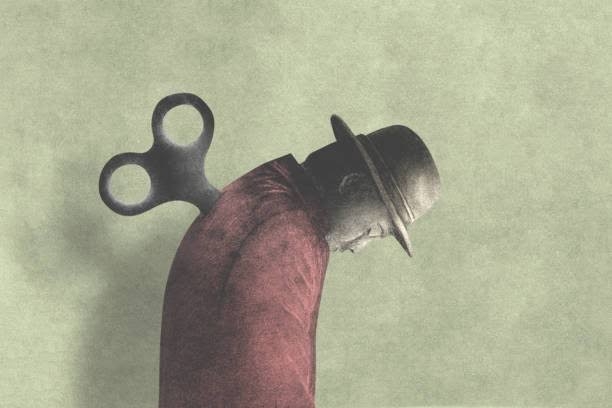
The blank page is not a void; it is a weight. It is an immense, crushing pressure that demands a signature, a beginning, a spark. We sit before it, pens poised or cursors blinking, convinced that original thought is a lightning bolt—a sudden, celestial visitation that strikes only the chosen few. We treat the idea as a noun, a finished product that emerges, fully formed, from the ether.
This is the central myth of creativity. It is the reason we stay stuck.
Originality is not an act of creation; it is an act of curation. It is not the sudden appearance of the new, but the radical recombination of the old. Every "original" idea you have ever encountered—the novel that kept you awake, the business model that disrupted an industry, the song that lodged itself in your temporal lobe—is, at its core, a collage. It is a mosaic of previously discarded experiences, reorganized into a configuration that possesses enough structural integrity to be called new.
I remember standing in the cluttered, impossible workshop of a master horologist in the Jura Mountains. He was surrounded by thousands of tiny, brass gears, each salvaged from clocks that had stopped ticking decades earlier. He didn't build his movements from scratch. He looked at the wreckage of the past, identified a gear that could serve a different purpose in a different tension, and soldered it into a new, complex whole. "You cannot invent time," he told me, polishing a balance wheel. "You can only arrange the mechanism so that time finds a new way to be measured."
That is how you generate an idea. You stop waiting for the lightning, and you start collecting the gears.
The Myth of the Virgin Birth
We are taught to worship at the altar of the "lone genius." We imagine the poet staring into the sunset, the scientist witnessing the apple drop, the entrepreneur struck by the vision of a future product. But the history of human progress is not a history of epiphany. It is a history of borrowing.
Consider the composition of the mind. Our brains are associative engines. Every thought we possess is tethered to a hundred other thoughts. When we reach for an "original" idea, we are not reaching into a vacuum; we are reaching into a vast, messy, interconnected library of everything we have ever read, seen, felt, or failed at. The difficulty is not that we lack ideas; it is that our library is poorly indexed.
The strategy of the original thinker is to improve the indexing. They do not wait for the association to strike. They force the collision.
The Landscape of Associative Architecture
To generate an idea is to navigate the distance between two seemingly unrelated points. If the distance is too small, the idea is cliché. If the distance is too large, the idea is nonsense. The "original" idea exists in the sweet spot of the improbable connection.
| Strategy | The Mechanism | The Goal |
| Combinatorial Play | Taking two concepts from disparate domains and forcing a marriage. | To create a functional hybrid that solves a problem in a new way. |
| Constraint Imposition | Severely limiting your resources or parameters to force a workaround. | To expose the creative utility you didn't know you possessed. |
| Historical Inversion | Taking a successful historical model and applying its inverse. | To identify the "blind spot" that current competitors are ignoring. |
| The "What If" Loop | Iteratively questioning the fundamental physics of your domain. | To dismantle the invisible rules that govern your thinking. |
The Library of the Possible
If we accept that an idea is merely a recombination of existing elements, then the primary responsibility of the creator is to expand the inventory. You cannot make a mosaic if you have no tiles.
Most of us suffer from a poverty of input. We read the same feeds, we talk to the same people, we work in the same narrow silos of expertise. This creates a feedback loop of predictable, unoriginal thought. To break it, you must practice a systematic form of intellectual promiscuity.
I once made a deal with myself: for a month, I would read nothing that pertained to my actual work. I read manuals for 19th-century weaving looms, journals on subterranean ant behavior, and biographies of failed Antarctic explorers. At the time, it felt like a retreat from productivity. In hindsight, it was an acquisition mission. I was gathering tiles.
When I finally returned to the project that had been stalling for months, those seemingly useless shards of information started to fit together. The structural logic of the weaving loom provided the solution to a data management problem; the behavior of the ants provided a model for a team-coordination issue. My "original" insight was nothing more than a theft—a well-timed borrowing of someone else’s logic.
The Architecture of the Final Draft
Generating an idea is a messy, linear-defying process. It is not something that happens at a desk between the hours of nine and five. It happens in the shower, on a walk, in the margins of a conversation. It happens when you allow the brain to stop "working" and start playing.
-
Stop treating ideas as fragile. Most of us kill our best ideas in their infancy because we are too critical, too judgmental, too focused on the polished finish. Let the idea be ugly. Let it be flawed. Your only job in the initial stage is to capture the association, not to judge its worth.
-
Externalize the process. A thought inside your head is a phantom. A thought on paper is a thing. You must get the components out of your skull and into a space where you can see them, move them around, and stack them up. A notebook, a whiteboard, a digital deck—it doesn't matter. You need to see the gears on the table.
-
Invite the outsider. We are notoriously bad at seeing the gaps in our own logic. The best way to generate an idea is to invite someone who knows nothing about the problem to break it. Their "stupid" questions are usually the exact points where your original thinking has become stale.
-
Kill the darlings. Once you have a configuration, you must be ruthless. The "original" idea is rarely the first one you assemble. It is the one that survives the pruning.
The Provocative Conclusion: Are You Thinking, or Just Rearranging?
The tragedy of modern creativity is our obsession with the output rather than the input. We want the masterpiece without the mess. We want the breakthrough without the boredom of gathering the gears.
But the process is the point. The generation of original ideas is a life’s work of pattern recognition. It is the practice of being a constant student of how things work, and more importantly, how they could work if you dared to strip them apart and reassemble them.
You are not looking for a lightning bolt. You are looking for a lever. You are looking for a way to tilt the landscape just enough that the pieces you have been collecting your entire life begin to slide into a new, inevitable shape.
Stop waiting for the flash. Start collecting the brass. The mosaic is waiting for you to build it.
- Arts
- Business
- Computers
- Jogos
- Health
- Início
- Kids and Teens
- Money
- News
- Personal Development
- Recreation
- Regional
- Reference
- Science
- Shopping
- Society
- Sports
- Бизнес
- Деньги
- Дом
- Досуг
- Здоровье
- Игры
- Искусство
- Источники информации
- Компьютеры
- Личное развитие
- Наука
- Новости и СМИ
- Общество
- Покупки
- Спорт
- Страны и регионы
- World

 English
 Russian
 French
 Spanish
 Portuguese
 Deutsch
 Turkish
 Dutch
Dutch
 Italiano
 Arabic
 Romaian
 Greek
Greek
