
Does chess improve memory?
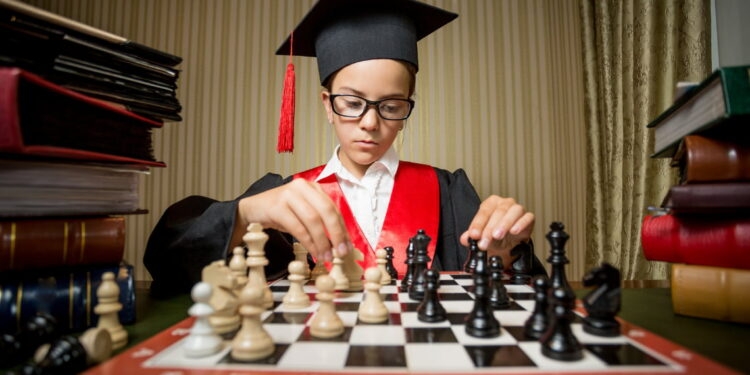
The mind is not a warehouse, and it is certainly not a hard drive. We operate under the stubborn, persistent delusion that our memories are finite—that we have a fixed capacity, a certain number of gigabytes of biological hard drive space that we slowly consume until we hit the inevitable, terrifying limit of a "full" brain. We treat the act of memory improvement as a scavenger hunt for the right "game," a pursuit of cardboard, ink, or pixels that promise to upgrade our gray matter into a more efficient, high-definition processor.
But this is a category error.
I remember standing in a drafty, cold auditorium in New York, surrounded by mental athletes who could scan a deck of shuffled cards and reproduce the sequence with unerring, terrifying precision. They were not creatures of exceptional biology. They were not born with "photographic" recall. They were, by their own admission, people of perfectly average intelligence who had spent their lives mastering a series of ancient, spatial tricks. They were not superhumans; they were architects. They had learned that the secret to a better memory wasn't to "train" the brain like a muscle in a gym—a strategy that is, in neurobiological terms, a recipe for frustration—but to change the way they organized their mental real estate.
Does chess improve memory? The question itself is framed incorrectly. It suggests that there is a specific, calibrated board game that will make you "smarter" in some generalized, universal way. There is not. The most effective memory exercises are not found in an app store or on a checkered board. They are found in the intentional, often difficult act of paying attention and constructing mental scaffolds for information that would otherwise evaporate.
The Illusion of the "Mental Workout"
We live in a marketplace obsessed with the promise of a quick fix. We see the advertisements: slick interfaces, colorful icons, and the intoxicating assurance that ten minutes of daily chess or puzzle solving will reverse cognitive slowing or sharpen our focus. Science, however, tells a more sobering story.
When you play chess, you get better at chess. You become a master of that particular pattern, that specific set of tactical motifs, and that exact set of logic. But the brain is a creature of adaptation, not generalization. Getting better at calculating a fork or a pin does not necessarily make you better at remembering your grocery list or your wedding anniversary; it makes you a better chess player.
| The Activity Type | The Cognitive Load | The Real-World Transfer |
| Brain Training Apps | Task-specific skill acquisition | Negligible; limited to the game itself |
| Crosswords/Sudoku | Semantic/Logical retrieval | Negligible; limited to word/number patterns |
| Chess Training | Pattern recognition, spatial, working memory | Moderate/Specific; limited transfer to distant domains |
| Method of Loci | Architectural construction/Vivid imagery | High; directly applicable to daily recall |
The Architecture of Meaning
If chess is not the universal "brain exercise," what is it? It is a sophisticated, cognitively demanding activity that taxes specific systems—working memory, visuospatial perception, and long-term pattern recognition.
When information goes "in one ear and out the other," it is often because it doesn't have anything to stick to. We are terrible at remembering lists of random numbers, disjointed names, or abstract facts because our brains were not evolved for abstraction. We were evolved for survival, for navigation, and for vivid, sensory-rich experience.
The most profound "exercise" you can perform is the act of elaborative encoding. When you encounter a piece of information you wish to retain, stop. Ask yourself: Why does this matter? How does this connect to what I already know?
I once struggled to remember the names of people I met at conferences. I would hear a name, and five seconds later, it would vanish into the ether. Then I started playing a game—not a digital one, but a creative one. I would look at a person and find an exaggerated feature—a nose, a chin, a pair of glasses—and associate the name with an absurd, high-definition image involving their name. By turning a boring piece of data into a grotesque, colorful mental image, I was doing more for my memory than any chess opening could ever accomplish. I was engaging in the work of making information meaningful.
The Memory Palace: Building Your Own Edifice
The most potent tool for memory is the Memory Palace, or the Method of Loci. You do not need a tournament-level rating to learn it. You do not need a subscription. You simply need to close your eyes and conjure a place you know intimately—your childhood home, your current apartment, your walk to the subway.
Take the things you want to remember and transform them into vivid, bizarre images. If you need to remember to buy milk, don't just hold the thought. Imagine a giant, glowing carton of milk exploding in the middle of your living room, dripping onto the sofa. The more ridiculous, the more tactile, the more human the image, the harder it is for your brain to discard it. You are not "training" your brain; you are building an edifice for your thoughts to live in.
The Discipline of the Long-Term Trace
We live in a culture that encourages the immediate, the transient, and the disposable. We read a paragraph, and we forget it as we scroll to the next. We are constantly feeding the system, but we are never allowing the system to stabilize the trace.
Memory consolidation—the process by which a temporary neural firing becomes a permanent structural change—requires quiet. It requires you to occasionally look away from the screen and actually think about what you have just read. It requires you to engage in the uncomfortable, vital practice of active retrieval.
When you finish reading an article, stop. Close your eyes. Spend five minutes in total silence trying to reconstruct the core argument from scratch. It will be painful. You will fail to recall most of it. That struggle—that specific, agonizing sensation of your brain grasping for a connection that isn't quite there—is the feeling of the memory being built. If you skip the struggle, you skip the memory.
The Provocative Conclusion: The Choice to Remember
Can chess improve memory? Yes, but only in the way that any deeply engaging, pattern-heavy pursuit improves the specific neural pathways it utilizes. It is not a magic key that unlocks the secrets of total recall.
We are living in an era of unprecedented forgetfulness, not because our brains are failing, but because we have outsourced the labor of attention. We have decided that remembering is something that the device, or the game, or the algorithm should do for us. We have surrendered our status as the architects of our own mental palaces in favor of a cheap, externalized storage locker.
If you want a better memory, you must reclaim the labor of the mind. Pay attention. Build the palaces. Make the images weird. Be willing to endure the struggle of retrieval. You are not the sum of what you have experienced; you are the sum of what you have bothered to keep. And that, in the final analysis, is a choice you make, over and over again, every single moment you decide to look at the world and actually, truly, see it.
- Arts
- Business
- Computers
- الألعاب
- Health
- الرئيسية
- Kids and Teens
- مال
- News
- Personal Development
- Recreation
- Regional
- Reference
- Science
- Shopping
- Society
- Sports
- Бизнес
- Деньги
- Дом
- Досуг
- Здоровье
- Игры
- Искусство
- Источники информации
- Компьютеры
- Личное развитие
- Наука
- Новости и СМИ
- Общество
- Покупки
- Спорт
- Страны и регионы
- World

 English
 Russian
 French
 Spanish
 Portuguese
 Deutsch
 Turkish
 Dutch
Dutch
 Italiano
 Romaian
 Portuguese (Brazil)
 Greek
Greek