
Does spaced repetition improve memory?
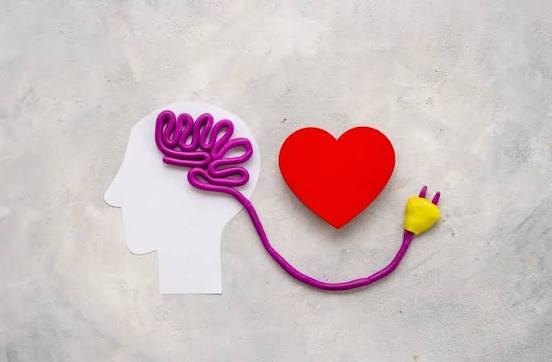
The mind is not a warehouse, and it is certainly not a hard drive. We operate under the stubborn, persistent delusion that our memories are finite—that we have a fixed capacity, a certain number of gigabytes of biological hard drive space that we slowly consume until we hit the inevitable, terrifying limit of a "full" brain. We treat the act of learning as a frantic, linear race against the clock, convinced that if we simply stare at a page long enough, the information will somehow osmose into our gray matter.
But this is not how the brain is built.
I remember standing in a drafty, cold auditorium in New York, watching a man memorize the sequence of an entire deck of playing cards in less than thirty seconds. He wasn't a savant. He wasn't gifted with a photographic recall that the rest of us lack. He was, by his own admission, a man of average intelligence who had spent his adult life mastering a series of ancient, spatial tricks. He was not a superhuman; he was an architect. He had learned that the secret to remembering everything wasn't to "try harder"—a strategy that is, in neurobiological terms, a recipe for failure—but to change the way he organized his mental real estate and, more importantly, the cadence at which he revisited his knowledge.
Does spaced repetition improve memory? The question itself is framed incorrectly. It suggests that memory is a muscle that can be strengthened through repetitive, brutal lifting. It is not. Memory is a system of hooks and hangers, and it is governed by a cruel, unforgiving decay curve. Spaced repetition is not an "improvement" of memory; it is an intervention against the inevitability of forgetting.
The Forgetting Curve and the Illusion of Proficiency
In the late 19th century, Hermann Ebbinghaus sat alone in a room, memorizing lists of nonsensical syllables, and plotted the rate at which they vanished from his mind. He discovered something that has haunted students ever since: memory decay is exponential. Within twenty-four hours, the vast majority of what we have "learned" has been discarded by the brain, classified as irrelevant noise.
We often mistake the fluency of reading for the permanence of knowing. When we read a paragraph for the third time, it feels familiar. That familiarity is a seductive lie. We mistake the ease of recognition for the depth of storage. True memory is not recognition; it is the ability to reconstruct an idea from scratch, in the absence of the stimulus.
Most of us study by "cramming," a strategy that treats the brain like a temporary holding pen. We blast information into the system, pass the test, and watch as it leaks out almost as quickly as it arrived. Spaced repetition acknowledges a different truth: the brain is a sieve, and the only way to retain information is to re-engage with it just as the trace is beginning to fade.
The Architecture of Retrieval
If memory is not a recording, what is it? It is a set of retrieval paths. When you "forget" something, it is rarely because the information has been deleted; it is because the path to that information has become overgrown and impassable. The professional mnemonists—those people who can recall thousands of digits of Pi—are not storing data in a better box. They are building better highways to the data through precise, timed intervention.
| The Encoding Method | Cognitive Burden | Reliability | Structural Mechanism |
| Rote Rehearsal | High | Low | Pure neural firing; subject to rapid decay. |
| Cramming | Very High | Very Low | High immediate output; near-total long-term loss. |
| Spaced Repetition | Low | Very High | Disrupts the forgetting curve via optimal intervals. |
| Spatial Loci (Method of Loci) | Low | Very High | Mapping information onto a familiar physical layout. |
The Lesson of the Overdue Review
A few years ago, I attempted to learn a foreign language using a collection of index cards. At first, I was diligent. I reviewed them every morning. I felt a sense of mastery as I successfully recalled the words with increasing speed. But then, life intervened. I missed a day, then a week, then a month. When I finally returned to the stack, I was horrified. The words that had once felt solid in my mind had become ghosts. They were barely there.
I had assumed that because I had "learned" them, they were safely tucked away in some permanent cabinet. I was wrong. I had confused the acquisition of a memory with the maintenance of a memory.
The lesson was clear: memory is not a fixed asset; it is a living, breathing, and rapidly degrading process. Spaced repetition is the act of forcing the brain to do the work of retrieval, and in doing so, we are literally reinforcing the neural connections that prevent the information from slipping away.
The Discipline of the Long-Term Trace
We live in a world that encourages the immediate, the transient, and the disposable. We read a paragraph, and we forget it as we scroll to the next. We are constantly feeding the system, but we are never allowing the system to stabilize the trace.
Memory consolidation—the process by which a temporary neural firing becomes a permanent structural change—takes time. It requires a state of "quiet." It requires you to occasionally look away from the screen and actually think about what you have just read. It requires you to engage in the uncomfortable, vital practice of active retrieval.
When you finish a book, stop. Close the cover. Spend five minutes in total silence trying to reconstruct the core argument of the book from scratch. It will be painful. You will fail to recall most of it. That struggle—that specific, agonizing sensation of your brain grasping for a connection that isn't quite there—is the feeling of the memory being built. If you skip the struggle, you skip the memory. Spaced repetition is simply the systematic, disciplined application of that struggle.
The Provocative Conclusion: The Choice to Remember
Can memory be improved? Yes. But it cannot be improved by a pill, an app, or a passive "habit." It can only be improved by the decision to be a participant in your own experience.
We are living in an era of unprecedented forgetfulness, not because our brains are failing, but because we have outsourced the labor of attention. We have decided that remembering is something that the device should do for us. We have surrendered our status as the architects of our own mental palaces in favor of a cheap, externalized storage locker.
If you want to improve your memory, you must first reclaim the labor of the mind. You must pay attention. You must build the palaces. You must make the flamingos weird. You must be willing to endure the struggle of retrieval.
You are not the sum of what you have experienced; you are the sum of what you have bothered to keep. And that, in the final analysis, is a choice you make, over and over again, every single moment you decide to look at the world and actually, truly, see it.
- Arts
- Business
- Computers
- Jogos
- Health
- Início
- Kids and Teens
- Money
- News
- Personal Development
- Recreation
- Regional
- Reference
- Science
- Shopping
- Society
- Sports
- Бизнес
- Деньги
- Дом
- Досуг
- Здоровье
- Игры
- Искусство
- Источники информации
- Компьютеры
- Личное развитие
- Наука
- Новости и СМИ
- Общество
- Покупки
- Спорт
- Страны и регионы
- World

 English
 Russian
 French
 Spanish
 Portuguese
 Deutsch
 Turkish
 Dutch
Dutch
 Italiano
 Arabic
 Romaian
 Greek
Greek