
How do memory palaces work?
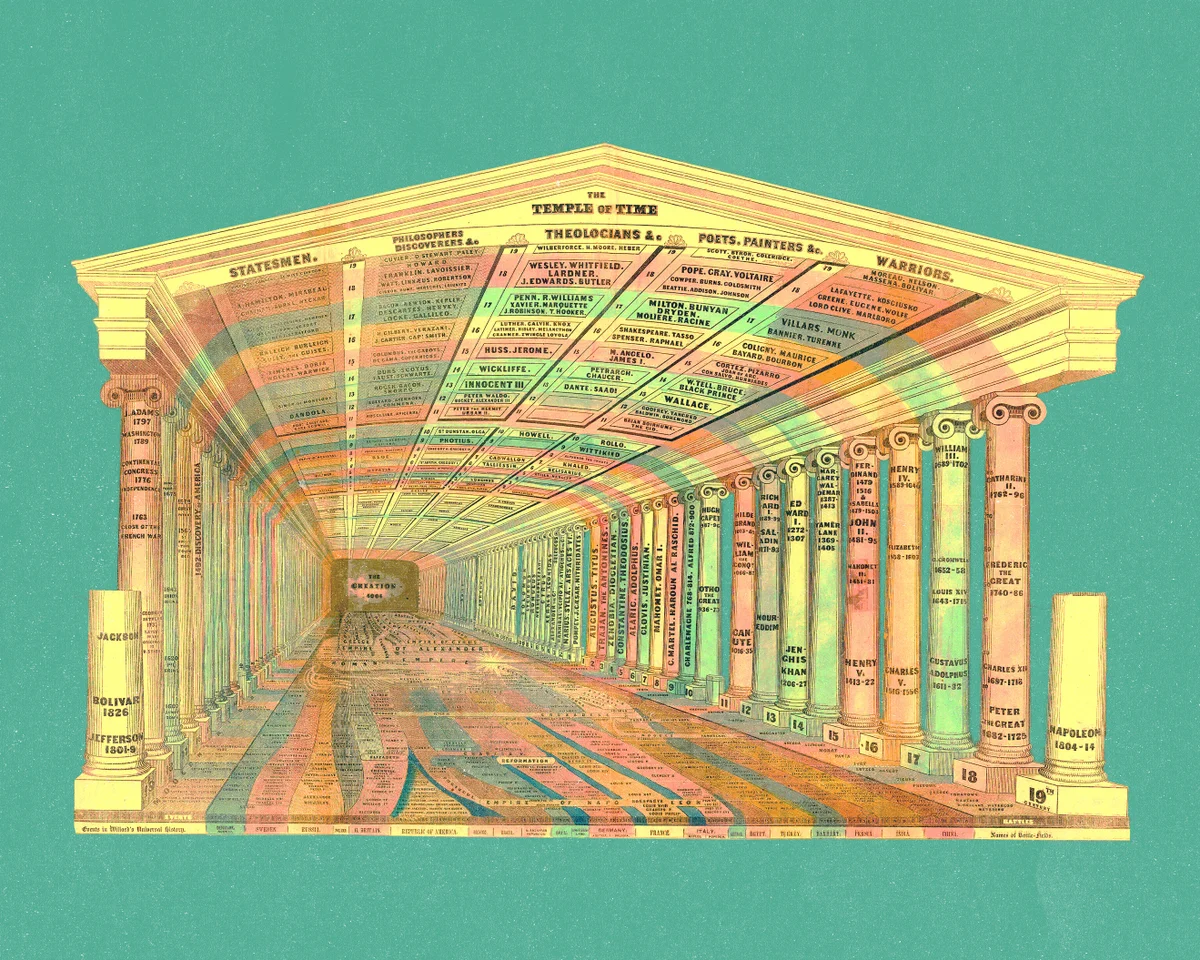
The mind is not a warehouse, and it is certainly not a hard drive. We operate under the stubborn, persistent delusion that our memories are finite—that we have a fixed capacity, a certain number of gigabytes of biological hard drive space that we slowly consume until we hit the inevitable, terrifying limit of a "full" brain. We treat the act of remembering as a form of intellectual hoarding, as if every new piece of information we store inevitably displaces something else, leaving us with a frantic, cluttered attic of half-remembered fragments.
But this is not how the brain is built.
I remember standing in a drafty, cold auditorium in New York, watching a man memorize the sequence of an entire deck of playing cards in less than thirty seconds. He wasn't a savant. He wasn't gifted with a photographic recall that the rest of us lack. He was, by his own admission, a man of average intelligence who had spent his adult life mastering a series of ancient, spatial tricks. He was not a superhuman; he was an architect. He had learned that the secret to retention wasn't to "try harder"—a strategy that is, in neurobiological terms, a recipe for failure—but to change the way he organized his mental real estate.
How do memory palaces work? The question itself is framed incorrectly. It suggests that a memory palace is a tool you pick up, like a hammer. It is not. A memory palace is an architectural project. It is a fundamental reconfiguration of how your consciousness interacts with the physical world.
The Evolutionary Mismatch
We are all prone to treating new information as a collection of isolated, alien objects. We try to grasp each one separately, unaware that we are intentionally overtaxing our own mental bandwidth. Why? Because the brain was never designed to store abstract lists of numbers, dense historical dates, or complex professional terminology. It was designed to navigate space. It was designed to remember where the water is and where the shelter lies.
When you learn the Method of Loci, you are not learning a "trick." You are hacking the evolutionary machinery of the hippocampus. You are forcing the brain to stop treating incoming data as abstract noise and instead treating it as a series of physical objects that must be navigated in a specific, known environment.
The Strategy of Spatial Encoding
The power of the memory palace lies in its ability to leverage our innate, superlative spatial memory. Think about your home. You do not need to "memorize" the location of your sofa, the kitchen table, or the front door. You can walk through that space in your mind’s eye with perfect clarity. You know the exact layout because you have lived in it. The memory palace simply takes that existing, rock-solid neural map and populates it with new information.
By placing the things you need to remember into specific, distinct "loci" within your house, you are assigning those pieces of information a permanent, retrievable address in your brain.
| The Encoding Strategy | The Mechanical Shift | The Resulting Efficiency |
| Linear Rehearsal | Repeating the sequence verbatim. | High cognitive friction; rapid decay. |
| Associative Linking | Connecting each item to a mental anchor. | Medium efficiency; requires active imagination. |
| Pattern Chunking | Grouping items into meaningful hierarchies. | Dramatic reduction in cognitive load. |
| Spatial Mapping (Loci) | Placing items in a familiar virtual environment. | Near-infinite capacity; utilizes spatial brain pathways. |
The Lesson of the Overloaded Scratchpad
A few years ago, I attempted to manage a complex series of production logistics—dozens of moving parts, phone calls, and deadlines—without a written system, relying entirely on my "working memory." I felt the familiar, panicked tightening in my chest as the tasks began to collide. I was trying to hold the entire project in my head as a list of independent, floating variables.
I was drowning. Then, I stopped. I forced myself to walk away from the noise and look at the project not as a list, but as a map.
I didn't try to remember the tasks. I tried to remember the relationships between them. I mapped them onto a virtual tour of my old university campus. The first task went on the gargoyle above the library entrance; the second, a particularly difficult phone call, became a giant, screaming telephone perched on the fountain in the quad. By the time I walked through my campus mentally, I wasn't holding thirty items in my head. I was navigating a landscape. The panic evaporated. The project became manageable not because I had become faster, but because I had stopped asking my brain to do the work that should have been offloaded to a system of spatial structure.
The Disciplined Practice of Constructing Your Palace
If you want to move beyond the limitations of standard, rote memorization, you must stop treating your mind as a place where things exist in a vacuum. You must start treating it as a place where things exist in a context.
1. The Strategy of the Mental Anchor
Do not hold an abstract fact. Attach it to a memory you already own. If you need to remember a specific instruction, visualize the person who gave it to you saying it in a specific, vivid location. The brain finds it significantly easier to retrieve a memory from a place than to retrieve a fact from a void.
2. Radical Simplification via Hierarchy
Never attempt to hold a long list. Always find a way to group the list into themes. If you are memorizing a sequence of numbers, do not see 8-4-2-9-1-1. See 84-29-11. You are changing the way the information enters your awareness. You are reducing the friction.
3. The Power of the Bizarre
The brain is an anomaly-detection machine. If you want to remember something for the long term, you have to make it an anomaly. You have to dress your facts in bright colors. You have to give them weight and texture. If you need to remember to buy milk, don't just hold the thought. Imagine a giant, glowing carton of milk exploding in the middle of your living room. The more ridiculous, the more tactile, the more human the image, the harder it is for your brain to discard it.
The Provocative Conclusion: Are You Thinking, or Just Carrying?
The feeling that your memory is failing is rarely a sign of cognitive decline. It is almost always a sign of cognitive clutter. We have become collectors of trivia, hoarders of unprocessed data, and observers of the disconnected. We expect our brains to function as efficient processors when we have provided them with nothing but raw, disorganized noise.
If you want to improve your capacity for recall, stop trying to shove more into the mental bucket. Learn to categorize the bucket. Learn to see the patterns that already exist in the mess.
The capacity of the human mind is not limited by the number of things we can hold in our heads at once. It is limited by our refusal to organize those things into a coherent, structural logic. Stop carrying the noise. Start building the architecture. The space is there, waiting for you to define it.
- Arts
- Business
- Computers
- Jocuri
- Health
- Home
- Kids and Teens
- Money
- News
- Personal Development
- Recreation
- Regional
- Reference
- Science
- Shopping
- Society
- Sports
- Бизнес
- Деньги
- Дом
- Досуг
- Здоровье
- Игры
- Искусство
- Источники информации
- Компьютеры
- Личное развитие
- Наука
- Новости и СМИ
- Общество
- Покупки
- Спорт
- Страны и регионы
- World

 English
 Russian
 French
 Spanish
 Portuguese
 Deutsch
 Turkish
 Dutch
Dutch
 Italiano
 Arabic
 Portuguese (Brazil)
 Greek
Greek
