
What Is the Retail Industry? Understanding the Economic Engine Behind Everyday Consumption
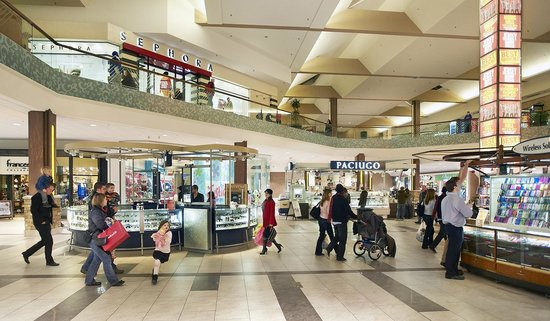
Most people encounter the retail industry before they have a name for it.
A child walks through a toy store and gravitates toward a brightly colored display. A teenager buys sneakers after comparing several brands online. An adult orders groceries through an app while commuting home. A retiree visits a local pharmacy and leaves with far more than the item originally intended.
Different customers. Different products. Different circumstances.
The same industry.
That is what makes retail so fascinating. It is everywhere, woven so tightly into daily life that it often fades into the background. Yet behind every shelf, website, shopping cart, loyalty program, and product recommendation sits one of the largest and most influential sectors of the global economy.
Ask someone what the retail industry does, and the answer usually sounds simple: it sells products.
Technically, that is correct.
But it is also like saying an orchestra merely plays notes.
The retail industry does far more than facilitate transactions. It shapes consumer behavior, influences cultural trends, translates innovation into commercial success, and serves as the bridge between production and consumption. It is where supply chains meet psychology, where economics meets experience, and where brands either fulfill their promises—or expose their shortcomings.
To understand the retail industry is to understand how modern markets function.
And increasingly, how consumers think.
Defining the Retail Industry
At its core, the retail industry consists of businesses that sell goods and services directly to consumers for personal or household use.
Retailers occupy the final stage of the supply chain.
The process generally follows a familiar path:
- Manufacturers produce goods.
- Distributors move products.
- Retailers present products to consumers.
- Consumers make purchases.
The retailer acts as the final commercial touchpoint before ownership transfers to the customer.
Yet focusing solely on transactions understates the industry's role.
Retailers are not passive intermediaries. They make decisions about assortment, pricing, merchandising, branding, inventory, fulfillment, and customer experience. These decisions influence what consumers buy, how much they spend, and how they perceive value.
In many respects, retailers serve as market curators.
They decide which products deserve attention.
Consumers decide whether they agree.
Why the Retail Industry Matters
The retail industry occupies a unique position within the economy.
Unlike manufacturers, retailers interact directly with consumers.
Unlike advertisers, retailers observe actual purchasing behavior rather than stated preferences.
Unlike technology providers, retailers operate at the moment where intent becomes action.
This positioning gives retailers extraordinary influence.
They help determine:
- Which products succeed
- Which brands gain visibility
- Which trends accelerate
- Which innovations reach mainstream adoption
The retail industry also generates significant economic activity through employment, logistics, real estate, technology investments, and supplier relationships.
Its impact extends far beyond shopping.
Retail functions as an economic ecosystem.
The Evolution of Retail: A Story of Continuous Reinvention
Retail has never remained static for long.
General stores once served as the center of community commerce.
Then came department stores, introducing consumers to unprecedented product variety.
Shopping malls transformed retail into a destination.
Big-box retailers emphasized scale and efficiency.
E-commerce expanded accessibility.
Mobile commerce introduced immediacy.
Today, consumers navigate seamlessly between physical and digital environments, often engaging with multiple channels before making a single purchase.
The industry's evolution reveals a recurring pattern.
Consumers rarely abandon convenience.
They simply redefine it.
Retailers that understand emerging definitions of convenience tend to prosper.
Those that cling to outdated assumptions often struggle.
The Major Segments of the Retail Industry
The retail industry encompasses a wide range of business models, each designed around distinct consumer needs.
Department Stores
Department stores offer broad product assortments across categories such as apparel, beauty, home goods, and accessories.
Historically, their strength lay in variety and convenience.
Specialty Retailers
These retailers focus deeply on specific product categories.
Examples include:
- Electronics stores
- Beauty retailers
- Sporting goods chains
- Pet supply stores
Their expertise often becomes a competitive advantage.
Grocery Retailers
Grocery stores provide everyday necessities and experience frequent customer visits.
Operational precision is especially important due to perishability and inventory complexity.
Discount Retailers
These businesses compete primarily through value pricing and operational efficiency.
Their success depends on scale and cost management.
Luxury Retailers
Luxury retailers emphasize exclusivity, craftsmanship, and elevated customer experiences.
Their value proposition extends beyond functionality.
E-Commerce Retailers
Online retailers leverage technology to offer convenience, personalization, and broad product selection.
Their competitive landscape continues to evolve rapidly.
Comparing Major Retail Segments
| Retail Segment | Core Value Proposition | Customer Priority | Typical Margin Structure | Competitive Advantage |
|---|---|---|---|---|
| Department Store | Variety | Convenience | Moderate | Broad assortment |
| Specialty Retail | Expertise | Knowledge | Moderate to High | Category focus |
| Grocery Retail | Necessity fulfillment | Accessibility | Low | Frequency of visits |
| Discount Retail | Affordability | Savings | Low | Operational efficiency |
| Luxury Retail | Exclusivity | Prestige | High | Brand equity |
| E-Commerce | Convenience and access | Speed and selection | Variable | Digital scalability |
The comparison reveals something important.
Retail competition is not simply about products.
It is about delivering value in ways that align with customer priorities.
Different consumers define value differently.
Successful retailers recognize that reality.
Retail Is Really About Consumer Behavior
Barbara Kahn has long emphasized the importance of understanding how consumers make decisions. Retail provides one of the clearest demonstrations of this principle.
Consumers rarely evaluate products through purely rational calculations.
Emotion influences choice.
Context influences choice.
Presentation influences choice.
A premium coffee displayed in an elegant environment often feels different from the same coffee displayed in a cluttered setting.
The product remains unchanged.
Perception does not.
Retailers understand this dynamic.
Store layouts, website design, product placement, packaging, pricing strategies, and promotional campaigns all shape customer perceptions.
Retail is not simply the distribution of goods.
It is the management of choice architecture.
The Customer Experience Revolution
Several years ago, I visited two apparel retailers within the same afternoon.
Both carried comparable merchandise.
Both operated in similar locations.
Both targeted similar demographics.
Yet the experiences felt entirely different.
One store felt transactional. Associates seemed disengaged. Navigation was confusing. Product discovery required effort.
The other felt intuitive. Employees offered thoughtful guidance without becoming intrusive. Displays told coherent stories. The environment encouraged exploration.
I spent significantly more time—and money—in the second store.
The lesson was obvious.
Customers do not evaluate products in isolation.
They evaluate experiences.
That observation has become increasingly relevant as product differentiation becomes more difficult. Retailers now compete not only through merchandise but also through the quality of interactions surrounding that merchandise.
Experience has become a strategic asset.
Technology's Expanding Influence on Retail
Technology has reshaped nearly every aspect of retail operations.
Consumers often notice customer-facing innovations first.
Examples include:
- Mobile shopping apps
- Digital wallets
- Personalized recommendations
- Self-checkout systems
- Buy-online-pickup-in-store services
These technologies improve convenience and accessibility.
Less visible—but equally important—are operational technologies.
Retailers increasingly rely on:
- Demand forecasting systems
- Inventory optimization tools
- Supply chain analytics
- Dynamic pricing algorithms
- Customer data platforms
These systems help retailers anticipate behavior rather than merely react to it.
Technology does not replace retail fundamentals.
It enhances the industry's ability to execute them.
Omnichannel Retail and the End of Channel Thinking
Consumers rarely distinguish between online and offline shopping.
Retailers once did.
That distinction is fading.
Modern consumers might:
- Discover a product through social media.
- Research it online.
- Visit a physical store.
- Purchase through an app.
- Arrange home delivery.
From the customer's perspective, this represents a single shopping journey.
The expectation is continuity.
Retailers increasingly respond through omnichannel strategies that integrate physical and digital touchpoints.
Success depends on consistency.
Customers care less about channels than outcomes.
Challenges Facing the Retail Industry
The retail industry remains dynamic, but it also faces significant challenges.
Rising Customer Expectations
Consumers increasingly expect:
- Fast fulfillment
- Competitive pricing
- Personalized experiences
- Product availability
- Convenient returns
Meeting all these expectations simultaneously can be difficult.
Margin Pressure
Competition remains intense across virtually every category.
Retailers must balance growth ambitions with profitability.
Supply Chain Complexity
Global sourcing networks create opportunities and vulnerabilities.
Disruptions can ripple quickly through retail ecosystems.
Data Privacy and Trust
Retailers collect vast amounts of customer information.
Protecting that data has become a critical business responsibility.
Trust, once lost, can be difficult to rebuild.
Why the Retail Industry Continues to Evolve
The retail industry survives because it adapts.
Consumer preferences shift.
Economic conditions change.
Technology advances.
Retailers respond.
This adaptability distinguishes retail from many other sectors.
The industry's history is not a story of stability.
It is a story of reinvention.
Again and again, retailers have adjusted to changing consumer expectations.
There is little reason to believe that pattern will stop.
Conclusion: The Retail Industry Is the Business of Understanding People
So, what is the retail industry?
The conventional answer is straightforward: businesses that sell goods and services directly to consumers.
The more meaningful answer reaches further.
The retail industry is the mechanism through which products become choices and choices become purchases.
It connects manufacturers to households, brands to customers, and innovation to demand.
More importantly, it serves as a continuous experiment in understanding human behavior.
Every pricing decision, product assortment, store layout, loyalty program, recommendation engine, and promotional campaign attempts to answer a single question:
What do customers truly value?
The retailers that answer that question most effectively tend to thrive.
The ones that misread it often struggle regardless of size, scale, or history.
That reality makes retail far more than a commercial activity. It is a lens through which we can observe changing preferences, emerging trends, and evolving definitions of value.
Products may change.
Channels may change.
Technology will certainly change.
But the retail industry's central challenge remains remarkably consistent.
Not merely selling things.
Understanding people well enough to know which things they want, why they want them, and how they prefer to buy them.
Everything else is execution.
- Arts
- Business
- Computers
- Jogos
- Health
- Início
- Kids and Teens
- Money
- News
- Personal Development
- Recreation
- Regional
- Reference
- Science
- Shopping
- Society
- Sports
- Бизнес
- Деньги
- Дом
- Досуг
- Здоровье
- Игры
- Искусство
- Источники информации
- Компьютеры
- Личное развитие
- Наука
- Новости и СМИ
- Общество
- Покупки
- Спорт
- Страны и регионы
- World

 English
 Russian
 French
 Spanish
 Portuguese
 Deutsch
 Turkish
 Dutch
Dutch
 Italiano
 Arabic
 Romaian
 Greek
Greek
