
What Is Multichannel Retail? Understanding the Strategy Behind Modern Shopping Experiences
A customer discovers a jacket in a physical store.
She leaves without buying it.
Later that evening, she visits the retailer’s website, compares sizes, reads reviews, and completes the purchase from her laptop.
A week later, she receives an email offering matching accessories.
Was that one shopping experience or three?
From the retailer’s perspective, the answer depends on how the business is organized.
If each interaction operates independently, it represents separate channels.
If the channels are intentionally coordinated into one continuous experience, it moves toward omnichannel retail.
That distinction matters.
Because modern consumers rarely think about channels.
They think about outcomes.
They want to find products easily, purchase conveniently, receive reliable service, and interact with brands on their own terms.
Multichannel retail emerged as a response to that changing behavior. It recognizes a simple but important reality: customers engage with retailers through multiple touchpoints, and businesses must meet them where they already are.
Yet multichannel retail is often misunderstood.
Some people assume it simply means selling online and offline.
That explanation is incomplete.
Multichannel retail is not merely about having more places to sell.
It is about building multiple pathways between a retailer and its customers.
Each pathway creates opportunity.
Each pathway creates complexity.
And managing that tension is what makes multichannel retail such an important strategy in modern commerce.
Defining Multichannel Retail
Multichannel retail refers to a retail strategy where a company sells products through multiple independent channels.
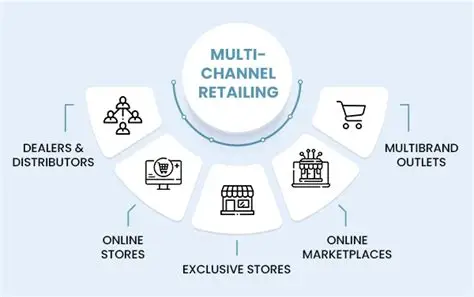
These channels may include:
- Physical stores
- E-commerce websites
- Mobile applications
- Social media platforms
- Catalogs
- Marketplaces
- Call centers
The central idea is accessibility.
Retailers recognize that customers prefer different shopping methods depending on their circumstances.
One customer may enjoy browsing in a store.
Another may prefer ordering through an app.
Another may discover products through social media and purchase through a website.
A multichannel retailer creates opportunities across these environments.
The customer chooses the channel.
The retailer provides the access.
How Multichannel Retail Works
At its foundation, multichannel retail involves operating several sales channels simultaneously.
A traditional retailer may add an online store.
An e-commerce company may open physical locations.
A brand may sell through its own website while also appearing on third-party marketplaces.
Each channel has its own purpose.
A physical store may emphasize discovery and personal interaction.
An online store may emphasize convenience and selection.
A mobile app may emphasize speed and personalization.
The strategic challenge is managing these channels effectively without allowing them to create confusion.
The Difference Between Multichannel and Omnichannel Retail
These terms are often used interchangeably.
They should not be.
The distinction is subtle but important.
Multichannel Retail
Multichannel retail focuses on providing multiple purchasing options.
The channels exist alongside one another.
For example:
- A customer shops in-store.
- Another customer shops online.
- Another customer uses the mobile app.
Each channel serves customers.
Omnichannel Retail
Omnichannel retail goes further by connecting those channels.
The goal is integration.
A customer might:
- Browse online
- Visit a store
- Check inventory through an app
- Purchase digitally
- Return the item in person
The experience feels continuous.
Multichannel asks:
“How can we sell through more channels?”
Omnichannel asks:
“How can we make all channels work together?”
Both approaches matter.
They simply represent different levels of coordination.
Why Retailers Adopt Multichannel Strategies
The reasons are practical.
Consumers behave differently.
Retailers must adapt.
Expanding Customer Reach
A physical store serves customers within a geographic area.
An online channel expands that reach.
A retailer operating multiple channels can connect with more potential buyers.
Increasing Convenience
Consumers value flexibility.
A customer may prefer browsing one channel and purchasing through another.
Multichannel strategies provide options.
Reducing Dependence on One Revenue Source
Retailers relying on a single channel face greater vulnerability.
A business dependent entirely on physical locations may struggle during disruptions.
A business dependent entirely on one digital platform may face algorithm changes or increased competition.
Multiple channels create diversification.
Improving Brand Visibility
Customers encounter brands in more places.
A retailer appearing in stores, search results, social platforms, and marketplaces increases opportunities for engagement.
Visibility influences consideration.
Common Multichannel Retail Channels
Multichannel retail can take many forms.
Brick-and-Mortar Stores
Physical stores remain important because they provide:
- Product interaction
- Immediate purchases
- Human assistance
- Brand experiences
Even digitally focused retailers recognize the value of physical presence.
E-Commerce Websites
Websites provide:
- Broad product access
- Convenient shopping
- Detailed information
- Continuous availability
They have become essential components of many retail strategies.
Mobile Commerce
Smartphones have changed shopping behavior.
Mobile channels allow customers to:
- Browse products
- Compare prices
- Receive offers
- Complete purchases anywhere
Social Commerce
Social platforms increasingly function as discovery and purchasing environments.
Consumers may encounter products while engaging with content, communities, or influencers.
Marketplaces
Third-party marketplaces allow retailers and brands to reach large audiences.
They provide traffic and infrastructure.
They also introduce competition.
Comparing Major Retail Channels
| Retail Channel | Primary Strength | Customer Advantage | Retailer Advantage | Main Challenge |
|---|---|---|---|---|
| Physical Store | Human interaction | Immediate experience | Brand engagement | Location costs |
| E-Commerce Website | Convenience | Broad access | Expanded reach | Digital competition |
| Mobile App | Personalization | Speed and accessibility | Customer data | Development costs |
| Social Commerce | Discovery | Integrated browsing | Audience engagement | Platform dependence |
| Marketplace | Large audience | Product variety | Increased visibility | Reduced control |
| Catalog/Phone Sales | Direct communication | Personalized assistance | Targeted selling | Declining usage |
The table demonstrates why retailers rarely rely on only one channel.
Each channel solves a different customer problem.
The Role of Customer Data in Multichannel Retail
Data connects the modern retail ecosystem.
Every interaction creates information.
A website visit reveals browsing behavior.
A purchase reveals preferences.
A loyalty program reveals buying patterns.
A mobile interaction reveals engagement habits.
Retailers use this information to improve:
- Product recommendations
- Marketing campaigns
- Inventory decisions
- Customer service
However, multichannel success depends on more than collecting data.
The challenge is interpreting it effectively.
Information only creates value when it improves decisions.
A Lesson Learned From Watching Channels Compete
Several years ago, I observed a retailer struggling with what seemed like a marketing problem.
The company had invested heavily in online advertising.
Traffic increased.
Sales did not.
At first, the team assumed customers simply were not interested.
A closer analysis revealed something different.
Customers were discovering products online but completing purchases in physical stores.
The digital channel was not failing.
It was influencing another channel.
That experience changed how I viewed multichannel retail.
A channel does not always need to generate the final transaction to create value.
Sometimes its role is discovery.
Sometimes it builds trust.
Sometimes it moves customers closer to a decision.
Retail journeys are rarely as linear as businesses once assumed.
Challenges of Multichannel Retail
While multichannel strategies create opportunities, they also introduce complexity.
Maintaining Consistent Branding
Customers expect recognizable experiences across channels.
A confusing website combined with an excellent store experience can damage trust.
Consistency matters.
Managing Inventory
Inventory becomes more complicated when products exist across multiple selling environments.
Retailers must decide:
- Which products appear in which channels?
- How should inventory be allocated?
- How should demand be forecasted?
Avoiding Internal Competition
Sometimes channels compete against each other.
A physical store may feel threatened by online sales.
A marketplace presence may compete with a brand website.
Retail leaders must determine how channels support the broader business rather than undermine one another.
Delivering Consistent Service
Customers expect reliability regardless of where they interact with a brand.
Poor service in one channel can affect perceptions of the entire company.
Technology Behind Multichannel Retail
Technology enables multichannel strategies.
Important systems include:
- Customer relationship management platforms
- Inventory management software
- E-commerce platforms
- Analytics tools
- Marketing automation systems
These technologies help retailers coordinate activities across multiple environments.
However, technology alone does not create successful multichannel retail.
A retailer can operate many channels poorly.
The goal is not channel quantity.
The goal is channel effectiveness.
The Consumer Psychology Behind Multichannel Shopping
Multichannel retail succeeds because consumers are not predictable machines.
Shopping decisions depend on context.
A busy professional may order online because time matters.
A customer purchasing furniture may prefer a showroom experience.
A shopper buying cosmetics may want both online research and in-store testing.
The same person may use different channels depending on the purchase.
Retailers that understand this flexibility create stronger relationships.
Conclusion: Multichannel Retail Is About Creating More Paths to Purchase
So, what is multichannel retail?
It is the strategy of selling products through multiple independent channels, including stores, websites, apps, marketplaces, and social platforms.
But that definition only captures the mechanics.
The deeper meaning is about choice.
Consumers no longer follow a single path from awareness to purchase.
They move.
They compare.
They explore.
They switch environments.
Multichannel retail recognizes that reality.
The strongest retailers do not ask customers to adapt to their preferred channel.
They adapt to the customer.
That shift represents a fundamental change in how businesses think about commerce.
A store is no longer just a store.
A website is no longer just a website.
An app is no longer just an app.
Each is a doorway into a broader relationship.
The challenge for retailers is not creating more doors.
It is ensuring that every door leads somewhere valuable.
Because customers may enter through different channels.
But they remember the experience they find on the other side.
- Arts
- Business
- Computers
- Oyunlar
- Health
- Home
- Kids and Teens
- Money
- News
- Personal Development
- Recreation
- Regional
- Reference
- Science
- Shopping
- Society
- Sports
- Бизнес
- Деньги
- Дом
- Досуг
- Здоровье
- Игры
- Искусство
- Источники информации
- Компьютеры
- Личное развитие
- Наука
- Новости и СМИ
- Общество
- Покупки
- Спорт
- Страны и регионы
- World

 English
 Russian
 French
 Spanish
 Portuguese
 Deutsch
 Dutch
Dutch
 Italiano
 Arabic
 Romaian
 Portuguese (Brazil)
 Greek
Greek
