
What are the best memory games for kids?
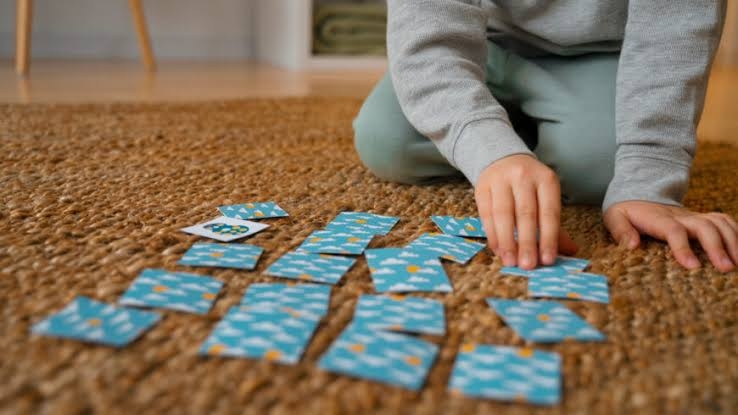
The mind is not a warehouse, and it is certainly not a hard drive. We operate under the stubborn, persistent delusion that a child’s mind is a blank slate waiting to be etched upon—a passive vessel into which we must pour information, facts, and dates, hoping they settle into some coherent, retrievable pattern. We treat the act of learning as a frantic, waking dash to capture curriculum, ignoring the essential, dark hours of play and rest that actually weave those threads into the tapestry of the self.
But this is not how the brain is built.
I remember standing in the back of a bustling elementary school classroom, watching a group of eight-year-olds engage in an exercise that had nothing to do with rote memorization and everything to do with spatial mapping. They were not children of exceptional genius. They were not powered by a secret regimen of "brain-boosting" supplements. They were, by every measure, perfectly ordinary students who had been taught that the secret to a better memory wasn't to "study harder"—a strategy that is, in neurobiological terms, a recipe for anxiety—but to treat every new fact as a visitor to be hosted, honored, and placed in a room of their own design. They were not consumers of information; they were architects of their own mental palaces.
What are the best memory games for kids? The question itself is framed incorrectly. It suggests that there is a precise, calibrated toy or a single, magic app that will solidify their neural traces as if by decree. There is not. The most effective memory cultivation is not found in a store-bought deck of cards or a screen-based puzzle. It is found in the intentional, often difficult act of honoring the architecture of the developing brain—a structure that is, remarkably, persistently, and intensely plastic, yet wildly sensitive to the environmental press we apply to it.
The Ecology of the Playful Mind
We live in a culture that treats cognitive development as a race—a hurdle course of grades, benchmarks, and standardized metrics. We push children to memorize the multiplication table before they have learned to love the rhythm of the numbers. We push them to recall historical dates before they have constructed the narrative context that makes those dates meaningful.
The brain is a muscle in the most literal sense. When you challenge it, you force it to adapt. When you force it to play games that require only rote repetition, you encourage a kind of biological atrophy. You train the child to perform, not to think. True cognitive play—the kind that fosters long-term memory resilience—requires the engagement of the visual, spatial, and emotional centers.
I once spent a week observing a teacher who had decided, quite consciously, to teach his students how to build their own memory palaces using nothing but the geography of their own school. He didn't use cards. He used the school layout. He taught them to place math concepts in the cafeteria, science laws in the library, and language rules in the gymnasium. They were not trying to win a game. They were trying to understand their own mental capacity. In the process, they learned the most vital lesson of all: memory is not something you have; it is something you do.
The Anatomy of the Forgetting Curve
If cognitive cultivation is the bridge between experience and recall, what happens when we stop building that bridge? We enter a state of chronic, low-level cognitive fragility. I remember watching one student attempt to memorize a list of items using a spatial visualization technique. He was frustrated. He felt the sharp, electric edge of the effort. But when he finally placed the last item in his mental room—a giant, spinning, luminous bicycle—he smiled. He hadn't just remembered the word "bicycle." He had created a landmark in his own mind.
He had confused the effort of the day with the result of the night.
The hippocampus—the brain's primary gateway for new information—requires a specific, enriched environment to function. When we lean on the rote, the repetitive, and the passive, we lose the ability to bind new information to existing knowledge structures, and the memory simply does not stick. We become efficient at processing information to pass a test, but entirely incapable of storing it for a lifetime.
| Game Type | Neurobiological Mechanism | Impact on Child Development |
| Spatial Mapping | Visual-spatial encoding | Extremely High; builds architecture |
| Active Storytelling | Emotional integration/Sequencing | High; anchors facts in personal meaning |
| Kim's Game | Sensory observation/Attention | Moderate; focus training |
| Card Matching | Pattern recognition | Low to Moderate; limited neural rerouting |
| Rote Flashcards | Minimal neural adaptation | Low; yields "learning to the test" only |
The Discipline of the Night
If you want to help a child build a better memory, you must reclaim the labor of the mind. You must stop treating their cognitive life as a variable you can optimize away without consequence.
1. The Strategy of Active Retrieval
Instead of searching for a tool, search for the information they just learned. If a child finishes a book or a lesson, do not just have them close it. Spend thirty seconds having them recreate the core arguments or the story arc in their own words. That struggle—that specific, uncomfortable sensation of the brain grasping for a connection that isn't quite there—is the feeling of the memory being physically solidified.
2. The Ritual of Meaning
Do not treat information as a commodity to be consumed. Treat it as a visitor to be hosted. If they want to remember a fact, help them associate it with a visual pun, a vivid action, or a piece of their own history. The more bizarre, the more tactile, the more human the image, the harder it is for the brain to discard it.
3. The Architecture of Rest
Children are not machines. They are biological systems that require time to reset their chemical equilibrium. If they are not sleeping, they are not learning. They are merely spinning their wheels on the treadmill of the present. The deepest stages of sleep are not wasted time; they are the moments when the brain is most active, binding the day’s fragile traces into the long-term, permanent structures of the mind.
The Provocative Conclusion: The Choice to Remember
What are the best memory games for kids? The answer is not in a software program, a specialized toy, or a grueling tutoring session. It is in the willingness to be uncomfortable. It is in the decision to engage with the world in a way that demands their attention, their curiosity, and their effort.
We are living in an era of unprecedented cognitive neglect, not because children's brains are failing, but because we have outsourced the labor of attention and sacrificed the necessity of practice for the hollow promise of ease. We have decided that remembering is something that the device should do for them, and that their biological limits are merely barriers to be shattered. We have surrendered their status as the architects of their own mental palaces in favor of a cheap, externalized storage locker that eventually leaks.
If you want to help a child, you must reclaim the labor of the day. Pay attention to their cycles. Help them build the palaces. Be willing to endure the perceived "lack of productivity" of hours spent without stimulation. They are not the sum of what they have experienced; they are the sum of what they have bothered to keep. And that, in the final analysis, is a choice they make, over and over again, every single moment they decide to look at the world and actually, truly, see it.
- Arts
- Business
- Computers
- Spellen
- Health
- Home
- Kids and Teens
- Money
- News
- Personal Development
- Recreation
- Regional
- Reference
- Science
- Shopping
- Society
- Sports
- Бизнес
- Деньги
- Дом
- Досуг
- Здоровье
- Игры
- Искусство
- Источники информации
- Компьютеры
- Личное развитие
- Наука
- Новости и СМИ
- Общество
- Покупки
- Спорт
- Страны и регионы
- World

 English
 Russian
 French
 Spanish
 Portuguese
 Deutsch
 Turkish
 Italiano
 Arabic
 Romaian
 Portuguese (Brazil)
 Greek
Greek
