
How can I improve concentration and memory?
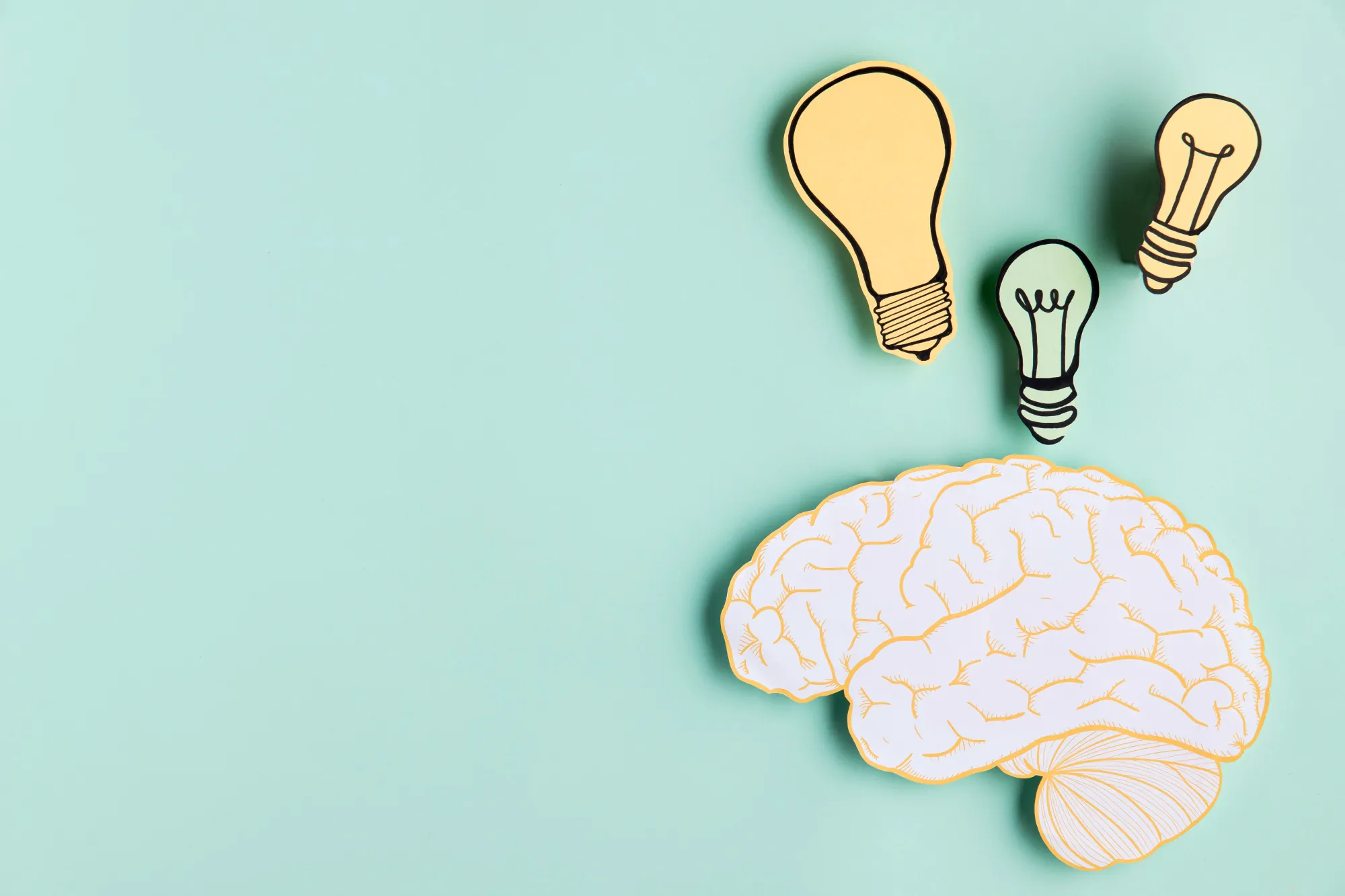
The mind is not a warehouse, and it is certainly not a hard drive. We operate under the stubborn, persistent delusion that our capacity for focus is a fixed resource—that we are born with a certain amount of "attention capital" and we slowly spend it until we reach the inevitable, quiet bankruptcy of mental exhaustion. We treat the act of concentrating as a feat of sheer, unadulterated willpower, as if we could simply brute-force our way to clarity if we were only disciplined enough to pay attention.
But this is not how the brain is built.
I remember standing in a drafty, cold auditorium in New York, watching a man memorize the sequence of an entire deck of playing cards in less than thirty seconds. He was not a savant. He was not gifted with a photographic recall that the rest of us lack. He was, by his own admission, a man of average intelligence who had spent his adult life mastering a series of ancient, spatial tricks. He was not a superhuman; he was an architect. He had learned that the secret to retention wasn't to "try harder"—a strategy that is, in neurobiological terms, a recipe for failure when the system is overloaded—but to understand the difference between the fleeting nature of distraction and the structural integrity of memory.
How can I improve concentration and memory? The question itself is framed incorrectly. It suggests that focus and recall are separate skills to be optimized, like turning a dial on a radio. They are not. They are the twin results of a brain that has been forced to create a meaningful architecture for the world it inhabits. The most effective preservation of the mind is not found in a "focus" app or a concentration supplement. It is found in the intentional, often difficult act of reclaiming the labor of attention from a world that is designed to disperse it.
The Ecology of the Mental Siege
We live in a culture that encourages the immediate, the transient, and the disposable. We are constantly feeding the system, but we are never allowing the system to stabilize the trace. We confuse the "brain fog" born of poor sleep, chronic stress, or multitasking with the genuine, clinical erosion of the hippocampal gateway.
Think of your memory as a desk covered in paper. When you are stressed or tired, the desk is cluttered. You might lose a single sheet of paper—a name, a date, where you left your keys. This is not memory loss; this is an efficiency problem. It is the result of an executive function that is spread too thin. Concentration, in this view, is the ability to clear the desk.
The Biological Circuit Breakers
The hippocampus—the brain's primary gateway for new information—requires a specific, enriched environment to function. When we lean on external storage—GPS, search engines, smartphones—we lose the ability to bind new information to existing knowledge structures, and the memory simply does not stick. We become efficient at processing information, but entirely incapable of storing it.
| The Technique | Neurobiological Function | Impact on Cognitive Reserve |
| Spatial Mnemonics | Visual-spatial encoding | Extremely high; creates durable "anchors" |
| Active Recall | Synaptic strengthening | High; forces retrieval pathways to mature |
| Monotasking | Executive function stabilization | Moderate; prevents cognitive "shuffling" |
| Interleaved Practice | Neural rerouting | High; stimulates complex pattern recognition |
The Lesson of the Locked Room
I once spent a week obsessing over my own cognitive health because I could not remember where I had left my phone for three days in a row. I spent those three days in a state of quiet, rising panic, convinced that I was witnessing the early, systematic dissolution of my own faculties. I was, in reality, simply overworked. I was operating on five hours of sleep, juggling three projects, and ignoring the basic metabolic needs of my brain.
The lesson I learned was not about my memory. It was about my transparency to myself. I had not "lost" my focus; I had sacrificed it to the altar of "multitasking." By forcing myself to slow down, to log my activities, and to observe my internal state, I realized that the "forgetfulness" was a symptom of my lifestyle, not my biology. I was failing to consolidate the information because I was failing to provide the brain the stillness required to encode it.
This is the distinction we often ignore: we are rarely "forgetting" in the sense of a lost file. We are, more often than not, failing to encode the data in the first place because we are too distracted by the next notification to ever truly perceive the present.
The Discipline of the Observation
If you want to know how to improve, you must first know how to watch yourself. Do not look for the occasional, inevitable lapses of the human condition. Look for the disruption of the sequence.
1. The Narrative Test
Are you forgetting things, or are you forgetting who you are in relation to those things? If you forget an appointment, that is a lapse. If you forget the concept of an appointment, or why you would have one, that is a departure from your own narrative.
2. The Feedback Loop
Ask those closest to you. We are notoriously unreliable witnesses to our own decline. Because our brains are the very tools we use to evaluate our own performance, they are subject to the same bias that causes a malfunctioning computer to report "all systems normal." Trust the external feedback of those who see you every day.
3. The Functional Impact
Are you still navigating your world? Are the lapses causing you to withdraw, to avoid situations, or to struggle with tasks you once performed without thought? The moment the forgetting begins to limit your interaction with reality, the observation period should end, and a professional assessment should begin.
The Provocative Conclusion: The Choice to Remember
How can you improve? You must reclaim the labor of the day. Pay attention to your cycles. Build the palaces. Be willing to endure the perceived "lack of productivity" of hours spent without stimulation. You are not the sum of what you have experienced; you are the sum of what you have bothered to keep.
We are living in an era of unprecedented cognitive neglect, not because our brains are failing, but because we have outsourced the labor of attention to a world that ignores the basic, biological requirements of the mind. We have decided that our cognitive limits are something to be suppressed or ignored until they can no longer be hidden. We have surrendered our status as the architects of our own mental palaces in favor of a cheap, externalized storage locker that eventually leaks.
If you are concerned, do not look for a diagnostic shortcut. Look for the pattern. Be willing to endure the discomfort of self-scrutiny. You are not the sum of what you have experienced; you are the sum of what you have bothered to keep. And that, in the final analysis, is a choice you make, over and over again, every single moment you decide to look at the world and actually, truly, see it.
- Arts
- Business
- Computers
- Spellen
- Health
- Home
- Kids and Teens
- Money
- News
- Personal Development
- Recreation
- Regional
- Reference
- Science
- Shopping
- Society
- Sports
- Бизнес
- Деньги
- Дом
- Досуг
- Здоровье
- Игры
- Искусство
- Источники информации
- Компьютеры
- Личное развитие
- Наука
- Новости и СМИ
- Общество
- Покупки
- Спорт
- Страны и регионы
- World

 English
 Russian
 French
 Spanish
 Portuguese
 Deutsch
 Turkish
 Italiano
 Arabic
 Romaian
 Portuguese (Brazil)
 Greek
Greek
