
Can the brain create new memories at any age?
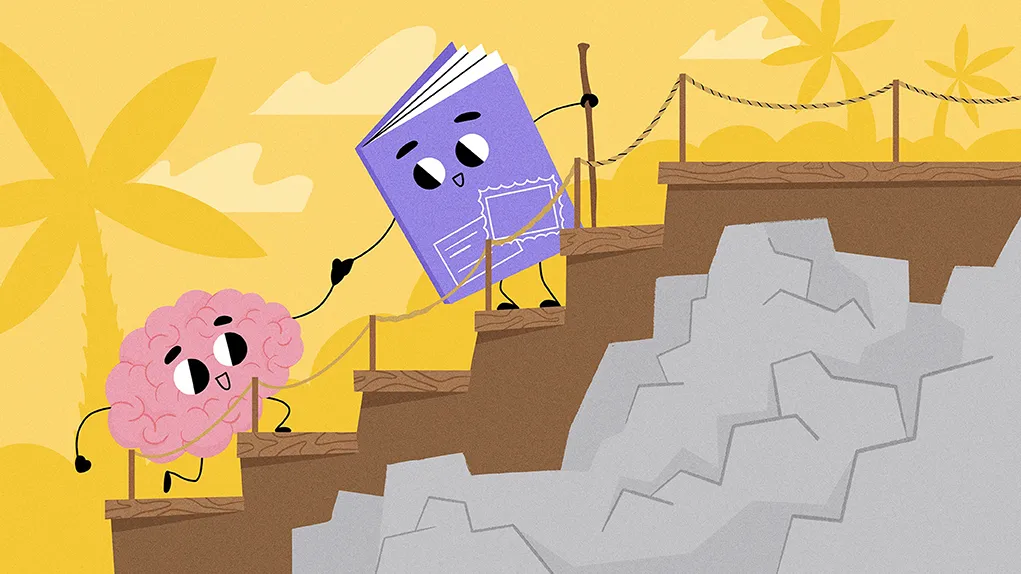
The mind is not a warehouse, and it is certainly not a hard drive. We operate under the stubborn, persistent delusion that the brain is a static structure—a biological vessel that reaches a peak of capacity in our youth and then, through a slow, agonizing process of attrition, begins to leak. We treat the act of learning as a finite resource, a commodity we consume in early life to sustain us through the remaining decades of an increasingly dusty existence.
But this is not how the brain is built.
I remember standing in a quiet, sunlit laboratory at a renowned research university, watching a neurologist scan the brain of a seventy-eight-year-old man. This man was not a scientist; he was a retired accountant who had, for reasons that defied his own explanation, decided to spend his eighth decade mastering the intricacies of Mandarin Chinese. He was not a superhuman. He was a person of perfectly average intellect who had ignored the societal script that says the aging brain is a closed book. As the images materialized on the screen, revealing the vibrant, firing networks of his hippocampus, I saw something that shattered the conventional wisdom I had carried for years: his brain was not closing down. It was busy.
Can the brain create new memories at any age? The question itself is framed incorrectly. It suggests that memory is a fragile bloom that eventually withers, regardless of the soil. It is not. It is an act of creation, a process of synaptic binding that continues, provided the structure is challenged, until the final flicker of consciousness. The most profound cognitive gaps we see in the elderly are not always the result of biological destiny; they are the result of a cultural surrender.
The Ecology of the Plastic Self
We live in a culture that treats cognitive decline as an inevitability—a rust-like corrosion of the synaptic machinery. We accept the "senior moment" as a diagnostic certainty. Yet, the neurobiological reality is far more forensic. The brain remains, until its absolute terminal state, a system of radical potential. It is governed by a concept known as neuroplasticity—the ability of the brain to reorganize itself by forming new neural connections throughout life.
Think of your memory as a forest. In youth, the pathways are wide, paved, and heavily traveled. As we age, if we stop walking those paths—if we stop encountering the new, the difficult, and the complex—the forest grows over. We call this "forgetting." In reality, it is a failure of maintenance. When we stop challenging the brain to build new architecture, it naturally begins to conserve energy. It is not dying; it is hibernating.
The Biological Circuit Breakers
When we look for the mechanics of memory in the aging brain, we are looking for where the connection was severed. Is it a loss of synaptic plasticity? Is it a decrease in neurotrophic factors, the "fertilizer" that keeps the brain growing? The science is increasingly clear: while the speed of processing may change, the ability to store—to encode new narratives, to map new spatial palaces, to acquire new skills—remains remarkably robust, provided the architecture is given a reason to exist.
| Life Stage | Primary Cognitive Goal | Mechanism of Memory Retention |
| Youth | High-speed encoding; habit formation | Massive synaptic pruning; rapid firing |
| Middle Age | Integration; narrative cohesion | Strengthened myelination; pattern recognition |
| Late Life | Knowledge synthesis; episodic endurance | Dendritic arborization; compensatory recruitment |
| All Stages | The Novelty Requirement | Neurogenesis; hippocampal stimulus |
The Lesson of the Accountant
I once spent a week with that retired accountant, watching him struggle through the grammar of his chosen language. He was, by every metric, a man who should have been "slowing down." He was tired. He was physically slower. Yet, the work he was doing was harder than anything I had witnessed in many of my own colleagues.
The lesson I learned was not about the longevity of the brain. It was about the necessity of the labor. He was not learning Mandarin because he needed to speak it; he was learning it because he needed to build it. He had recognized that the brain is a machine that requires a heavy load to function optimally. By choosing to struggle—to force his neurons to map new sounds, new symbols, and new meanings—he was creating a physical, structural shield against the very decline he had been told was inevitable.
This is the distinction we often ignore: we are rarely "forgetting" in the sense of a terminal diagnosis. We are, more often than not, experiencing the results of a voluntary retirement from the act of creation.
The Discipline of the Observation
If you want to understand if the brain can create new memories at any age, you must first understand that the process is designed to protect you from the temptation of an easy existence.
1. The Novelty Requirement
The brain does not care about the familiar. You can read the same newspaper for forty years and you will not create a new memory of the experience. To build, you must be in a state of engagement with the novel. It must be something that forces the brain to deviate from its established paths.
2. The Cognitive Mapping
The most effective way to test your own plasticity is to acquire a skill that is fundamentally different from your life's work. If you were a builder, learn a language. If you were a musician, learn to code. The brain requires the friction of the unknown to trigger the growth of new synaptic connections.
3. The Structural Verification
We must be honest about the environment. If we surround ourselves with the repetitive, the passive, and the predictable, we are effectively telling our brains that no new memories are required. The aging brain is a high-maintenance engine; it requires fuel, and that fuel is complexity.
The Provocative Conclusion: The Choice to Remember
The idea that the brain is a warehouse that eventually closes its doors is a dangerous, self-fulfilling fiction. It is the moment the fog lifts enough to see the landscape clearly, so you can finally decide where to build.
We are living in an era of unprecedented cognitive neglect, not because our brains are failing, but because we have outsourced the labor of attention to a world that ignores the basic, biological requirements of the mind. We have decided that our cognitive limits are something to be accepted as a natural progression, rather than a threshold to be pushed. We have surrendered our status as the architects of our own mental palaces in favor of a cheap, externalized storage locker that eventually leaks.
If you are concerned, do not look for a diagnostic shortcut. Look for the pattern of your own engagement. Be willing to endure the discomfort of the new. You are not the sum of what you have experienced; you are the sum of what you have bothered to keep. And that, in the final analysis, is a choice you make, over and over again, every single moment you decide to look at the world and actually, truly, see it.
- Arts
- Business
- Computers
- Juegos
- Health
- Home
- Kids and Teens
- Money
- News
- Personal Development
- Recreation
- Regional
- Reference
- Science
- Shopping
- Society
- Sports
- Бизнес
- Деньги
- Дом
- Досуг
- Здоровье
- Игры
- Искусство
- Источники информации
- Компьютеры
- Личное развитие
- Наука
- Новости и СМИ
- Общество
- Покупки
- Спорт
- Страны и регионы
- World

 English
 Russian
 French
 Portuguese
 Deutsch
 Turkish
 Dutch
Dutch
 Italiano
 Arabic
 Romaian
 Portuguese (Brazil)
 Greek
Greek
