
Should Retailers Sell Online?
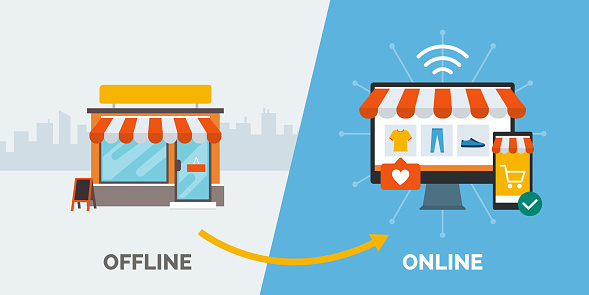
A surprisingly large number of retailers still ask the question.
Not startups. Not entrepreneurs sketching business plans on napkins. Established retailers ask it too.
Should we sell online?
At first glance, the answer appears obvious. Consumers buy online every day. E-commerce sales continue representing a meaningful share of retail spending. Customers expect websites, mobile experiences, delivery options, and digital convenience.
Case closed.
Except it is not.
Because the real question is not whether online selling is possible. It clearly is. The real question is whether selling online creates value for a particular retailer.
That distinction matters.
Retail history is filled with businesses that launched e-commerce operations simply because competitors did. Some succeeded. Others discovered that adding an online channel introduced complexity, operational challenges, and profitability concerns that outweighed the benefits.
The conversation therefore deserves more nuance than it often receives.
Selling online is not a universal requirement.
Nor is it a universal mistake.
It is a strategic decision.
And like most strategic decisions, its effectiveness depends less on the idea itself and more on execution.
The Wrong Question Dominated Retail for Years
For a long time, discussions about e-commerce resembled a binary debate.
Online or offline.
Websites or stores.
Physical retail or digital retail.
The framing was flawed from the beginning.
Consumers never experienced shopping that way.
Customers do not wake up thinking, “Today I will participate in e-commerce.”
They simply want products.
Conveniently.
Reliably.
At a reasonable value.
The channel is often secondary.
This is why the most successful retailers stopped treating online retail as a separate business model and started treating it as another way of serving customers.
The distinction seems subtle.
Its implications are significant.
Why Customers Expect Online Access
Consumer expectations have evolved dramatically.
A customer standing inside a store may still want to:
- Check inventory online
- Compare product options
- Read reviews
- Place future orders digitally
- Schedule delivery
The purchasing journey increasingly spans multiple touchpoints.
Consumers move fluidly between channels.
Research may occur online.
Evaluation may occur in-store.
Purchase may happen through a mobile application.
Fulfillment may occur from a warehouse.
The customer perceives one experience.
Retailers often manage several.
Selling online helps accommodate this increasingly fragmented purchasing journey.
Online Retail Expands Market Reach
Physical stores are constrained by geography.
A customer generally needs to travel.
Online retail changes that equation.
A retailer operating from a single location can theoretically serve customers across regions, states, or countries.
This expanded reach represents one of e-commerce's most compelling advantages.
The opportunity is obvious.
More potential customers.
More transactions.
More revenue opportunities.
Yet expanded reach creates expanded competition.
That is the tradeoff many retailers underestimate.
The Reach Versus Competition Tradeoff
Physical retail often competes within local markets.
Online retail competes within much broader environments.
A specialty retailer launching an e-commerce website may suddenly compete against:
- National chains
- Global marketplaces
- Direct-to-consumer brands
- Category specialists
The customer gains access to more choices.
The retailer faces more rivals.
Online expansion therefore increases opportunity and competitive pressure simultaneously.
Success depends on differentiation.
Retailers rarely win simply by existing online.
They win by offering something consumers value.
Online Versus Offline Retail Economics
| Business Factor | Primarily Offline Retail | Online Retail |
|---|---|---|
| Geographic Reach | Limited by location | Broad and scalable |
| Store Infrastructure Costs | High | Lower physical footprint |
| Digital Marketing Costs | Moderate | Often substantial |
| Customer Acquisition | Local traffic dependent | Search and advertising dependent |
| Inventory Visibility | Location-specific | Centralized visibility possible |
| Fulfillment Complexity | Immediate customer pickup | Shipping and delivery required |
| Competitive Intensity | Localized | Broad and continuous |
| Customer Data Collection | More limited | Extensive behavioral data |
| Convenience | Location dependent | High |
| Sensory Product Experience | Strong | Limited prior to purchase |
The comparison highlights an important reality.
Selling online does not eliminate costs.
It changes them.
The Hidden Costs of Selling Online
Retailers sometimes view e-commerce as a lower-cost alternative to physical retail.
Certain expenses certainly decline.
Others emerge.
Online retail introduces costs related to:
- Website development
- Platform management
- Digital advertising
- Payment processing
- Order fulfillment
- Shipping
- Returns management
- Customer support
These expenses accumulate quickly.
In some categories, customer acquisition costs become particularly challenging.
Generating website traffic is rarely free.
Converting that traffic into profitable sales can be even more difficult.
This explains why launching an online store is relatively easy.
Building a profitable online business is considerably harder.
Why Online Retail Creates Valuable Customer Data
One of e-commerce's most significant advantages involves visibility.
Every interaction generates information.
Retailers can observe:
- Search behavior
- Product views
- Cart activity
- Purchase frequency
- Customer preferences
This information provides insights that are difficult to capture in purely physical environments.
The resulting data helps retailers:
- Improve assortments
- Personalize marketing
- Forecast demand
- Enhance customer experiences
The value extends beyond immediate transactions.
Understanding customers often becomes a competitive advantage in its own right.
Customer Convenience Is Difficult to Ignore
Consumers consistently demonstrate appreciation for convenience.
Online retail reduces friction in several ways.
Products remain accessible beyond store hours.
Shopping can occur from virtually any location.
Comparisons become easier.
Reordering becomes faster.
Delivery eliminates transportation requirements.
Convenience alone does not guarantee purchase.
It does influence behavior.
Retailers ignoring this reality risk creating unnecessary barriers between customers and products.
The strongest retail strategies often focus relentlessly on reducing friction.
Online retail can support that objective effectively.
A Lesson I Learned Watching a Local Retailer Resist E-Commerce
Several years ago, I observed a specialty retailer facing increasing pressure to launch an online store.
Management resisted.
Their reasoning seemed logical.
The business enjoyed loyal customers.
Store traffic remained healthy.
Margins were strong.
Why complicate things?
For a while, the strategy appeared justified.
Then customer expectations began shifting.
Not necessarily toward online purchasing.
Toward online accessibility.
Customers wanted inventory visibility.
Product information.
Availability confirmation.
Ordering flexibility.
The retailer eventually launched a modest e-commerce platform.
Interestingly, many customers continued purchasing in-store.
The online channel did not replace physical retail.
It enhanced it.
The lesson was revealing.
Customers were not demanding a different retailer.
They were demanding a more convenient version of the same retailer.
That distinction changed how I viewed the online-versus-offline debate.
Not Every Product Category Benefits Equally
The decision to sell online depends heavily on category dynamics.
Some products transition naturally to e-commerce.
Others encounter greater challenges.
Categories That Often Perform Well Online
- Books
- Consumer electronics
- Beauty products
- Apparel
- Household goods
These products often possess characteristics that facilitate digital purchasing.
Categories That Face Greater Challenges
- Large furniture
- Perishable groceries
- Certain luxury goods
- Highly tactile products
Consumers frequently prefer physical interaction before purchasing these items.
The category matters.
A great deal.
Retail strategy should reflect that reality.
Omnichannel Retail Changes the Discussion
The most important retail development of the past decade may not be e-commerce itself.
It may be omnichannel retail.
Consumers increasingly expect seamless integration across channels.
They want to:
- Buy online and pick up in-store
- Return online purchases locally
- Access inventory information digitally
- Transition smoothly between touchpoints
This expectation changes the strategic calculation.
The question becomes less about whether retailers should sell online.
The question becomes whether retailers can afford to operate without online capabilities.
For many businesses, the answer is increasingly no.
Why Small Retailers Sometimes Benefit the Most
Large retailers possess extensive resources.
Online expansion remains achievable.
For smaller retailers, e-commerce can create disproportionate opportunities.
A niche business serving a limited geographic area may suddenly access national demand.
Unique products gain broader visibility.
Brand awareness expands.
Customer relationships extend beyond local markets.
The internet can level certain competitive disadvantages.
Not all.
But some.
This potential explains why many small retailers pursue online channels despite operational challenges.
Online Retail Does Not Replace Physical Retail
One persistent misconception deserves attention.
Selling online does not require abandoning stores.
Many of today's strongest retailers operate both.
Physical stores create:
- Product discovery
- Brand immersion
- Human interaction
- Immediate fulfillment
Online channels create:
- Convenience
- Accessibility
- Expanded reach
- Data visibility
The strengths are complementary.
Consumers frequently use both.
Retailers increasingly do as well.
The future appears less like substitution and more like integration.
The Strategic Questions Retailers Should Ask
Before launching e-commerce operations, retailers should evaluate several factors.
Where Do Customers Want to Shop?
Customer preferences should influence channel decisions.
Can Operations Support Fulfillment?
Shipping and returns introduce complexity.
Does the Category Translate Well Online?
Certain products adapt more naturally than others.
Can the Business Differentiate?
Competing online requires meaningful value creation.
Will Online Retail Strengthen the Overall Customer Experience?
This may be the most important question of all.
Successful online retail should enhance—not undermine—the broader business.
Conclusion: Retailers Should Not Sell Online Because Everyone Else Does
There is a temptation in retail to follow prevailing trends.
When competitors adopt a new strategy, imitation often feels prudent.
Selling online should not be approached that way.
Retailers should not launch e-commerce platforms because online retail appears fashionable.
Nor should they avoid e-commerce because physical stores remain valuable.
The decision requires a more sophisticated lens.
Online retail expands reach, increases convenience, generates customer insights, and supports omnichannel experiences. It also introduces operational complexity, heightened competition, and new cost structures.
The question is not whether online retail is good or bad.
The question is whether it helps a retailer serve customers more effectively.
Because retail has never been fundamentally about stores.
Or websites.
Or apps.
It has always been about creating value for customers.
And when viewed through that lens, the answer becomes clearer.
Most retailers should sell online—not because online retail represents the future, but because customers increasingly expect flexibility. They want options. They want convenience. They want experiences that adapt to their needs rather than forcing them into predetermined channels.
Perhaps the most provocative insight is this: the retailers most likely to succeed online are often those that stop thinking about online retail altogether. Instead, they focus on serving customers wherever those customers choose to engage.
The channel becomes secondary.
The customer remains central.
And that, more than any technology or platform, is what ultimately determines retail success.
- Arts
- Business
- Computers
- Jogos
- Health
- Início
- Kids and Teens
- Money
- News
- Personal Development
- Recreation
- Regional
- Reference
- Science
- Shopping
- Society
- Sports
- Бизнес
- Деньги
- Дом
- Досуг
- Здоровье
- Игры
- Искусство
- Источники информации
- Компьютеры
- Личное развитие
- Наука
- Новости и СМИ
- Общество
- Покупки
- Спорт
- Страны и регионы
- World

 English
 Russian
 French
 Spanish
 Portuguese
 Deutsch
 Turkish
 Dutch
Dutch
 Italiano
 Arabic
 Romaian
 Greek
Greek
