
How Do I Integrate an Online and Physical Store?
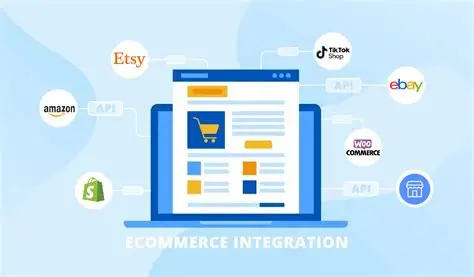
For years, retailers treated online and physical stores as separate worlds.
Different teams.
Different budgets.
Different goals.
Sometimes, different rivalries.
The website pursued traffic. The store pursued footfall. E-commerce teams celebrated online conversions while store managers focused on in-person sales. Each channel optimized its own performance, often with little regard for the customer journey occurring between them.
Consumers, meanwhile, ignored these organizational boundaries entirely.
A shopper might discover a product on Instagram, research it on a retailer’s website, inspect it in a store, purchase it through a mobile app, and return it at a physical location.
To the retailer, these activities belonged to multiple departments.
To the customer, they belonged to a single shopping experience.
That disconnect explains why integration has become one of retail’s most important strategic priorities.
The question is no longer whether retailers should integrate online and physical stores.
The question is how.
And surprisingly, the answer has less to do with technology than many executives assume.
Technology matters.
Inventory visibility matters.
Data matters.
Yet true integration begins with a mindset shift.
Retailers must stop managing channels and start managing customers.
Everything else follows.
The Biggest Mistake Retailers Make
When retailers discuss integration, conversations often begin with software.
Point-of-sale systems.
Inventory platforms.
Customer databases.
Mobile applications.
These tools are important.
They are not the starting point.
The starting point is recognizing that customers do not think in channels.
Retailers do.
Consumers simply want to achieve objectives.
They want products.
Convenience.
Confidence.
Flexibility.
A customer does not wake up wondering whether a purchase should be attributed to e-commerce or store operations.
The customer wants the experience to work.
Integration succeeds when retailers organize around that reality.
What Retail Integration Actually Means
At its core, integration involves creating a unified experience across customer touchpoints.
A shopper should encounter consistency regardless of where interaction occurs.
This includes consistency in:
- Product information
- Pricing
- Promotions
- Inventory visibility
- Customer service
- Loyalty benefits
- Brand experience
Notice something interesting.
Most of these elements have nothing to do with technology directly.
Technology enables consistency.
Consistency creates integration.
The distinction matters.
Inventory Is Where Integration Begins
If there is one operational capability that determines whether omnichannel retail succeeds, it is inventory visibility.
Consumers increasingly expect accurate answers to simple questions:
- Is the product available?
- Where is it available?
- How quickly can I receive it?
These questions sound straightforward.
Operationally, they are challenging.
Online and physical channels frequently operate from separate inventory pools.
This creates friction.
Customers see products online that are unavailable in stores.
Stores carry products invisible to online shoppers.
Inventory becomes fragmented.
Integration requires a unified inventory view.
Retailers must know what inventory exists, where it exists, and how it can be fulfilled.
Without this foundation, many omnichannel services become unreliable.
The Evolution of Retail Integration
| Integration Capability | Separate Channels | Fully Integrated Retail |
|---|---|---|
| Inventory Visibility | Channel-specific | Shared inventory view |
| Customer Data | Isolated databases | Unified customer profile |
| Loyalty Programs | Different rewards systems | Consistent rewards everywhere |
| Pricing | Channel-dependent | Coordinated pricing strategy |
| Returns | Restricted by channel | Flexible cross-channel returns |
| Product Information | Inconsistent content | Unified product data |
| Fulfillment Options | Limited flexibility | Multiple fulfillment choices |
| Customer Experience | Fragmented journey | Seamless interaction |
The progression reveals an important truth.
Integration is not a single project.
It is a series of connected capabilities.
Each builds upon the previous one.
Unified Inventory Creates Customer Confidence
Inventory visibility influences nearly every omnichannel interaction.
Consider buy online, pick up in store.
The service appears simple.
The customer places an order.
The store prepares it.
The customer retrieves it.
Yet this experience depends entirely on inventory accuracy.
If the system claims a product exists but the shelf is empty, trust erodes immediately.
This is why many retailers prioritize inventory integration before pursuing more advanced omnichannel initiatives.
Visibility creates confidence.
Confidence drives adoption.
Customer Data Should Travel Across Channels
Inventory is one side of integration.
Customer information is the other.
Consumers increasingly expect retailers to recognize them regardless of channel.
Imagine a shopper who:
- Purchases online
- Visits a store
- Contacts customer service
- Redeems loyalty rewards
The retailer should ideally maintain a unified view of that customer.
Without integration, information remains fragmented.
Employees lack context.
Personalization suffers.
Service quality declines.
Unified customer profiles create continuity.
The experience feels coherent.
The retailer appears more intelligent.
The customer notices.
Why Pricing Consistency Matters
One of the fastest ways to undermine omnichannel trust involves inconsistent pricing.
A customer sees one price online.
Another price in-store.
A third price through a mobile application.
Confusion follows.
Trust weakens.
Purchase friction increases.
This does not mean pricing must always remain identical.
Strategic differences occasionally make sense.
The key is transparency.
Customers should understand why differences exist.
Integration depends heavily on reducing surprises.
Pricing consistency contributes significantly to that objective.
A Lesson I Learned Watching a Retailer Integrate Channels
Several years ago, I observed a retailer undertaking an ambitious omnichannel transformation.
Leadership invested heavily in technology.
Systems were upgraded.
Inventory platforms were modernized.
Customer databases were consolidated.
The technical work was impressive.
Yet customer satisfaction barely improved.
Why?
Because operational behavior remained unchanged.
Store employees viewed online orders as interruptions.
E-commerce teams prioritized digital metrics exclusively.
Departments continued operating independently despite shared systems.
Eventually, management shifted its focus.
Performance incentives were redesigned.
Customer-centric metrics replaced channel-specific metrics.
Collaboration increased.
Results improved rapidly.
The lesson was revealing.
Technology enables integration.
People create it.
Retailers frequently underestimate this distinction.
Buy Online, Pick Up In Store Changes Everything
Buy online, pick up in store—often abbreviated as BOPIS—has become one of the most influential omnichannel capabilities.
Its popularity reflects the blending of online and offline strengths.
Consumers gain:
- Digital convenience
- Faster fulfillment
- Reduced shipping costs
- Greater flexibility
Retailers gain:
- Increased store traffic
- Additional purchase opportunities
- Lower fulfillment expenses
The service succeeds because it aligns retailer economics with customer preferences.
Few omnichannel innovations have reshaped shopping behavior as dramatically.
Returns Reveal Integration Quality
Returns provide a useful test of retail integration.
Customers increasingly expect flexibility.
A product purchased online should be returnable in-store.
A store purchase should appear within customer purchase histories.
Processes should feel connected.
Retailers often discover integration weaknesses through returns management.
Systems fail to communicate.
Records become fragmented.
Customer frustration emerges.
When returns function seamlessly, customers rarely notice.
When they do not, customers notice immediately.
The quality of integration becomes highly visible.
Product Information Must Remain Consistent
Many retailers focus heavily on inventory integration while overlooking product information.
Yet customers frequently move between channels during product evaluation.
Descriptions.
Specifications.
Images.
Pricing.
Availability.
These elements should remain consistent.
Conflicting information creates uncertainty.
And uncertainty reduces purchase confidence.
The strongest omnichannel retailers maintain centralized product information systems that distribute consistent content across touchpoints.
Consistency reduces friction.
Friction reduces sales.
The connection is direct.
Store Associates Become Omnichannel Ambassadors
Historically, store associates primarily supported in-store transactions.
Integration expands their role significantly.
Modern associates increasingly help customers:
- Locate online inventory
- Place digital orders
- Arrange home delivery
- Access loyalty accounts
- Navigate fulfillment options
This evolution transforms stores into service hubs rather than merely transaction locations.
The shift is subtle.
Its impact is substantial.
Retailers that empower associates to support omnichannel journeys often create stronger customer experiences.
Fulfillment Flexibility Is a Competitive Advantage
Consumers increasingly value choice.
Not just product choice.
Fulfillment choice.
They want options.
Home delivery.
Store pickup.
Curbside pickup.
Ship-from-store.
Same-day delivery.
The ability to offer multiple fulfillment paths depends on integration.
Inventory systems, store operations, logistics capabilities, and customer interfaces must work together.
Flexibility becomes difficult without coordination.
This is why fulfillment strategy and integration strategy are increasingly inseparable.
Measuring Integration Success
Many retailers evaluate online and physical channels independently.
Integration requires broader metrics.
Useful measures include:
Customer Lifetime Value
How much value does a customer generate across all channels?
Cross-Channel Engagement
How frequently do customers interact through multiple touchpoints?
Fulfillment Adoption
How often do customers use integrated services?
Inventory Accuracy
Can inventory data support omnichannel experiences reliably?
Customer Satisfaction
Do customers perceive interactions as seamless?
The focus shifts from channel performance to customer outcomes.
This shift is foundational.
Why Retail Integration Is Ultimately About Trust
Retail executives often discuss integration through operational language.
Systems.
Processes.
Platforms.
Data.
These elements matter.
Yet customers experience integration differently.
They experience reliability.
A product shown online exists in-store.
A loyalty reward works everywhere.
A return proceeds smoothly.
An associate understands purchase history.
Promises become predictable.
That predictability creates trust.
And trust remains one of retail’s most valuable assets.
Conclusion: Stop Integrating Channels and Start Integrating Customers
Retail integration is frequently described as a technology challenge.
The description is incomplete.
Technology provides infrastructure.
Customers provide purpose.
The retailers that succeed are not necessarily those with the most sophisticated systems. They are the ones that understand why integration matters in the first place.
Consumers do not distinguish between channels as rigidly as retailers once did.
They move fluidly.
Research online.
Visit stores.
Purchase through apps.
Return products wherever convenient.
The customer journey ignores organizational boundaries.
Retailers must learn to do the same.
Perhaps the most provocative insight is this: the future of retail does not belong to online stores or physical stores.
It belongs to retailers that make the distinction increasingly irrelevant.
When inventory is visible everywhere, customer information travels seamlessly, fulfillment options remain flexible, and experiences feel consistent, customers stop thinking about channels altogether.
And that may be the ultimate measure of successful integration.
Not that customers notice it.
But that they no longer have to.
- Arts
- Business
- Computers
- Spiele
- Health
- Startseite
- Kids and Teens
- Geld
- News
- Personal Development
- Recreation
- Regional
- Reference
- Science
- Shopping
- Society
- Sports
- Бизнес
- Деньги
- Дом
- Досуг
- Здоровье
- Игры
- Искусство
- Источники информации
- Компьютеры
- Личное развитие
- Наука
- Новости и СМИ
- Общество
- Покупки
- Спорт
- Страны и регионы
- World

 English
 Russian
 French
 Spanish
 Portuguese
 Turkish
 Dutch
Dutch
 Italiano
 Arabic
 Romaian
 Portuguese (Brazil)
 Greek
Greek
