
What is the Consumer Price Index (CPI)?
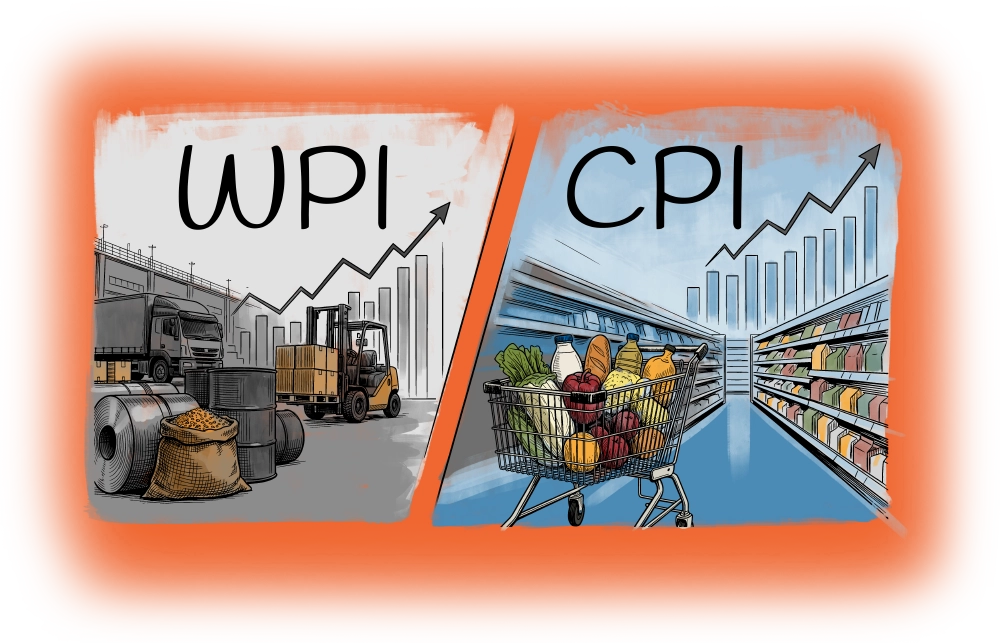
What Is the Consumer Price Index (CPI)?
The Consumer Price Index (CPI) is one of the most important economic indicators used to measure changes in the prices of goods and services that households commonly purchase. It is widely used by governments, central banks, businesses, and individuals to understand inflation, monitor the cost of living, and make economic decisions.
In simple terms, the CPI shows how much the prices of a typical basket of consumer goods and services have changed over time. When the CPI rises, it generally means that consumers are paying more for everyday items, indicating inflation. When the CPI falls, it may indicate deflation, meaning prices are decreasing.
Definition of the Consumer Price Index
The Consumer Price Index is a statistical measure that tracks the average change in prices paid by consumers for a selected group of goods and services over a specific period. This group of goods and services is often called a consumer basket.
The basket represents the spending habits of an average household and may include categories such as:
-
Food and beverages
-
Housing costs
-
Transportation
-
Clothing
-
Medical care
-
Education
-
Communication
-
Recreation
-
Other goods and services
The CPI compares the cost of this basket at different points in time. For example, if the same basket of goods costs $100 today and $110 a year later, the CPI indicates that prices have increased by approximately 10%.
How Is the CPI Calculated?
Calculating the CPI involves several steps:
1. Selecting a Consumer Basket
Statistical agencies first identify the goods and services that represent typical household spending. They collect information through surveys to understand what consumers buy and how much they spend in different categories.
Because consumer habits change over time, the basket is periodically updated to reflect current spending patterns.
2. Collecting Price Data
Prices are collected from thousands of stores, service providers, and other sources. Data may include prices for items such as groceries, rent, fuel, clothing, and healthcare services.
The goal is to track how the prices of the same or similar items change over time.
3. Assigning Weights
Not all goods and services affect household budgets equally. For example, housing usually represents a larger share of consumer spending than entertainment.
Therefore, each category in the CPI basket is given a weight based on its importance in household spending. A price increase in a heavily weighted category has a greater impact on the overall CPI.
4. Comparing Prices Over Time
The CPI is calculated by comparing the current cost of the basket with its cost during a reference period, known as the base year.
The basic formula is:
CPI = (Cost of consumer basket in current period ÷ Cost of consumer basket in base period) × 100
If the CPI is 120, it means prices are 20% higher than they were during the base year.
CPI and Inflation
The CPI is closely connected to inflation because it is one of the main tools used to measure changes in the general price level.
Inflation refers to the rate at which prices increase over time. The inflation rate is often calculated using changes in the CPI.
For example:
-
If the CPI increases from 200 to 210 in one year, prices have risen by about 5%.
-
This means the inflation rate is approximately 5% for that period.
However, CPI and inflation are not exactly the same thing. CPI is a measurement tool, while inflation is the economic condition reflected by rising prices.
Why Is the CPI Important?
The Consumer Price Index plays a major role in economic decision-making. Its importance can be seen in several areas.
1. Measuring Inflation
The primary purpose of the CPI is to measure inflation. Governments and economists use CPI data to understand whether prices are rising, falling, or remaining stable.
Central banks often monitor CPI when deciding whether to raise or lower interest rates. For example, if inflation is too high, a central bank may increase interest rates to slow spending and reduce price growth.
2. Understanding the Cost of Living
The CPI helps measure changes in the cost of living. If the CPI rises significantly, households may need more income to maintain the same standard of living.
For example, if food, rent, and transportation costs increase, consumers may have to spend more money on basic needs.
3. Adjusting Wages and Benefits
Many governments and organizations use CPI data to adjust payments, including:
-
Pension benefits
-
Social security payments
-
Government assistance programs
-
Labor contracts
These adjustments help protect purchasing power when prices rise.
4. Supporting Business Decisions
Businesses use CPI information to make decisions about pricing, wages, and investment. Companies may adjust their prices based on changes in consumer costs and market conditions.
5. Guiding Economic Policy
Governments use CPI trends to evaluate economic conditions and design policies. Persistent inflation may require measures to control rising prices, while very low inflation may encourage policies that support economic growth.
Types of CPI Measures
Different countries may calculate several versions of CPI depending on their economic goals.
Headline CPI
Headline CPI measures price changes across all categories of the consumer basket, including food and energy. Because food and energy prices can change quickly, headline CPI may fluctuate significantly.
Core CPI
Core CPI excludes food and energy prices because they are often considered more volatile. Economists use core CPI to identify longer-term inflation trends.
For example, a temporary increase in fuel prices may raise headline CPI, but core CPI may provide a clearer picture of underlying price pressures.
Urban Consumer CPI
Some countries calculate CPI specifically for urban populations. This measure reflects the spending patterns of people living in cities.
National CPI
A national CPI covers the entire population and provides a broader measure of price changes across a country.
Limitations of the CPI
Although CPI is a valuable economic indicator, it has some limitations.
1. Changing Consumer Behavior
Consumers often change their buying habits when prices change. If the price of one product rises, they may switch to a cheaper alternative. CPI calculations may not fully capture these changes immediately.
2. Quality Changes
Products often improve over time. For example, a new smartphone may cost more than an older model but may also have better features. Measuring whether the price increase reflects inflation or improved quality can be difficult.
3. Differences Between Households
The CPI represents average consumer spending, but individual households have different spending patterns. A family that spends more on food or housing may experience inflation differently from the average CPI measure.
4. Housing Measurement Issues
Housing costs can be challenging to measure because homes are both consumer goods and investments. Different countries use different methods for including housing costs in CPI calculations.
CPI vs. Other Price Measures
The CPI is not the only way to measure price changes. Other indicators include:
Producer Price Index (PPI)
The Producer Price Index measures changes in prices received by producers for goods and services. It focuses on costs at the production level rather than consumer purchases.
GDP Deflator
The GDP deflator measures price changes for all goods and services produced within an economy. Unlike CPI, it includes investment goods, government services, and exports.
Personal Consumption Expenditures (PCE) Price Index
The PCE price index measures consumer spending patterns and is another inflation indicator used by some central banks.
Each measure has a different purpose, but CPI remains one of the most widely recognized indicators of consumer price changes.
Example of CPI in Everyday Life
Suppose a household spends money on groceries, rent, fuel, and healthcare. Over one year:
-
Grocery prices rise by 8%
-
Rent increases by 6%
-
Fuel prices rise by 10%
-
Healthcare costs increase by 4%
Because these categories have different weights in the CPI basket, the overall CPI increase may be different from any individual price change.
A rising CPI means that the household needs more money to purchase the same goods and services than before.
Conclusion
The Consumer Price Index (CPI) is a key economic measure that tracks changes in the prices consumers pay for goods and services. It helps governments, businesses, and individuals understand inflation, evaluate changes in living costs, and make informed financial decisions.
Although CPI has limitations, it remains one of the most important tools for monitoring economic health. By showing how prices change over time, the CPI provides valuable insight into purchasing power, inflation trends, and the overall condition of an economy.
- Arts
- Business
- Computers
- Juegos
- Health
- Home
- Kids and Teens
- Money
- News
- Personal Development
- Recreation
- Regional
- Reference
- Science
- Shopping
- Society
- Sports
- Бизнес
- Деньги
- Дом
- Досуг
- Здоровье
- Игры
- Искусство
- Источники информации
- Компьютеры
- Личное развитие
- Наука
- Новости и СМИ
- Общество
- Покупки
- Спорт
- Страны и регионы
- World

 English
 Russian
 French
 Portuguese
 Deutsch
 Turkish
 Dutch
Dutch
 Italiano
 Arabic
 Romaian
 Portuguese (Brazil)
 Greek
Greek
