
How to improve memory after stress?
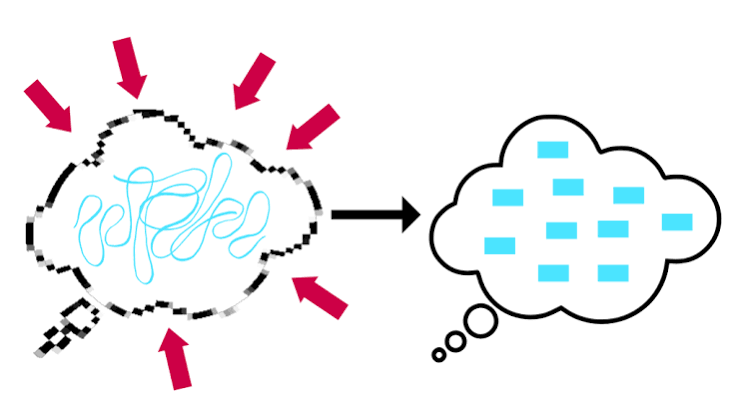
You walk into a room, stare at the blank wall, and realize your mind has entirely unspooled. You can't remember why you opened the browser tab, what your colleague told you five minutes ago, or where you set your phone down.
And right on cue, the internal alarm bells start ringing.
What is happening to my brain? Am I losing my grip?
Let’s dismantle that panic right out of the gate. Your memory isn’t permanently fried, and you aren't suffering from some irreversible cognitive collapse. What you are experiencing is the very predictable, biological fallout of chronic stress poisoning your neural architecture. When pressure spikes, your nervous system prioritizes immediate survival over long-term data storage. The prefrontal cortex—the command center responsible for encoding, organizing, and retrieving information—gets sidelined by an amygdala in full-blown hijack mode.
If you want to improve your memory after stress, you cannot rely on productivity apps, sticky notes, or sheer force of will. You have to systematically clear the emotional static, repair your mental bandwidth, and rebuild your capacity for focus from the ground up.
The Neurobiology of a Stress-Induced Memory Leak
Think of how your mind processes information when you are operating under high pressure. Under normal conditions, information enters your working memory, gets filtered, and is cleanly cataloged.
Now, flood that system with cortisol and adrenaline.
The biological machinery changes instantly. The hippocampus—the brain's primary gateway for converting short-term experiences into permanent long-term memories—actually shrinks under the corrosive weight of chronic stress hormones. Synaptic plasticity drops. The neural pathways responsible for association and retrieval become choked with emotional noise.
When you try to remember something simple right after a stressful period, you are trying to write data onto a hard drive that is actively melting down from overheating. The issue was never your memory capacity. The issue is that your internal processing environment has been turned into a war zone.
I learned this the hard way several years ago. Following a grueling, high-stakes project that pushed my professional and personal limits, I hit a wall where I couldn't recall basic terminology mid-conversation. I panicked, assuming my cognitive edge was gone for good. I tried to double down, forcing myself to read dense material for hours, which only deepened the exhaustion and made the forgetfulness worse.
It wasn't until I stopped treating the symptom (the forgetfulness) and started addressing the root cause (the chronic nervous system arousal) that the fog began to clear. I had to systematically lower my baseline stress threshold before my brain could even begin to rebuild its storage pathways. Once the emotional static dropped, the memory returned on its own. The lesson was stark: you cannot out-think a nervous system that is stuck in fight-or-flight.
Mapping the Post-Stress Memory Breakdown
To fix memory loss after stress, you have to map the exact failure points in your cognitive workflow. Stress doesn't break memory randomly; it attacks specific functional phases.
| Failure Phase | Physiological Mechanism | Behavioral Manifestation | Corrective Strategy |
| Encoding Blockade | Cortisol flooding; prefrontal cortex downregulation | Forgetting instructions given to you moments ago. | Conscious grounding, forced pacing, single-tasking. |
| Consolidation Failure | Suppressed hippocampal neurogenesis during sleep | Remembering things briefly, but losing them by the next day. | Strict sleep hygiene, nervous system down-regulation before bed. |
| Retrieval Panic | Amygdala hijacking; emotional trigger loops | Going entirely blank during a meeting or test under pressure. | Interrupter breathing, naming the state, neutralizing the trigger. |
If you try to fix an encoding failure with a better to-do list, you are treating a biological wound with a piece of tape. You have to stabilize the underlying physiology first.
Step-by-Step Correction: Rebuilding Cognitive Bandwidth
Recovering your memory after a prolonged stress response requires a deliberate, structured protocol. Here is how you systematically clear the debris and restore your mental processing power.
1. Identify Your Stress-Induced Triggers
Keep a mental or physical log of your memory slips for a week. Every time you forget a word, miss a deadline, or lose your train of thought, note your exact internal state. Were your shoulders raised? Was your breathing shallow? Were you feeling a subtle hum of anxiety?
-
The Goal: Connect the memory lapse directly to your physical arousal state. Stress rarely feels loud; usually, it manifests as low-grade tension that you've normalized. Spotting the physical trigger allows you to catch the mental drop before your working memory wipes clean.
2. Implement the "Cognitive Reset" Pause
When stress compromises your working memory, trying to force your way through it only deepens the panic loop. Your brain needs an immediate circuit breaker to lower cortisol levels and reopen prefrontal access.
-
The Practice: The moment you notice your mind going blank or scattering under pressure, physically step back. Drop your shoulders away from your ears. Take three slow, deliberate exhales that are longer than your inhales. Do not touch your phone or look at a screen for sixty seconds. Give your nervous system a momentary window to register safety so the retrieval pathways can unfreeze.
3. Externalize Working Memory to Lower Load
After a period of intense stress, your brain's RAM is permanently fragmented. Trying to hold a running list of tasks in your head is like running fifty background applications on an overheating laptop.
-
The Practice: Adopt a zero-tolerance policy for mental storage. The instant a task, a commitment, or a piece of information enters your head, dump it into an external system immediately—a physical notebook or a dedicated capture tool. Do not negotiate with your memory. By removing the burden of holding data, you conserve the scarce energy your brain needs to heal and consolidate.
4. Rebuild the Sleep-Consolidation Loop
Chronic stress destroys sleep architecture, specifically reducing the deep and REM sleep cycles where the hippocampus moves short-term traces into permanent long-term storage. If you aren't sleeping deeply, your memory will remain porous no matter what else you do.
-
The Practice: Create a hard boundary at least one hour before bed. Eliminate high-arousal inputs (emails, news, complex problem-solving). Signal to your nervous system that the day is done through physical wind-down routines. Protecting your sleep is protecting your storage architecture.
The Provocative Reality of Post-Stress Recovery
Let’s dismantle the illusion that you can simply snap back to full cognitive performance through sheer grit.
When people experience memory loss after stress, their default reaction is to bully themselves into better focus. They push harder, work longer, and beat themselves up every time they forget a detail. That approach is entirely counterproductive. It is the psychological equivalent of whipping a starving horse because it isn't running fast enough.
Your memory is a lagging indicator of your overall cognitive and emotional health. If you are stressed, distracted, and chronically overextended, your brain is doing exactly what it was evolutionarily designed to do: it is dropping non-essential background processes to keep you alive.
Stop treating your forgetfulness as a moral failing or a sign of permanent decay. Treat it as a direct message from your biology. If you want your memory back, you have to stop creating the internal chaos that destroys it in the first place. Clean up your boundaries, lower your baseline stress, protect your rest, and give your mind the structural safety it needs to remember what matters.
- Arts
- Business
- Computers
- الألعاب
- Health
- الرئيسية
- Kids and Teens
- مال
- News
- Personal Development
- Recreation
- Regional
- Reference
- Science
- Shopping
- Society
- Sports
- Бизнес
- Деньги
- Дом
- Досуг
- Здоровье
- Игры
- Искусство
- Источники информации
- Компьютеры
- Личное развитие
- Наука
- Новости и СМИ
- Общество
- Покупки
- Спорт
- Страны и регионы
- World

 English
 Russian
 French
 Spanish
 Portuguese
 Deutsch
 Turkish
 Dutch
Dutch
 Italiano
 Romaian
 Portuguese (Brazil)
 Greek
Greek
