
How can I improve recall?
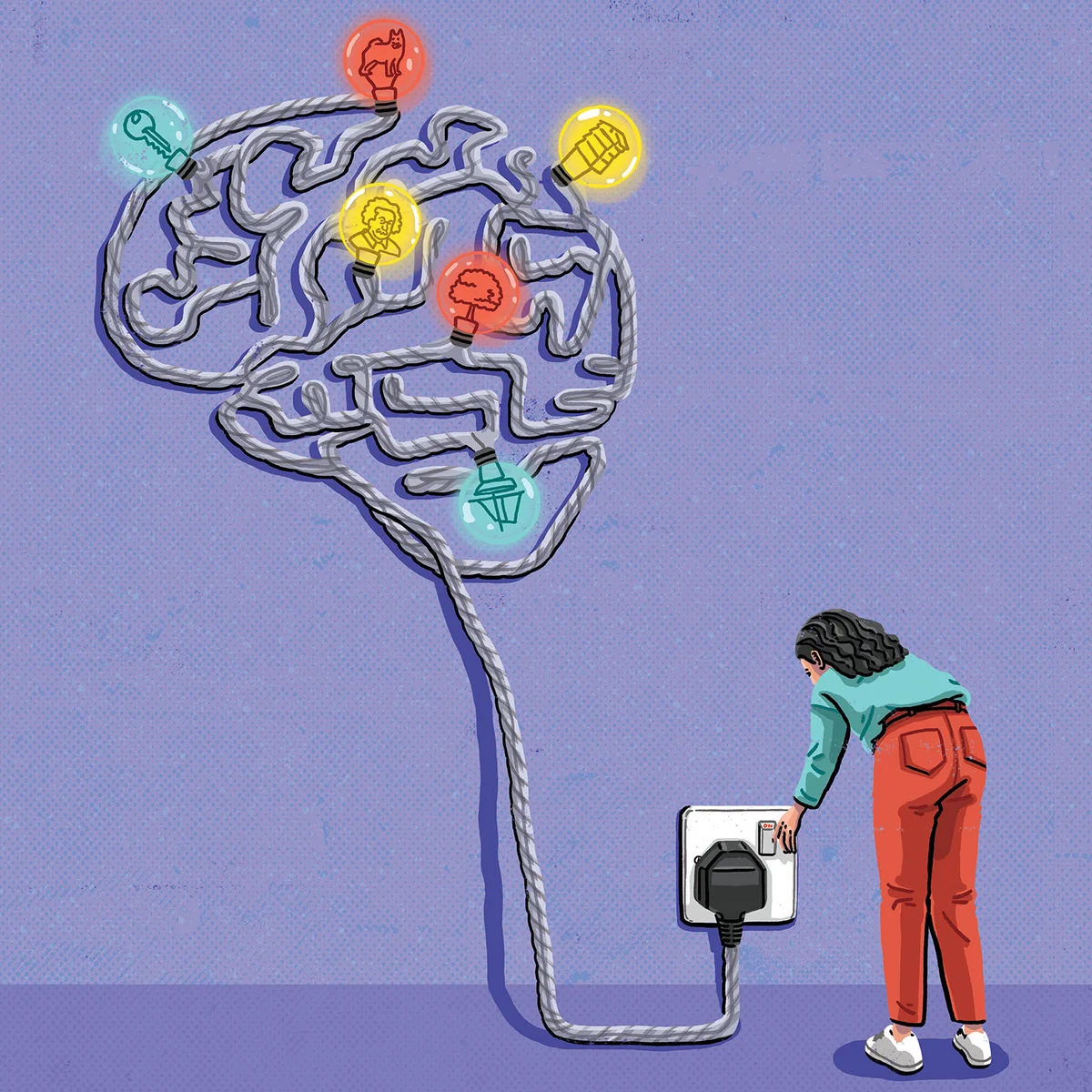
You walk into a high-stakes meeting, step up to a whiteboard, or sit down for a critical examination, fully confident that the information you studied is locked inside your head. You open your mouth to deliver the exact data point, technical term, or historical precedent you need.
And your mind hits an absolute wall of blank, empty static.
You stand there sweating, searching desperately through the fog, cursing your brain for failing you right when it matters most.
What is wrong with my memory? Why is the data there one minute and completely gone the next?
Let’s cut through the noise right out of the gate: your inability to recall information under pressure is not a sign that your neurological hardware is permanently damaged, and your frustrating memory blanks are not proof that you were born without the capacity for deep retrieval. For decades, culture has treated memory recall like a static genetic lottery—you are either born with the lightning-fast mental database of a prodigy, or you are destined to stumble through life forgetting names, blanking on facts, and watching your knowledge evaporate when stress spikes.
That view is dangerously backward.
Recall is not an innate mystical trait. It is a mechanical, highly structured capability that can be mapped, diagnosed, measured, and systematically trained just like any technical skill. If you want to stop watching your knowledge vanish the second the stakes get high, you have to stop treating your mind like a mysterious black box and start treating it like a technical system that requires rigorous engineering. How can you improve recall? Let's break down the foundational architecture required to stop reacting to cognitive blanks and start executing with precision.
The Anatomy of a Retrieval Failure
Think about how you evaluate a complex enterprise database system when it starts returning errors during a heavy query request. If a high-volume server fails to pull a record when prompted, you don't stare at the monitor and yell at the screen to dig harder. You look at the indexing structure, the query paths, the cache corruption, the storage schemas. You treat the retrieval failure as a direct piece of data pointing toward a mechanical breakdown in how the information was indexed in the first place.
Yet, when it comes to human memory, we completely abandon all logic.
We expect ourselves to absorb complex information while half-distracted, never structure the retrieval cues, and then panic when our brains fail to magically cough up the exact answer under a flood of stress hormones. And when our minds inevitably go blank during an exam or a high-pressure presentation, we beat ourselves up for having a "bad memory," completely ignoring the reality that we never engineered the retrieval pathways required to find the data in the dark.
Recall operates on exact neurobiological feedback loops. When you lack structural encoding and cue-mapping frameworks, your emotional brain (the amygdala) and your stress response hijack your executive function (the prefrontal cortex) the second pressure spikes. Cortisol floods your system, shutting down access to fine-grained memory files. You aren't losing your mind; you are simply ignoring the mechanical breakdowns causing your retrieval blocks.
The Lesson of the Panic-Prone Strategist
I learned this reality years ago while working with a senior corporate strategist who was utterly convinced that his brain was rapidly declining because he kept blanking during high-stakes board presentations. On paper, he was brilliant. He understood his market metrics inside and out, possessed world-class analytical intuition, and worked fourteen-hour days preparing his decks. Yet, every single time a board member threw an unexpected question at him, his recall completely cratered. He would stand at the front of the room, staring at his slides while his mind went totally white.
For years, he tried to fix this by memorizing more scripts, rehearsing his talking points until 3:00 AM, and berating himself for lacking composure. He treated his retrieval failures like personal character insults.
When we finally sat down and mapped his recall execution, we discovered something entirely different. He wasn't failing because his brain was incapable of storing data. He was failing because his retrieval architecture was entirely dependent on linear, unassisted rote memorization. He had memorized his presentations like a rigid script. The second a board member broke the script with an unexpected question, his brain lost its contextual anchor, panicked, triggered a cortisol spike, and locked him out of his own memory files. He wasn't managing his retrieval mechanics; he was relying on blind hope.
Once we built a structured protocol to replace rigid scripting with modular conceptual anchoring, associative cue-mapping, and pressure-simulated active recall drills, his entire profile changed. The board meetings didn't get any softer, but his ability to pull precise data out of storage under extreme stress became completely mechanical. That is what true recall engineering looks like in action.
The Taxonomy of Retrieval Mechanics
To understand how to improve recall, you have to look past vague advice to "try harder" or "relax" and examine concrete behavioral mechanics. Here is how core recall approaches compare across different operational frameworks.
| Recall Dimension | The Unskilled Approach (Linear Rote Memorization) | The Skilled Approach (Mechanically Engineered Retrieval) | Corrective Technical Protocol |
| Storage Structure | Storing facts in isolated, linear sequences that break if disrupted. | Interconnected semantic networks anchored by multiple diverse retrieval cues. | Concept mapping, associative scaffolding, multi-angle encoding. |
| Testing Protocol | Passive re-reading of notes, assuming familiarity equals accessible recall. | Forced active retrieval from scratch under simulated pressure conditions. | Blank-sheet brain dumps, flashcard matrices, high-stakes drills. |
| Stress Response | Panicking when recall stalls, flooding the prefrontal cortex with cortisol. | Recognizing retrieval blocks as temporary chemical lockouts and executing tactical pacing. | Friction pauses, breathing regulation, contextual retracing. |
| Cue Management | Relying entirely on memorizing the exact phrasing of a textbook or script. | Building flexible mental hooks that trigger retrieval from any directional angle. | Reverse engineering, first-principles questioning, analogical anchoring. |
Notice the structural divide? The unskilled approach relies entirely on hope, linear scripts, and calm, low-stress environments. The skilled approach relies on mechanics. When stress spikes or unexpected variables are introduced, the linear method collapses into complete amnesia.
Step-by-Step Protocol: Engineering Your Recall Architecture
You cannot read your way into better recall. You have to build it through deliberate, uncomfortable practice. Here is how you systematically upgrade your internal retrieval machinery.
1. Shift from Linear Scripts to Modular Associative Networks
The single greatest cause of recall failure under pressure is rigid, linear storage. If you memorize a speech, a technical process, or a presentation word-for-word, your brain treats it like a single long chain. If someone interrupts you halfway through or asks an unexpected question, the chain snaps, and you cannot find your place.
-
The Practice: Break your knowledge base into modular, independent conceptual blocks. Instead of memorizing static sequences, tie each core concept to three distinct associative cues—an analogy, a real-world application, and a foundational first principle.
-
The Goal: Build a multi-directional retrieval network. If one pathway is blocked by stress or an unexpected question, your brain can easily access the information through an alternative conceptual bridge.
2. Implement Pressure-Simulated Active Retrieval Drills
If you only practice recalling information while sitting comfortably at your desk in absolute silence, your brain forms a fragile retrieval pathway that depends entirely on a calm environment. The moment you enter a high-stakes meeting or an exam room, the change in environmental context and adrenaline levels causes that fragile pathway to fail.
-
The Practice: Introduce artificial pressure into your review sessions. Set a strict countdown timer, stand up on your feet while trying to explain a complex topic out loud from scratch, or have someone throw unpredictable curveball questions at you while you drill your active recall.
-
The Goal: Desensitize your nervous system to performance pressure. When you practice retrieving data under simulated friction, your brain stops treating high-stakes environments as an emergency.
3. Build Environmental and Conceptual Contextual Anchors
Have you ever walked into a room to grab something, forgotten what it was, and then remembered the exact second you walked back to where you originally thought of it? That is contextual retrieval in action. Your memory is deeply tethered to its environment.
-
The Practice: When studying or storing critical information, intentionally embed contextual anchors. Note the physical environment, the operational problem you were solving, or the adjacent concepts you were exploring. When you need to recall the data later, mentally reconstruct that initial operational context.
-
The Goal: Provide your nervous system with rich navigational coordinates so you can trace your way back to the data even when initial direct recall stalls.
4. Execute the Tactical Pause During Retrieval Blocks
When a fact or a word escapes you under pressure, your emotional brain often panics instantly. You feel a micro-surge of adrenaline, your heart rate quickens, and you start frantically clawing through your memory, which only tightens the neurological bottleneck and drives the memory further out of reach.
-
The Practice: Establish an immutable rule for retrieval blocks: the absolute moment you feel your mind go blank, you are strictly prohibited from panicking or forcing a rushed answer. Take one slow, deliberate breath, mentally step back from the blank space, and systematically trace the peripheral cues around the missing concept.
-
The Goal: Let the cortisol spike metabolize and allow your prefrontal cortex to regain control of the search directory. Calm, methodical navigation always outperforms frantic mental clawing.
The Provocative Reality of Retrieval Mastery
Let’s dismantle the ultimate comforting illusion: the belief that memory recall is an unchangeable genetic trait, or that some people are simply born with an effortless steel trap for a mind while others are doomed to blank out under pressure.
When people struggle with retrieval, they love to blame aging, poor natural intelligence, or high-pressure environments. They cast themselves as helpless victims of circumstance. That is a cop-out. It is a psychological defense mechanism designed to protect you from the uncomfortable labor of taking absolute responsibility for your own cognitive habits.
Mastering recall requires maintenance. It requires sweat, structural discipline, and the brutal honesty of looking at your own sloppy encoding habits without making excuses. If your car engine starts sputtering, you don't stare at the dashboard and blame the asphalt. You pop the hood, look for the oil leak, and fix the mechanical failure.
It is time to pop the hood on your own memory machinery. Stop waiting for information to magically appear when you snap your fingers, stop hoping that rigid scripts will survive high-pressure environments, and stop treating blank-outs as an unalterable personal flaw. Build the skills, master the retrieval mechanics, and take absolute ownership of your mental database. Watch how quickly your operational trajectory transforms when you stop reacting to cognitive panic and start engineering your recall.
- Arts
- Business
- Computers
- Jeux
- Health
- Domicile
- Kids and Teens
- Argent
- News
- Personal Development
- Recreation
- Regional
- Reference
- Science
- Shopping
- Society
- Sports
- Бизнес
- Деньги
- Дом
- Досуг
- Здоровье
- Игры
- Искусство
- Источники информации
- Компьютеры
- Личное развитие
- Наука
- Новости и СМИ
- Общество
- Покупки
- Спорт
- Страны и регионы
- World

 English
 Russian
 Spanish
 Portuguese
 Deutsch
 Turkish
 Dutch
Dutch
 Italiano
 Arabic
 Romaian
 Portuguese (Brazil)
 Greek
Greek
