
What Are the Latest Retail Trends? The New Rules of Consumer Engagement
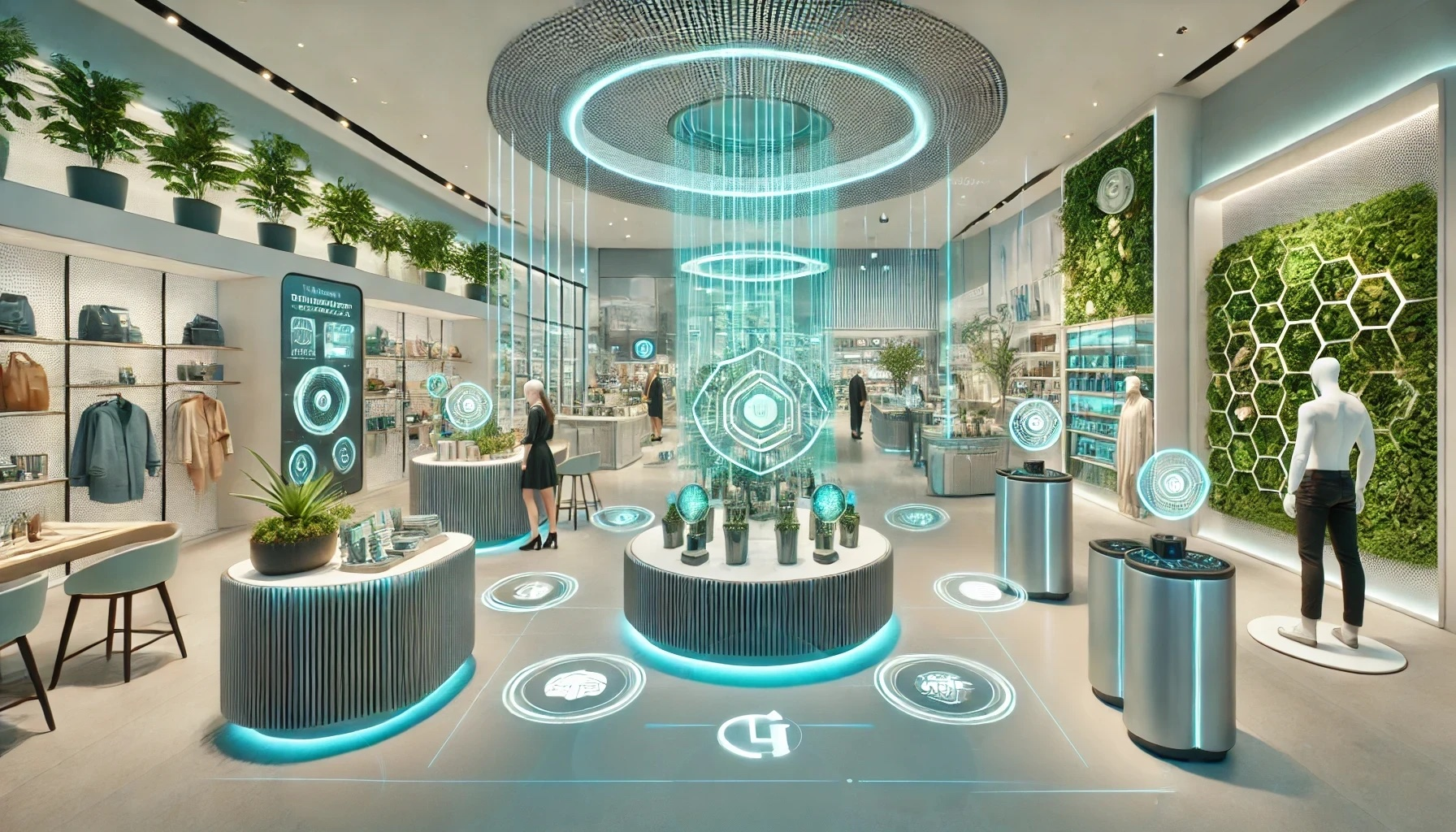
Retail has always been a study in contradictions.
Consumers say they want simplicity, then gravitate toward endless choice. They insist price matters most, yet routinely pay premiums for products wrapped in meaning, community, and identity. They claim loyalty, then switch brands after a single disappointing interaction.
That tension is precisely what makes retail so fascinating.
For years, analysts tried to divide the industry into neat categories: online versus offline, luxury versus value, mass versus niche. But the most important retail trends emerging today suggest those distinctions are becoming less useful. The winners are no longer defined by channel, size, or even assortment. They are defined by how effectively they solve consumer problems while creating emotional resonance.
What's striking about the current retail landscape is that many of the fastest-growing companies are succeeding not because they offer something radically new, but because they understand something timeless: consumers don't buy products. They buy solutions, status, convenience, belonging, entertainment, and confidence.
The latest retail trends reveal a marketplace increasingly organized around those human motivations.
The Rise of Seamless Omnichannel Commerce
For years, retailers treated physical stores and e-commerce operations as separate businesses. Consumers never saw them that way.
A shopper researching a product on a smartphone while standing in a store aisle isn't thinking about channels. They're trying to make a purchase decision.
That distinction matters.
Today's leading retailers are investing heavily in creating seamless transitions between digital and physical touchpoints. Buy-online-pickup-in-store programs continue to grow. Mobile apps increasingly function as shopping companions inside stores. Inventory visibility has become a competitive necessity rather than a differentiator.
What consumers reward is not technological sophistication for its own sake. They reward reduced friction.
Consider the difference between a retailer that forces customers to navigate disconnected systems and one that creates a continuous experience. The second retailer doesn't merely save time; it reduces cognitive effort. And consumers consistently gravitate toward experiences that feel easier.
The trend, therefore, is not digital transformation. The trend is friction elimination.
Why Stores Still Matter
Predictions about the death of physical retail have proven remarkably inaccurate.
Stores continue to perform functions websites cannot easily replicate:
- Product discovery
- Sensory evaluation
- Immediate gratification
- Social interaction
- Brand immersion
Rather than disappearing, stores are evolving.
Many locations now function simultaneously as showrooms, fulfillment centers, service hubs, and marketing vehicles. Their value extends beyond direct sales. A well-designed store often improves online conversion rates, strengthens customer loyalty, and increases brand visibility.
The store is no longer just a place where transactions happen. Increasingly, it is where relationships begin.
Retail Is Becoming More Experiential
One of the most significant shifts in recent years involves the transformation of shopping from a transactional activity into an experiential one.
Consumers can acquire products almost anywhere.
The harder challenge is creating memorable moments.
Retailers are responding by introducing interactive displays, in-store events, personalized consultations, workshops, demonstrations, and community-building initiatives. These experiences generate something difficult for competitors to copy: emotional connection.
Interestingly, the most successful experiences are not necessarily the most elaborate.
Sometimes a knowledgeable associate who offers genuinely helpful advice creates more value than a multimillion-dollar technology installation.
Experience is not about spectacle.
It's about relevance.
When customers feel understood, they stay longer, spend more, and return more frequently.
Personalization Is Moving Beyond Recommendations
Retailers have spent years refining recommendation algorithms.
Customers have noticed.
And they now expect more.
The next phase of personalization extends beyond suggesting products. It includes customized promotions, individualized communication, adaptive pricing strategies, curated assortments, and highly tailored loyalty programs.
The objective is simple: make every customer feel that the retailer understands their unique preferences.
Yet there is a delicate balance.
Consumers appreciate personalization when it creates convenience. They become uncomfortable when it feels intrusive. Successful retailers understand this distinction and design experiences that feel helpful rather than invasive.
This trend reflects a broader truth about consumer behavior: relevance creates value.
The retailer who helps customers navigate complexity often wins over the retailer who merely provides more options.
Value Has Been Redefined
Economic uncertainty has reshaped consumer expectations.
But value no longer means low price alone.
Today's consumers evaluate value through multiple lenses:
- Quality
- Convenience
- Durability
- Brand trust
- Sustainability
- Time savings
As a result, discount retailers, premium retailers, and luxury brands can all succeed simultaneously.
The common denominator is clarity.
Consumers want to understand exactly what they're receiving in exchange for their money.
Brands that communicate a compelling value proposition continue to thrive, regardless of price point.
This explains why premium grocery concepts can expand during periods of inflation while discount chains also gain market share. Different consumers define value differently.
The smartest retailers focus less on price competition and more on value communication.
The Retail Trends Defining 2026
The industry's current direction becomes clearer when we compare major trends side by side.
| Trend | Primary Consumer Benefit | Retailer Benefit | Level of Adoption |
|---|---|---|---|
| Omnichannel Integration | Convenience and flexibility | Higher customer retention | Very High |
| AI-Powered Personalization | Relevance and discovery | Increased conversion rates | High |
| Retail Media Networks | More targeted promotions | New revenue streams | High |
| Experiential Retail | Emotional engagement | Stronger brand loyalty | Growing Rapidly |
| Sustainability Initiatives | Ethical purchasing confidence | Enhanced brand perception | Moderate to High |
| Community-Based Commerce | Sense of belonging | Repeat purchases and advocacy | Growing |
| Social Commerce | Frictionless discovery | Expanded customer reach | High |
| Subscription Models | Predictability and convenience | Recurring revenue | Moderate |
| Same-Day Fulfillment | Immediate gratification | Competitive differentiation | High |
| Data-Driven Merchandising | Better product relevance | Inventory optimization | Very High |
The table reveals an important pattern.
Most leading trends are not primarily about products.
They are about relationships.
AI Is Reshaping Retail Decision-Making
Artificial intelligence has moved beyond experimentation.
Retailers now use AI to forecast demand, optimize pricing, manage inventory, personalize marketing, and improve customer service.
Yet perhaps the most interesting impact of AI is occurring behind the scenes.
Consumers may never know an algorithm determined product placement, adjusted inventory levels, or identified emerging trends. They simply encounter better experiences.
This invisibility is important.
The most successful technologies in retail often disappear into the background. Customers rarely celebrate operational efficiency. They notice when it is absent.
Retailers deploying AI effectively are not replacing human judgment. They are augmenting it.
The combination of machine intelligence and human empathy remains remarkably powerful.
A Lesson I Learned Watching Retailers Evolve
Several years ago, I visited a retailer that had invested heavily in sophisticated digital tools. Leadership proudly demonstrated advanced analytics dashboards, predictive models, and customer segmentation systems.
Everything looked impressive.
Then I spent time on the sales floor.
Associates struggled to answer customer questions. Inventory discrepancies frustrated shoppers. Checkout processes felt cumbersome.
The lesson stayed with me.
Technology alone doesn't create superior retail experiences.
Execution does.
Customers evaluate retailers through lived experiences, not strategic presentations. They remember whether a product was available, whether assistance was useful, and whether the process felt effortless.
That observation remains relevant today. The most effective retail innovations are those that improve customer outcomes rather than simply showcasing technical capabilities.
Sustainability Is Becoming More Practical
For years, sustainability discussions often focused on aspiration.
Now they are increasingly focused on accountability.
Consumers want evidence.
Retailers are responding with more transparent sourcing practices, recyclable packaging, resale programs, repair services, and supply-chain disclosures.
Importantly, sustainability is becoming integrated into broader value propositions rather than existing as a separate initiative.
Consumers increasingly ask practical questions:
Where was this product made?
How long will it last?
Can it be repaired?
Can it be reused?
Retailers capable of answering these questions credibly gain trust.
And trust, as every retailer eventually discovers, is one of the most valuable assets in commerce.
Community Is Emerging as a Competitive Advantage
One of the most intriguing retail trends involves the growing importance of community.
Historically, retailers focused on transactions.
Today's strongest brands often focus on participation.
Consumers join brand communities, attend events, engage on social platforms, contribute reviews, and interact with fellow customers. These activities strengthen emotional attachment while increasing switching costs.
The implications are significant.
A retailer competing solely on products can be replicated.
A retailer supported by an engaged community is far more difficult to duplicate.
Community transforms customers into advocates.
And advocates generate growth that advertising alone cannot reliably produce.
Retail Media Is Creating a New Business Model
Another major trend is the expansion of retail media networks.
Retailers increasingly monetize customer attention by offering advertising opportunities within their digital ecosystems.
At first glance, this appears to be an advertising story.
In reality, it is a data story.
Retailers possess valuable first-party customer insights that allow brands to target audiences with remarkable precision. As privacy regulations evolve and third-party tracking becomes less reliable, these assets become increasingly important.
The result is a new revenue stream that extends beyond product sales.
For many retailers, media operations are becoming strategic growth engines.
The Future Belongs to Retailers That Balance Efficiency and Emotion
Retail often swings between two extremes.
One emphasizes operational excellence.
The other emphasizes brand building.
The most successful companies understand they need both.
Efficiency without emotion creates commoditization.
Emotion without efficiency creates frustration.
Consumers expect retailers to deliver convenience, relevance, speed, and reliability. They also expect inspiration, trust, authenticity, and connection.
Meeting both sets of expectations is difficult.
That difficulty explains why retail leadership remains so challenging—and so rewarding.
Conclusion: The Real Trend Is Human-Centered Retail
If there is a single lesson emerging from today's retail landscape, it is this: technology matters, but human needs matter more.
The latest retail trends—from AI personalization and retail media networks to experiential stores and community commerce—may appear diverse on the surface. Yet they share a common objective. They help retailers better understand and serve customers.
That is the enduring paradox of retail.
The tools keep changing. Consumer psychology changes far more slowly.
Retailers that become obsessed with technology often lose sight of the customer. Retailers that ignore technology risk irrelevance. The challenge is finding the balance.
The next era of retail will not be won by companies with the most advanced algorithms or the largest store footprints. It will be won by organizations that combine data with empathy, efficiency with engagement, and convenience with meaning.
In other words, the future of retail looks surprisingly familiar.
It is still about people.
- Arts
- Business
- Computers
- Spiele
- Health
- Startseite
- Kids and Teens
- Geld
- News
- Personal Development
- Recreation
- Regional
- Reference
- Science
- Shopping
- Society
- Sports
- Бизнес
- Деньги
- Дом
- Досуг
- Здоровье
- Игры
- Искусство
- Источники информации
- Компьютеры
- Личное развитие
- Наука
- Новости и СМИ
- Общество
- Покупки
- Спорт
- Страны и регионы
- World

 English
 Russian
 French
 Spanish
 Portuguese
 Turkish
 Dutch
Dutch
 Italiano
 Arabic
 Romaian
 Portuguese (Brazil)
 Greek
Greek
