
How do I stay calm under pressure?
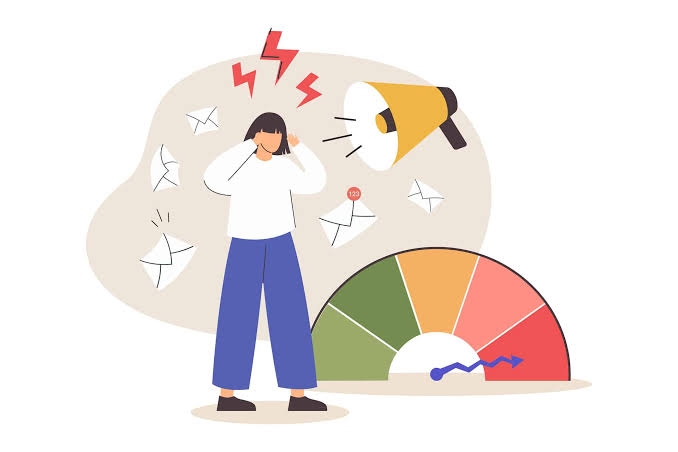
You sit at your desk or stand at the front of a boardroom as an unexpected crisis hits, and your nervous system instantly catches fire. Your heart rate surges, your breathing climbs into your chest, and a heavy, suffocating wave of panic threatens to drown your rational thinking.
You grip the edges of your podium, cursing your body's inability to hold its ground.
Why do I always panic when the stakes get high? Why can't I just stay calm?
Let’s cut through the noise right out of the gate: your inability to stay calm under pressure is not a sign that your neurological hardware is permanently defective, and your tendency to unravel when a crisis hits is not proof that you were born without the capacity for composure. For decades, culture has treated composure like a static genetic lottery—you are either born with the unyielding ice-cold nerves of a seasoned veteran, or you are destined to stumble through life choking the moment the spotlight shines.
That view is dangerously backward.
Composure is not an innate mystical trait. It is a mechanical, highly structured capability that can be mapped, diagnosed, measured, and systematically trained just like any technical skill. If you want to stop watching your performance evaporate the second life gets difficult, you have to stop treating your mind like a mysterious black box and start treating it like a technical system that requires rigorous engineering. How do you stay calm under pressure? Let's break down the foundational architecture required to stop reacting to emergency spikes and start executing with precision.
The Anatomy of an Emergency Overload
Think about how you evaluate a high-stakes emergency power grid when a sudden substation failure threatens to cascade across the entire network. If a massive electrical spike hits the transformers, you don't stare at the control room monitors and yell at the circuits to calm down. You look at the automated trip switches, the heavy-duty load-shedding relays, the voltage regulators, the thermal dampeners. You treat the surge as a direct piece of data pointing toward a mechanical breakdown in the distribution grid.
Yet, when it comes to human pressure management, we completely abandon all logic.
We expect ourselves to navigate high-stakes crises, intense deadlines, and sudden market chaos while relying entirely on whatever vague willpower we can scrape together in the moment. And when our nervous systems inevitably short-circuit under the load, we beat ourselves up for lacking mental toughness, completely ignoring the reality that we never engineered a structural circuit breaker to handle the voltage.
Composure operates on exact neurobiological feedback loops. When you lack structural self-regulation skills, your emotional brain (the amygdala) and your ancient survival pathways hijack your prefrontal cortex the second pressure spikes. Cortisol and adrenaline flood your bloodstream, shutting down your capacity for fine-grained calculation. You aren't weak; you are simply ignoring the mechanical breakdowns causing your biological short circuits.
The Lesson of the Overheated Incident Commander
I learned this reality years ago while working with a senior emergency response coordinator who was utterly convinced that his panic under pressure was an unchangeable part of his intense personality. On paper, he was brilliant. He possessed world-class technical skills, worked exhausting shifts, and understood his protocols inside and out. Yet, every single time a major multi-system failure occurred, his composure completely disintegrated. He would start barking erratic orders, missing critical data points, and freezing up when every second counted.
For years, he tried to fix this by telling himself to relax, taking deep breaths when it was already too late, and berating himself for losing his cool. He treated his panic attacks like moral failings.
When we finally sat down and mapped his high-pressure execution, we discovered something entirely different. He wasn't failing because his character was fundamentally broken. He was failing because his pressure management strategy relied entirely on passive suppression until he hit a hard breaking point. He would bottle up his tension, ignore the early warning signs of cognitive overload, and pretend everything was fine until the crisis breached his containment wall, triggering a full psychological meltdown. He had no mechanical early-warning system and no structured way to process pressure in real time.
Once we built a structured protocol to map his pressure trigger thresholds, intercept the physiological early-warning signs of adrenaline flooding, and execute a tactical friction pause before taking action, his entire profile changed. The crises didn't get any softer, but his ability to process those crises without cracking became completely mechanical. That is what true pressure engineering looks like in action.
The Taxonomy of Pressure Mechanics
To understand how to stay calm under pressure, you have to look past vague advice to "keep a cool head" or "breathe through it" and examine concrete behavioral mechanics. Here is how core composure approaches compare across different operational frameworks.
| Pressure Dimension | The Unskilled Approach (Adrenaline Flood & Panic) | The Skilled Approach (Mechanically Engineered Composure) | Corrective Technical Protocol |
| Surge Detection | Realizing you are panicking only after your performance has already cratered. | Identifying early physiological warning signs within seconds of onset. | Somatic check-ins, heart-rate monitoring, micro-surges mapping. |
| Crisis Analysis | Catastrophizing external variables, bad luck, or sudden market shocks. | Treating every pressure spike as high-value diagnostic data to debug mental models. | Root-cause audits, error logging, objective deconstruction. |
| Response Window | Reacting instantly on pure survival impulse the second a crisis hits. | Enforcing a mandatory friction pause between external stimulus and behavioral output. | Tactical breathing, physical step-back, countdown delays. |
| Recovery Cycle | Lingering in residual anxiety, rumination, and paralysis for hours after an event. | Systematic nervous system reset and rapid return to operational baseline. | Cognitive decoupling, physiological down-regulation, protocol reset. |
Notice the structural divide? The unskilled approach relies entirely on hope, emotional suppression, and brute willpower. The skilled approach relies on mechanics. When stress spikes or crisis intensity scales upward, the naive method collapses into complete functional chaos.
Step-by-Step Protocol: Engineering Your Composure
You cannot read your way into staying calm under pressure. You have to build it through deliberate, uncomfortable practice. Here is how you systematically upgrade your internal composure machinery.
1. Build an Early-Warning Physiological Audit
The single greatest cause of composure failure is late detection. By the time you realize you are panicking, your amygdala has already seized control of your nervous system. Trying to reason with yourself at that stage is like trying to pilot a sinking ship while the wheelhouse is underwater.
-
The Practice: Map your physical stress signature. Before your pressure response explodes into overt panic or freezing, your body always gives you mechanical early warnings: a tight chest, elevated heart rate, shallow breathing, clenched jaw, or a sudden tunnel vision effect. Train yourself to spot these micro-signals within thirty seconds of their onset.
-
The Goal: Intercept the adrenaline cascade at the physiological level before it compromises your executive function. Catching a surge at ten percent intensity is infinitely easier than managing it at one hundred percent.
2. Implement the Tactical Friction Pause Under Fire
When an unexpected crisis hits, your emotional brain demands immediate, frantic action. It whispers that if you do not react instantly, disaster will strike. That urgency is almost always a chemical illusion designed to drive erratic behavior.
-
The Practice: Establish an immutable rule for high-pressure triggers: the absolute moment a crisis occurs, you are strictly prohibited from taking immediate emotional action. Force a mandatory friction pause—step back from the terminal, take one slow, deliberate breath, and wait a full five seconds before speaking or moving.
-
The Goal: Break the automatic stimulus-response loop. Give your prefrontal cortex enough time to come back online so your next move is an intentional engineering decision rather than a panic reflex.
3. Treat High-Pressure Triggers as Diagnostic Data
When people experience intense stress, their default reaction is to look outward—blaming the market, the broken timeline, or the incompetent coworker who caused the mess. That external blame strips you of all operational control.
-
The Practice: Whenever a pressure spike disrupts your focus, treat the stress as a piece of high-value diagnostic data. Ask yourself: What specific expectation did reality just violate? What hidden assumption or ego attachment am I holding onto that is causing this panic?
-
The Goal: Shift your mindset from helpless victim of circumstance to objective systems engineer. Composure is forged when you stop fighting reality and start debugging the internal expectations that caused your friction.
4. Construct a Systematic Recovery Protocol
Even elite performers experience adrenaline surges. The difference between an amateur and a master of composure is not the absence of stress; it is the speed and cleanliness of the recovery cycle.
-
The Practice: Design a formal operational reset routine for when a high-pressure crisis concludes. Define the exact physical and mental steps required to de-escalate your nervous system, document the lessons learned, and clear your mental RAM before returning to normal execution.
-
The Goal: Stop rumination in its tracks. Prevent a single chaotic event from contaminating your entire day by establishing a hard mechanical boundary between the crisis and your ongoing operations.
The Provocative Reality of Composure Mastery
Let’s dismantle the ultimate comforting illusion: the belief that staying calm under pressure is an unchangeable personality trait, or that some people are simply born with an unbreakable inner armor while others are destined to crack when the stakes are real.
When people struggle with pressure, they love to blame high-stress careers, toxic environments, or their own genetic wiring. They cast themselves as helpless victims of circumstance. That is a cop-out. It is a psychological defense mechanism designed to protect you from the uncomfortable labor of taking absolute responsibility for your own internal mechanics.
Mastering composure requires maintenance. It requires sweat, structural discipline, and the brutal honesty of looking at your own sloppy stress habits without making excuses. If your car engine starts sputtering, you don't stare at the dashboard and blame the asphalt. You pop the hood, look for the oil leak, and fix the mechanical failure.
It is time to pop the hood on your own pressure machinery. Stop waiting for life to get easier so you can finally stay calm, stop hoping that deep breaths alone will substitute for regulation mechanics, and stop treating panic episodes as an unalterable personal flaw. Build the skills, master the regulatory mechanics, and take absolute ownership of your internal stability. Watch how quickly your operational trajectory transforms when you stop reacting to crisis static and start engineering your composure.
- Arts
- Business
- Computers
- Spellen
- Health
- Home
- Kids and Teens
- Money
- News
- Personal Development
- Recreation
- Regional
- Reference
- Science
- Shopping
- Society
- Sports
- Бизнес
- Деньги
- Дом
- Досуг
- Здоровье
- Игры
- Искусство
- Источники информации
- Компьютеры
- Личное развитие
- Наука
- Новости и СМИ
- Общество
- Покупки
- Спорт
- Страны и регионы
- World

 English
 Russian
 French
 Spanish
 Portuguese
 Deutsch
 Turkish
 Italiano
 Arabic
 Romaian
 Portuguese (Brazil)
 Greek
Greek
