
How do central banks control inflation?
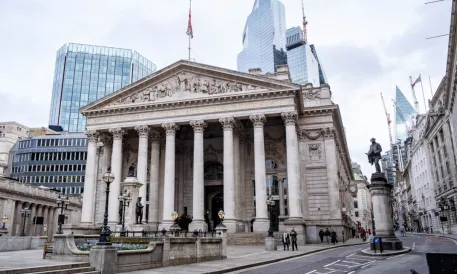
Central banks play a crucial role in maintaining economic stability, and one of their primary responsibilities is controlling inflation. Inflation refers to the general rise in the prices of goods and services over time. While moderate inflation is considered healthy for economic growth, excessive inflation can reduce purchasing power, increase uncertainty, and harm businesses and consumers alike. On the other hand, inflation that is too low or negative (deflation) can slow economic activity. To strike the right balance, central banks use a range of monetary policy tools to influence inflation.
What Is a Central Bank?
A central bank is the institution responsible for managing a country's monetary system. Examples include the Federal Reserve in the United States, the European Central Bank in the eurozone, the Bank of England, and the Bank of Japan. Although their responsibilities vary, most central banks aim to maintain price stability, support employment, and promote sustainable economic growth.
Many central banks set an inflation target, often around 2% annually. This target is considered low enough to preserve purchasing power while allowing the economy to grow steadily.
Why Inflation Needs to Be Controlled
Inflation affects nearly every aspect of the economy. If prices rise too quickly:
-
Consumers can buy fewer goods and services with the same income.
-
Businesses face higher production costs.
-
Savings lose purchasing power.
-
Financial planning becomes more difficult.
Conversely, if inflation is too low or prices fall consistently, consumers may delay spending, businesses may reduce investment, and unemployment can increase.
Central banks aim to keep inflation stable rather than eliminate it entirely.
The Main Tool: Interest Rates
The most powerful tool central banks use to control inflation is adjusting policy interest rates.
Raising Interest Rates
When inflation rises above the target, central banks often increase interest rates.
Higher interest rates affect the economy in several ways:
-
Borrowing becomes more expensive for households and businesses.
-
Mortgage, credit card, and business loan costs increase.
-
Consumers spend less and save more.
-
Businesses postpone investments.
-
Demand for goods and services declines.
As demand slows, businesses have less ability to raise prices, helping reduce inflation over time.
For example, if home loans become more expensive, fewer people may buy houses. Reduced demand can help slow increases in housing prices and related industries.
Lowering Interest Rates
If inflation falls too low or the economy weakens, central banks may reduce interest rates.
Lower rates:
-
Make borrowing cheaper.
-
Encourage consumer spending.
-
Promote business investment.
-
Support job creation.
-
Increase overall economic demand.
As demand grows, inflation gradually moves back toward the central bank's target.
Open Market Operations
Central banks also control inflation through open market operations, which involve buying or selling government securities.
Selling Government Bonds
When inflation is too high, the central bank may sell government bonds to commercial banks and investors.
This removes money from the financial system because buyers pay cash for the bonds. With less money available for lending and spending, economic activity slows, reducing inflationary pressure.
Buying Government Bonds
When inflation is too low, central banks can purchase government bonds.
This injects money into the banking system, increasing liquidity and encouraging banks to lend more. Increased lending supports spending and investment, which can raise inflation toward the desired level.
Reserve Requirements
Some central banks influence inflation by changing reserve requirements—the percentage of customer deposits banks must keep instead of lending.
-
Higher reserve requirements reduce the amount banks can lend.
-
Lower reserve requirements allow banks to issue more loans.
Although this tool is less commonly adjusted today than interest rates, it can still affect the money supply and inflation.
Quantitative Easing (QE)
During severe economic downturns, interest rates may already be close to zero, leaving little room for further cuts.
In such situations, central banks may use quantitative easing (QE).
QE involves purchasing large amounts of government bonds and other financial assets.
The goals are to:
-
Increase the money supply.
-
Lower long-term borrowing costs.
-
Encourage lending.
-
Support investment and spending.
QE became widely used during the 2008 global financial crisis and again during the COVID-19 pandemic.
While QE can stimulate economic activity, excessive use may contribute to higher inflation if too much money enters the economy.
Quantitative Tightening (QT)
When inflation becomes too high after periods of QE, central banks may implement quantitative tightening (QT).
QT works by reducing the central bank's balance sheet through:
-
Selling government bonds.
-
Allowing bonds to mature without replacing them.
This removes money from the financial system, helping reduce inflationary pressures.
Managing Inflation Expectations
Inflation is influenced not only by current conditions but also by what people expect will happen in the future.
If consumers and businesses expect prices to rise rapidly:
-
Workers demand higher wages.
-
Businesses raise prices in anticipation of higher costs.
-
Consumers buy goods sooner before prices increase.
These actions can create a self-fulfilling cycle of inflation.
Central banks therefore communicate their policies clearly through press conferences, reports, and economic forecasts. Credible communication helps anchor inflation expectations near the target level.
Exchange Rates and Inflation
Interest rate changes can also influence exchange rates.
When a country's interest rates rise:
-
Foreign investors may seek higher returns.
-
Demand for the country's currency increases.
-
The currency appreciates.
A stronger currency makes imported goods cheaper, reducing imported inflation.
However, it may also make exports more expensive, potentially slowing economic growth.
The Time Lag of Monetary Policy
One challenge central banks face is that monetary policy does not work instantly.
Changes in interest rates often take several months—and sometimes more than a year—to fully affect:
-
Consumer spending
-
Business investment
-
Employment
-
Inflation
Because of these delays, central banks rely heavily on economic forecasts rather than current inflation alone when making policy decisions.
Challenges in Controlling Inflation
Controlling inflation is not always straightforward.
Supply Shocks
Inflation caused by supply shortages—such as oil price spikes, natural disasters, or supply chain disruptions—is difficult to address with interest rates alone.
Higher interest rates may reduce demand but cannot directly increase the supply of goods.
Balancing Inflation and Growth
Aggressive rate increases can reduce inflation but may also:
-
Slow economic growth.
-
Increase unemployment.
-
Reduce investment.
Central banks must carefully balance controlling inflation with supporting the broader economy.
Global Influences
Modern economies are highly interconnected.
Events such as wars, pandemics, commodity shortages, or global financial crises can drive inflation regardless of domestic monetary policy.
In these cases, central banks often coordinate with governments while continuing to pursue their inflation targets.
Why Central Bank Independence Matters
Many economists believe central banks should operate independently from political influence.
Independent central banks can make decisions based on long-term economic conditions rather than short-term political pressures.
This independence helps build public confidence that inflation will remain under control, making monetary policy more effective.
Conclusion
Central banks control inflation primarily by managing interest rates, regulating the money supply, and influencing financial conditions throughout the economy. Higher interest rates generally reduce borrowing and spending, helping to slow inflation, while lower rates encourage economic activity when inflation is too weak. Additional tools—including open market operations, quantitative easing, quantitative tightening, reserve requirements, and clear communication—allow central banks to respond to changing economic conditions.
Although no central bank can eliminate inflation entirely, effective monetary policy aims to keep price increases stable and predictable. By maintaining confidence in the value of money and responding carefully to economic developments, central banks help create an environment that supports sustainable growth, employment, and long-term financial stability.
- Arts
- Business
- Computers
- Παιχνίδια
- Health
- Κεντρική Σελίδα
- Kids and Teens
- Money
- News
- Personal Development
- Recreation
- Regional
- Reference
- Science
- Shopping
- Society
- Sports
- Бизнес
- Деньги
- Дом
- Досуг
- Здоровье
- Игры
- Искусство
- Источники информации
- Компьютеры
- Личное развитие
- Наука
- Новости и СМИ
- Общество
- Покупки
- Спорт
- Страны и регионы
- World

 English
 Russian
 French
 Spanish
 Portuguese
 Deutsch
 Turkish
 Dutch
Dutch
 Italiano
 Arabic
 Romaian
 Portuguese (Brazil)
