
Retail Management Notes: The Decisions, Systems, and Human Insights Behind Successful Retail
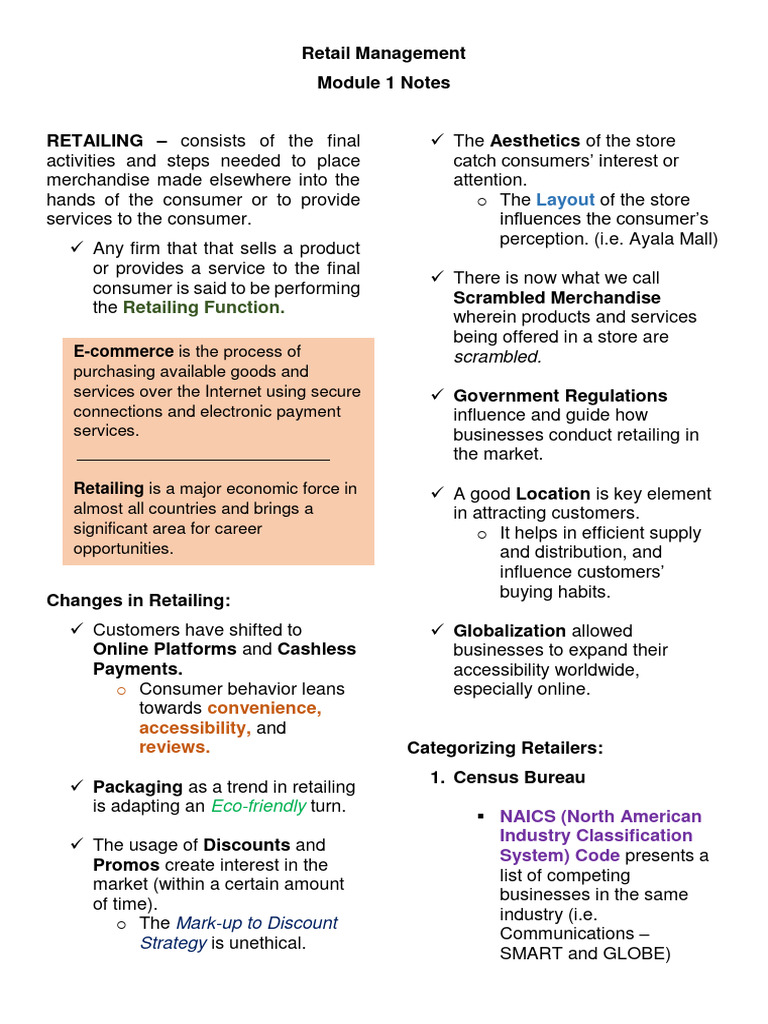
A customer walks into a store.
They notice the products. The prices. The displays. The service.
They rarely notice the decisions happening beneath the surface.
A manager adjusting employee schedules before opening. A buyer analyzing sales patterns. A supply team tracking inventory movement. A store leader deciding whether a customer complaint represents a small problem or a larger warning sign.
Retail management exists in this space between what customers see and what businesses must solve.
It is both operational and human.
A retailer can have excellent products but poor execution. It can have strong marketing but weak inventory planning. It can attract customers but fail to create experiences that bring them back.
The difference often comes down to management.
I learned this lesson while observing a store team preparing for a high-traffic sales period. The inventory was available, the promotions were carefully planned, and the marketing campaign had generated interest. Yet the biggest challenges came from unexpected details: staffing decisions, customer questions, product placement, and communication between departments. The experience showed me that retail success rarely depends on one dramatic decision. It depends on hundreds of small decisions made correctly.
Retail management is not simply about selling products.
It is about coordinating people, processes, and customer expectations.
What Is Retail Management?
Retail management is the process of planning, organizing, and controlling retail operations to achieve business goals while creating value for customers.
A retail manager is responsible for balancing multiple priorities:
- Increasing sales
- Managing employees
- Controlling costs
- Maintaining inventory
- Improving customer experience
- Achieving operational efficiency
The role requires both analytical thinking and emotional intelligence.
Numbers reveal performance.
People create performance.
A successful retail manager understands both.
The Core Functions of Retail Management
Retail management can be divided into several key areas.
1. Store Operations Management
Store operations are the foundation of daily retail performance.
This includes:
- Opening and closing procedures
- Product availability
- Store organization
- Safety standards
- Customer service processes
- Loss prevention
Operational consistency matters because customers expect reliability.
A customer visiting a store today should receive a similar level of service tomorrow.
Strong operations create trust.
2. Inventory Management
Inventory decisions determine whether a retailer can meet customer demand.
Too much inventory creates unnecessary costs.
Too little inventory creates missed sales.
Retail managers monitor:
- Stock levels
- Product turnover
- Replenishment schedules
- Seasonal demand
- Slow-moving products
Inventory management is a constant balancing act between availability and efficiency.
A product sitting unsold represents money tied up.
A missing product represents a customer who may leave.
3. Employee Management
Retail is a people-centered business.
Employees influence the customer experience directly.
Retail managers must handle:
- Hiring
- Training
- Scheduling
- Performance feedback
- Motivation
- Conflict resolution
A well-trained employee can turn an ordinary transaction into a positive customer relationship.
A poorly managed team can damage a retailer’s reputation quickly.
4. Customer Experience Management
Modern retail competition is not only about products.
It is about experiences.
Retail managers influence customer satisfaction through:
- Store atmosphere
- Employee interactions
- Checkout efficiency
- Problem resolution
- Personalization
Customers remember how a retailer makes them feel.
The experience becomes part of the product.
Retail Management Approaches Compared
| Management Approach | Main Focus | Strengths | Weaknesses | Best Application |
|---|---|---|---|---|
| Traditional Store Management | Daily operations and consistency | Reliable execution | May respond slowly to change | Established retail environments |
| Data-Driven Management | Analytics and performance metrics | Better decision-making | Requires accurate information | Large retail organizations |
| Customer-Centric Management | Shopper experience | Builds loyalty | Can increase operating complexity | Premium and service-focused brands |
| Lean Retail Management | Efficiency and waste reduction | Lower costs | Less flexibility during disruptions | High-volume retailers |
| Omnichannel Management | Integration of stores and digital channels | Creates seamless shopping | Requires technology investment | Modern retail ecosystems |
The strongest retailers often combine multiple approaches rather than relying on one philosophy.
The Importance of Retail Strategy
Retail management is not only about daily execution.
It also involves long-term decisions.
Managers must consider:
- Market positioning
- Competitor behavior
- Customer preferences
- Expansion opportunities
- Product selection
A store does not operate in isolation.
It exists within a competitive environment where customer expectations constantly change.
Strategic retail management requires asking difficult questions:
Who is our customer?
Why should they choose us?
What experience are we creating?
Visual Merchandising and Consumer Behavior
A store layout is a silent salesperson.
Product placement influences what customers notice, consider, and purchase.
Retail managers use merchandising strategies such as:
- Featured displays
- Product grouping
- Seasonal presentations
- Promotional areas
- Checkout placement
A well-designed store guides customers without making the process feel forced.
The goal is not simply to display products.
The goal is to create a shopping journey.
Retail Metrics Every Manager Should Understand
Retail management depends heavily on measurement.
Important performance indicators include:
Sales Per Square Foot
This measures how effectively retail space generates revenue.
Inventory Turnover
This shows how quickly products sell and are replaced.
Conversion Rate
This measures how many visitors become buyers.
Average Transaction Value
This identifies how much customers spend per purchase.
Customer Retention Rate
This measures the ability to create repeat business.
Metrics do not replace judgment.
They improve judgment.
Numbers reveal patterns that managers can investigate.
The Role of Technology in Retail Management
Technology has changed how retailers operate.
Managers now use tools for:
- Inventory tracking
- Employee scheduling
- Customer analytics
- Digital payments
- Sales forecasting
Technology provides speed and visibility.
However, retail remains a human business.
A software system can identify declining sales.
A manager must determine why customers are responding differently.
The best retail organizations combine technology with human insight.
Challenges Retail Managers Face
Retail management is demanding because managers operate under constant pressure.
Common challenges include:
Changing Consumer Expectations
Customers expect convenience, speed, and personalized service.
Employee Retention
Retail managers must build teams despite workforce challenges.
Inventory Uncertainty
Demand can shift quickly, making planning difficult.
Cost Control
Managers must improve performance while controlling expenses.
Competitive Pressure
Retailers compete not only with nearby stores but also with online businesses.
The role requires adaptability.
Leadership Lessons From Retail Management
The best retail managers understand that leadership is not about giving instructions.
It is about creating alignment.
Strong leaders:
- Communicate clearly
- Set realistic expectations
- Develop employees
- Recognize performance
- Solve problems quickly
A store team often reflects the quality of its leadership.
When employees understand the purpose behind decisions, execution improves.
The Future of Retail Management
Retail management continues to evolve.
Future-focused retailers will emphasize:
- Data-informed decisions
- Flexible operations
- Employee development
- Personalized customer experiences
- Integrated online and offline shopping
The role of the retail manager will become less about controlling tasks and more about coordinating systems.
The manager becomes a connector.
Between customers and products.
Between employees and goals.
Between strategy and execution.
Conclusion: Retail Management Is the Art of Making Complexity Feel Simple
The best retail experiences appear effortless.
A customer finds the right product.
An employee provides helpful service.
The checkout process works smoothly.
The store feels organized.
But behind that simplicity is careful management.
Retail managers solve problems before customers notice them. They make decisions with incomplete information. They balance financial goals with human expectations.
The strongest retailers understand a fundamental truth:
Retail is not only a business of products.
It is a business of decisions.
Every display, every interaction, every inventory choice, and every employee action contributes to the customer experience.
Retail management succeeds when complexity is transformed into confidence.
The customer sees a store.
The manager sees a system.
And the difference between the two is where great retail performance is created.
- Arts
- Business
- Computers
- Games
- Health
- Home
- Kids and Teens
- Money
- News
- Personal Development
- Recreation
- Regional
- Reference
- Science
- Shopping
- Society
- Sports
- Бизнес
- Деньги
- Дом
- Досуг
- Здоровье
- Игры
- Искусство
- Источники информации
- Компьютеры
- Личное развитие
- Наука
- Новости и СМИ
- Общество
- Покупки
- Спорт
- Страны и регионы
- World

 Russian
 French
 Spanish
 Portuguese
 Deutsch
 Turkish
 Dutch
Dutch
 Italiano
 Arabic
 Romaian
 Portuguese (Brazil)
 Greek
Greek
