
Retail Business Examples: How Different Retail Models Win Customers, Build Loyalty, and Create Value
A retail business begins with a simple exchange.
A customer wants something.
A company provides it.
But between those two moments exists an entire world of strategy, psychology, operations, and decision-making.
A neighborhood grocery store and a global online marketplace may both be considered retailers, yet they operate almost like different species. One depends on location and personal relationships. The other depends on technology, logistics, and massive data systems.
A luxury brand sells scarcity.
A discount retailer sells efficiency.
A subscription company sells convenience.
The products may differ. The principles remain connected.
Every successful retail business answers the same fundamental questions:
Who is the customer?
What problem are we solving?
Why should people buy from us instead of someone else?
I learned this lesson while studying a small specialty retailer competing against much larger companies. The business could not match big competitors on price or advertising budgets. Instead, it focused on product knowledge, personal service, and a carefully defined customer community. The lesson was clear: retail success does not always come from being the biggest player. It comes from understanding the value you create better than anyone else.
Retail is not one business model.
It is a collection of strategies designed around different customer needs.
What Defines a Retail Business?
A retail business sells products or services directly to consumers for personal use.
Traditional examples include:
- Clothing stores
- Grocery stores
- Electronics retailers
- Department stores
- Specialty shops
Modern retail has expanded to include:
- E-commerce platforms
- Subscription services
- Direct-to-consumer brands
- Marketplace businesses
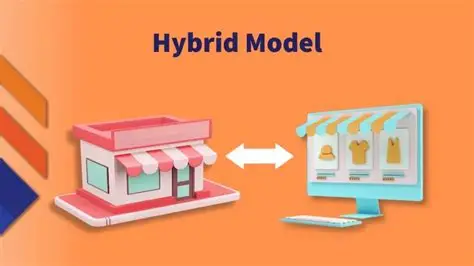
- Hybrid online and physical models
Despite these differences, all retailers manage several core functions:
- Product selection
- Pricing
- Customer experience
- Inventory
- Marketing
- Distribution
The strongest retailers create alignment between these areas.
A great product with poor service struggles.
A great website with unreliable delivery disappoints.
A great price without customer trust rarely creates lasting loyalty.
Example 1: Grocery Retail — Winning Through Convenience and Availability
Grocery retail is one of the clearest examples of a business built around everyday consumer needs.
Customers do not visit grocery stores only because they want food.
They want:
- Convenience
- Reliability
- Freshness
- Affordable choices
Large grocery retailers compete through operational excellence.
Their advantages often come from:
- Efficient supply chains
- Strong supplier relationships
- Inventory management
- Store locations
- Private-label products
The challenge is complexity.
Fresh products have limited shelf lives.
Consumer preferences change.
Margins are often narrow.
A successful grocery retailer must manage thousands of products while ensuring customers find what they need.
The grocery model demonstrates an important retail principle:
Availability creates trust.
When customers repeatedly find products in stock, the retailer becomes part of their routine.
Example 2: Luxury Retail — Selling Meaning Beyond the Product
Luxury retail operates according to a different logic.
A luxury purchase is rarely based only on function.
Customers are buying:
- Craftsmanship
- Identity
- Status
- Exclusivity
- Experience
Luxury retailers carefully control:
- Distribution
- Store environment
- Customer service
- Product availability
- Brand storytelling
Scarcity can increase desire.
A product that feels difficult to obtain may appear more valuable.
However, luxury retail requires discipline. Expanding too quickly or discounting too aggressively can weaken the perception that makes the brand attractive.
The product matters.
The meaning attached to the product matters just as much.
Example 3: Discount Retail — The Power of Value
Discount retailers succeed by making affordability their central promise.
Their strategy often focuses on:
- Lower operating costs
- Efficient supply chains
- High sales volume
- Competitive pricing
Customers choose discount retailers because they believe they are making a smart financial decision.
The appeal is not simply spending less.
It is feeling that the purchase represents good judgment.
Discount retail demonstrates how price influences perception.
A retailer that consistently delivers value earns customer trust.
Example 4: E-Commerce Retail — Convenience as the Product
Online retail changed expectations around shopping.
Customers increasingly value:
- Speed
- Selection
- Easy comparison
- Home delivery
- Simple returns
E-commerce retailers compete through technology and logistics.
Their systems must coordinate:
- Digital storefronts
- Warehouses
- Payment processing
- Delivery networks
- Customer data
The challenge is recreating the confidence customers once gained from physical stores.
A customer cannot touch the product before purchasing.
The retailer must replace physical reassurance with information, reviews, and reliable service.
Example 5: Direct-to-Consumer Brands — Building Relationships Without Traditional Retail
Direct-to-consumer (DTC) companies sell products directly through their own channels rather than relying primarily on traditional retailers.
This model allows companies to control:
- Branding
- Customer data
- Communication
- Product presentation
DTC brands often build communities around their products.
Their advantage is closeness to the customer.
Their challenge is that they must manage responsibilities traditionally handled by retailers, including fulfillment, customer service, and marketing.
Retail Business Models Compared
| Retail Business Example | Primary Customer Need | Main Competitive Advantage | Major Challenge | Revenue Approach |
|---|---|---|---|---|
| Grocery Retail | Convenience and reliability | Inventory availability and locations | Low margins and freshness management | Frequent purchases |
| Luxury Retail | Identity and exclusivity | Brand perception and experience | Maintaining scarcity | High-margin purchases |
| Discount Retail | Affordable value | Cost efficiency | Protecting margins | High-volume sales |
| E-Commerce Retail | Convenience and selection | Technology and logistics | Delivery expectations | Online transactions |
| Direct-to-Consumer Brand | Connection and personalization | Customer relationships | Customer acquisition costs | Direct sales |
| Subscription Retail | Convenience and retention | Recurring relationships | Maintaining engagement | Monthly or recurring payments |
Each model succeeds because it understands a specific customer motivation.
Example 6: Subscription Retail — Turning Transactions Into Relationships
Subscription businesses changed the traditional retail relationship.
Instead of asking customers to make repeated purchasing decisions, companies create ongoing relationships.
Examples include:
- Beauty product subscriptions
- Meal delivery services
- Clothing subscriptions
- Household product subscriptions
The advantage is predictability.
Companies can forecast demand more accurately.
Customers gain convenience.
But subscription models face a major challenge:
Retention.
A customer may sign up easily.
Keeping that customer requires consistent value.
Example 7: Specialty Retail — Winning Through Expertise
Specialty retailers compete by focusing deeply on a specific category.
Examples include businesses focused on:
- Outdoor equipment
- Beauty products
- Books
- Pet supplies
- Hobbies
Their advantage is expertise.
A specialty retailer can provide guidance that a general retailer may not match.
Customers often visit because they want confidence, not just a product.
The retailer becomes a trusted advisor.
The Importance of Customer Experience Across Retail Models
Although retail models differ, customer experience remains central.
A positive experience includes:
- Easy purchasing
- Helpful information
- Reliable service
- Fair policies
- Consistent quality
Customer expectations continue to rise because consumers compare every interaction against their best experiences.
A grocery shopper expects speed.
A luxury customer expects attention.
An online shopper expects convenience.
The definition of “good service” depends on the retail model.
Technology as a Retail Advantage
Technology now influences nearly every retail business.
Retailers use technology for:
- Inventory forecasting
- Personalized recommendations
- Customer analytics
- Digital payments
- Automated fulfillment
However, technology is not valuable by itself.
The strongest retailers use technology to improve human decisions.
A data system can identify customer patterns.
A manager must decide what those patterns mean.
Why Some Retail Businesses Fail
Retail failures often occur when businesses lose connection with customer needs.
Common causes include:
- Poor inventory decisions
- Weak customer experience
- Failure to adapt
- Unclear positioning
- Inefficient operations
A retailer does not fail simply because competitors exist.
It fails when it stops understanding why customers choose it.
Conclusion: The Best Retail Businesses Understand the Customer Story
Retail is often described as selling products.
That description is incomplete.
Successful retailers sell solutions, experiences, identities, and relationships.
A grocery store sells convenience.
A luxury brand sells aspiration.
A discount retailer sells confidence in value.
An online marketplace sells access.
A specialty retailer sells expertise.
Different businesses. Different strategies. Different customers.
Yet the underlying lesson remains the same:
Retail success begins with understanding what customers truly value.
The product is only part of the equation.
The real competitive advantage comes from creating a reason for customers to return.
Because in retail, the first purchase creates revenue.
The relationship creates the business.
- Arts
- Business
- Computers
- Juegos
- Health
- Home
- Kids and Teens
- Money
- News
- Personal Development
- Recreation
- Regional
- Reference
- Science
- Shopping
- Society
- Sports
- Бизнес
- Деньги
- Дом
- Досуг
- Здоровье
- Игры
- Искусство
- Источники информации
- Компьютеры
- Личное развитие
- Наука
- Новости и СМИ
- Общество
- Покупки
- Спорт
- Страны и регионы
- World

 English
 Russian
 French
 Portuguese
 Deutsch
 Turkish
 Dutch
Dutch
 Italiano
 Arabic
 Romaian
 Portuguese (Brazil)
 Greek
Greek
