
What are the best investments during inflation?
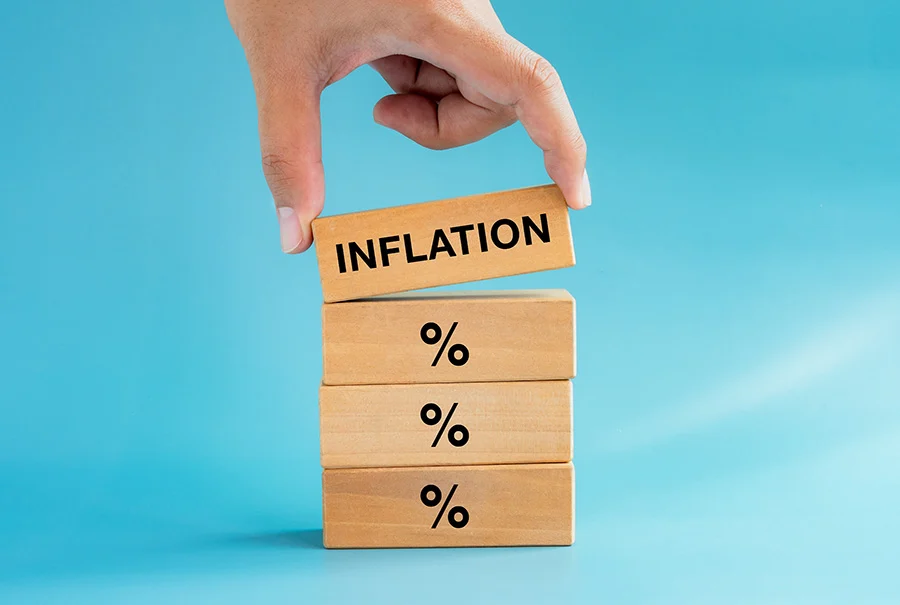
What Are the Best Investments During Inflation?
Inflation can quietly erode the purchasing power of your money. As prices rise, each dollar buys less than it did before, making it more difficult for savings held in cash to maintain their value. While inflation creates challenges for investors, it also presents opportunities. Certain investments have historically performed better than others during periods of rising prices.
The best investments during inflation depend on your financial goals, risk tolerance, and investment timeline. Instead of relying on a single asset, many investors build diversified portfolios that include investments with the potential to outpace inflation.
Why Inflation Matters for Investors
Inflation measures the rate at which the prices of goods and services increase over time. Moderate inflation is a normal part of a healthy economy, but high inflation can reduce the real value of savings and fixed-income investments.
For example, if inflation is 5% per year and your savings account earns only 2%, your purchasing power effectively declines by about 3% annually.
This is why many investors seek assets that can generate returns exceeding the inflation rate.
Stocks
Stocks have historically been among the best long-term investments during inflation.
Companies with strong pricing power can often pass higher costs on to customers, helping protect their profits. Businesses operating in sectors such as consumer staples, healthcare, energy, and technology may continue growing even when prices rise.
Advantages
-
Long-term growth potential
-
Opportunity to outpace inflation
-
Dividend income from many companies
Risks
-
Market volatility
-
Short-term price declines
-
Some industries struggle more during inflation
Investing through broad-market index funds or exchange-traded funds (ETFs) can reduce the risk associated with owning individual stocks.
Real Estate
Real estate has long been considered an effective inflation hedge.
Property values and rental income often rise alongside inflation, allowing real estate investors to benefit from increasing cash flow and asset appreciation.
Real estate investment trusts (REITs) provide exposure to real estate without requiring investors to purchase physical property.
Advantages
-
Potential appreciation
-
Rental income may increase with inflation
-
Portfolio diversification
Risks
-
Interest rate increases can pressure property values
-
Maintenance and ownership costs
-
Real estate markets can experience downturns
Treasury Inflation-Protected Securities (TIPS)
Treasury Inflation-Protected Securities (TIPS) are U.S. government bonds specifically designed to help protect investors from inflation.
Their principal value adjusts based on changes in the Consumer Price Index (CPI). As inflation rises, the bond's value increases, helping preserve purchasing power.
Advantages
-
Government-backed
-
Direct inflation protection
-
Lower investment risk than many alternatives
Risks
-
Lower returns during periods of low inflation
-
Interest rate movements can affect market prices if sold before maturity
TIPS are often suitable for conservative investors seeking inflation protection.
Commodities
Commodities such as oil, natural gas, wheat, corn, and industrial metals often increase in price during inflationary periods.
Since commodities themselves are components of the inflation process, their prices frequently rise when overall prices increase.
Investors can gain exposure through commodity ETFs, mutual funds, or futures-based investments.
Advantages
-
Strong inflation correlation
-
Diversification benefits
Risks
-
High price volatility
-
Commodity prices can fluctuate significantly based on supply and demand
Because of their volatility, commodities typically represent only a small portion of a diversified portfolio.
Gold and Precious Metals
Gold has traditionally been viewed as a store of value during economic uncertainty and inflation.
Although gold does not generate income like stocks or bonds, many investors buy it as a hedge against declining currency purchasing power.
Silver, platinum, and other precious metals may also benefit during inflation, although they tend to be more volatile.
Advantages
-
Historical inflation hedge
-
Portfolio diversification
-
Safe-haven appeal during uncertainty
Risks
-
No dividend or interest income
-
Prices can remain flat for extended periods
-
Performance varies depending on economic conditions
Gold often performs best as part of a diversified investment strategy rather than as a standalone investment.
Dividend-Paying Stocks
Companies that consistently increase their dividends may provide additional protection against inflation.
Businesses with stable earnings and strong cash flow often continue raising dividend payments over time, helping investors offset rising living costs.
Examples include companies in sectors such as:
-
Utilities
-
Consumer staples
-
Healthcare
-
Energy
Dividend growth can become an important source of long-term income.
Value Stocks
Value stocks are shares of companies trading below what investors believe to be their intrinsic value.
During inflationary environments, value stocks have sometimes outperformed high-growth companies because they often generate stronger current earnings and cash flow.
Examples include businesses in:
-
Financial services
-
Manufacturing
-
Energy
-
Industrial companies
While not guaranteed, value investing has historically shown resilience during periods of rising interest rates and inflation.
Floating-Rate Bonds
Unlike traditional bonds with fixed interest payments, floating-rate bonds have interest rates that adjust periodically.
As benchmark interest rates rise in response to inflation, the income from these bonds may increase.
Advantages
-
Rising interest income
-
Reduced interest-rate risk
Risks
-
Credit risk for corporate issuers
-
Lower returns if interest rates decline
International Investments
Inflation affects countries differently.
Owning international stocks or global funds can reduce dependence on the economic conditions of a single country. Some foreign markets may experience lower inflation or stronger economic growth.
Global diversification can improve portfolio resilience over the long term.
High-Yield Savings Accounts and Certificates of Deposit
While cash typically loses purchasing power during inflation, high-yield savings accounts and certificates of deposit (CDs) often offer higher interest rates when central banks raise rates to combat inflation.
These investments provide:
-
Capital preservation
-
Liquidity
-
Low risk
However, they may still fail to fully keep pace with high inflation over long periods.
Investments That May Struggle During Inflation
Some investments tend to perform less favorably during inflationary periods.
These include:
-
Long-term fixed-rate bonds
-
Cash held without earning competitive interest
-
Companies with weak pricing power
-
Businesses heavily dependent on discretionary consumer spending
This does not necessarily mean investors should avoid these assets entirely, but they may require careful evaluation.
The Importance of Diversification
No single investment performs best during every inflationary period.
A balanced portfolio may include:
-
Broad stock market funds
-
Real estate exposure
-
Inflation-protected bonds
-
Precious metals
-
Cash reserves
-
International investments
Diversification reduces the impact of poor performance from any one asset class while improving long-term stability.
Tips for Investing During Inflation
When inflation rises, consider these practical strategies:
-
Focus on long-term investing instead of reacting to short-term market movements.
-
Review your portfolio regularly to ensure it aligns with your goals.
-
Avoid concentrating too much money in a single asset class.
-
Continue investing consistently through market ups and downs.
-
Maintain an emergency fund to cover unexpected expenses.
Trying to perfectly predict inflation or time the market is extremely difficult, even for professional investors.
Final Thoughts
The best investments during inflation are those that have the potential to preserve or grow purchasing power over time. Stocks, real estate, Treasury Inflation-Protected Securities (TIPS), commodities, precious metals, dividend-paying companies, and selected bonds have all played valuable roles in helping investors navigate inflationary environments.
Rather than searching for a single "perfect" investment, many financial professionals recommend building a diversified portfolio tailored to your objectives and risk tolerance. By combining assets that respond differently to changing economic conditions, investors can better protect their wealth while pursuing long-term financial growth.
- Arts
- Business
- Computers
- Giochi
- Health
- Home
- Kids and Teens
- Money
- News
- Personal Development
- Recreation
- Regional
- Reference
- Science
- Shopping
- Society
- Sports
- Бизнес
- Деньги
- Дом
- Досуг
- Здоровье
- Игры
- Искусство
- Источники информации
- Компьютеры
- Личное развитие
- Наука
- Новости и СМИ
- Общество
- Покупки
- Спорт
- Страны и регионы
- World

 English
 Russian
 French
 Spanish
 Portuguese
 Deutsch
 Turkish
 Dutch
Dutch
 Arabic
 Romaian
 Portuguese (Brazil)
 Greek
Greek
