
SaaS vs. PaaS: Which Is Better?
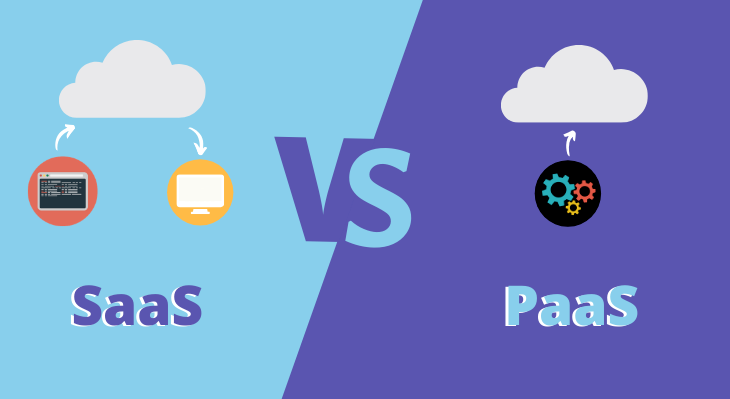
There’s a curious pattern in technology markets. Consumers rarely buy products; they buy relief. Relief from complexity. Relief from uncertainty. Relief from work they would rather not do.
That realization hit me during a strategy workshop with a midsize software company. The leadership team was debating a platform investment. One executive wanted a Software-as-a-Service solution because it could be deployed immediately. Another argued passionately for a Platform-as-a-Service environment that would allow customization and future innovation.
The discussion lasted three hours.
What struck me wasn’t the technical disagreement. It was the fact that both sides were correct.
The conversation mirrored a larger misunderstanding in the cloud computing market. Businesses often approach SaaS and PaaS as if they are competing products on a store shelf. Choose one. Reject the other. Move on.
But that framing misses the real question.
The issue is not whether SaaS is better than PaaS. The issue is whether convenience or control creates more value for your organization at a particular moment in time.
And that distinction changes everything.
Understanding the Difference: Convenience Versus Control
At the highest level, SaaS and PaaS occupy different positions on the cloud services spectrum.
Software-as-a-Service (SaaS) delivers fully functional applications through the internet. Users access the software, while the provider manages infrastructure, maintenance, security updates, and performance optimization.
Examples include customer relationship management tools, collaboration platforms, accounting software, and marketing automation systems.
Platform-as-a-Service (PaaS) provides a framework for developers to build, deploy, and manage applications without worrying about underlying hardware and operating systems.
Rather than consuming a finished product, organizations receive a foundation upon which they can create customized solutions.
The distinction sounds straightforward.
The implications are not.
One model asks, “What task are you trying to complete?”
The other asks, “What capability are you trying to create?”
Those are profoundly different questions.
Why SaaS Became the Default Choice
SaaS succeeded for the same reason prepared meals became popular. Most people value outcomes more than process.
Organizations purchasing SaaS solutions typically want speed.
They want implementation measured in days instead of months.
They want predictable subscription costs.
They want software that works immediately.
This preference is hardly surprising. Research across enterprise technology markets consistently shows that deployment speed and operational simplicity rank among the most important purchasing criteria for business leaders.
When companies adopt SaaS, they outsource complexity.
The vendor handles patches.
The vendor handles upgrades.
The vendor handles infrastructure scaling.
The customer focuses on usage.
That transfer of responsibility creates enormous value, especially for small and midsize businesses with limited technical resources.
The Hidden Strength of SaaS
The greatest advantage of SaaS is often misunderstood.
People frequently point to lower costs.
That is not always true.
Over several years, subscription expenses can become substantial.
The real advantage is cognitive efficiency.
Every decision a company avoids has value.
Every server configuration it never touches has value.
Every software update that occurs automatically has value.
SaaS reduces the number of things an organization must think about.
And in business, attention is often more scarce than money.
Why PaaS Continues to Attract Ambitious Organizations
Yet convenience has limits.
At some point, companies encounter unique requirements that standardized software cannot accommodate.
This is where PaaS enters the picture.
A PaaS environment provides developers with tools, middleware, runtime environments, databases, and deployment frameworks. The organization gains flexibility without assuming responsibility for every infrastructure layer.
Think of SaaS as renting a fully furnished apartment.
Think of PaaS as leasing land with utilities already installed.
One option prioritizes immediate occupancy.
The other prioritizes creation.
For organizations pursuing innovation, differentiation, or proprietary customer experiences, PaaS can become extraordinarily attractive.
The ability to build applications tailored to specific workflows often creates competitive advantages that generic software cannot replicate.
The Innovation Premium
One lesson I learned while advising a software product team still resonates.
The company initially purchased several SaaS tools to accelerate growth. For the first two years, the decision looked brilliant. Costs were manageable. Deployment was effortless. Productivity improved.
Then growth introduced complexity.
Workflows became specialized.
Data requirements expanded.
Integration needs multiplied.
Eventually, employees spent more time working around software limitations than using the software itself.
The company migrated portions of its operations to a PaaS-based environment and developed custom applications.
The transition was neither inexpensive nor simple.
But it restored strategic flexibility.
That experience reinforced an important principle: efficiency today can become constraint tomorrow.
Not always.
But often enough to deserve consideration.
SaaS vs. PaaS: Side-by-Side Comparison
| Feature | SaaS | PaaS |
|---|---|---|
| Primary Purpose | Deliver ready-to-use software | Enable application development |
| User Type | Business users, non-technical teams | Developers and IT teams |
| Setup Time | Hours or days | Days to months |
| Customization | Limited to vendor options | Extensive customization |
| Infrastructure Management | Vendor-managed | Vendor-managed infrastructure, customer-managed applications |
| Maintenance Responsibility | Primarily vendor | Shared responsibility |
| Initial Cost | Typically lower | Often higher |
| Scalability | High | High |
| Development Requirements | Minimal | Significant |
| Time to Value | Very fast | Moderate |
| Competitive Differentiation | Limited | Potentially substantial |
| Long-Term Flexibility | Moderate | High |
The table suggests a winner depending on what metric you prioritize.
That is precisely the problem.
Different organizations prioritize different metrics.
The Economics Behind the Decision
Technology purchasing decisions are rarely about technology alone.
They are economic choices disguised as technical choices.
A SaaS subscription may appear inexpensive at first glance. Monthly fees spread costs over time, reducing upfront expenditures.
PaaS often requires investment in development talent, architecture planning, testing, and ongoing application management.
Viewed narrowly, SaaS seems more attractive.
Viewed strategically, the picture becomes more complicated.
Consider two organizations.
The first operates a regional accounting firm with standardized processes.
The second runs a rapidly growing logistics platform seeking unique operational capabilities.
The accounting firm gains little from custom software development.
Its competitive advantage comes from expertise, relationships, and service quality.
SaaS aligns naturally with its needs.
The logistics platform, however, may generate substantial value through proprietary routing algorithms, customized dashboards, and specialized automation.
For that company, PaaS investments may produce returns that vastly exceed development costs.
The economic question is therefore not “Which costs less?”
It is “Which creates more value?”
Those are different calculations.
Security: A More Nuanced Discussion Than Most People Realize
Security conversations often become oversimplified.
Some executives assume SaaS is automatically safer because large vendors possess sophisticated security teams.
Others assume PaaS provides stronger protection because organizations maintain greater control.
Reality lives somewhere between those extremes.
Major SaaS providers frequently invest millions of dollars in cybersecurity capabilities that many organizations could never replicate independently.
At the same time, SaaS customers surrender a degree of visibility and control.
PaaS environments offer greater customization and governance opportunities, but they also introduce additional responsibility.
Security outcomes depend less on the model itself and more on implementation quality.
A poorly configured platform can be vulnerable.
A poorly managed SaaS deployment can be vulnerable.
Technology architecture matters.
Operational discipline matters more.
When SaaS Is Usually the Better Choice
SaaS tends to outperform alternatives under several conditions.
You Need Immediate Results
Organizations facing urgent operational requirements often benefit from rapid deployment.
Speed becomes a strategic asset.
Your Processes Are Relatively Standardized
If business workflows resemble those used by thousands of other organizations, custom development may generate limited incremental value.
Technical Resources Are Limited
Smaller companies frequently lack dedicated development teams.
SaaS reduces technical burdens dramatically.
Predictability Matters
Subscription pricing simplifies budgeting and resource planning.
For many executives, that predictability is highly appealing.
When PaaS Usually Delivers More Value
PaaS becomes compelling under different circumstances.
Customization Is Essential
Organizations with unique workflows often require software built around their operations rather than operations adapted to software.
Innovation Drives Competitive Advantage
When differentiation depends on proprietary applications, PaaS provides critical flexibility.
Development Talent Exists Internally
A platform's potential remains unrealized without skilled teams capable of leveraging it.
Long-Term Strategic Control Matters
Companies seeking ownership over application experiences frequently prefer platform-based approaches.
The Emerging Reality: Most Companies Will Use Both
Here is the twist many discussions overlook.
The future is not SaaS or PaaS.
It is SaaS and PaaS.
Modern technology ecosystems increasingly combine both models.
A company might use SaaS for email, collaboration, payroll, and customer support while simultaneously building specialized applications on a PaaS environment.
This hybrid approach reflects a broader truth about markets.
Consumers rarely choose extremes.
They assemble portfolios.
The same behavior appears in cloud computing.
Organizations adopt SaaS where standardization creates efficiency.
They adopt PaaS where customization creates value.
The resulting architecture balances convenience with control.
The Real Question Leaders Should Ask
Technology debates often become trapped in feature comparisons.
More storage.
More integrations.
More customization.
More automation.
Those details matter.
But they are not where the decision begins.
The better question is strategic.
What kind of company are you trying to become?
If your objective is operational excellence through proven tools and streamlined execution, SaaS will often provide the most efficient path forward.
If your objective is creating unique capabilities that competitors cannot easily replicate, PaaS may justify its additional complexity.
The answer emerges not from technology specifications but from business priorities.
That distinction is easy to miss.
Yet it determines whether a cloud investment becomes an asset or an obligation.
Conclusion: Better for Whom?
Asking whether SaaS is better than PaaS resembles asking whether a luxury sedan is better than a pickup truck.
The question sounds sensible.
The answer depends entirely on what needs to be accomplished.
SaaS excels when organizations seek simplicity, speed, and operational efficiency. It removes friction and allows teams to focus on outcomes rather than infrastructure.
PaaS excels when organizations seek flexibility, innovation, and strategic differentiation. It provides the tools to build rather than merely consume.
Neither model wins universally.
Neither model loses universally.
What matters is the fit between organizational objectives and technological capabilities.
And perhaps that is the most important lesson cloud computing continues to teach us.
The highest-performing companies are not those that choose the most sophisticated technology.
They are the ones that understand which complexity is worth owning—and which complexity is better left to someone else.
- Arts
- Business
- Computers
- Juegos
- Health
- Home
- Kids and Teens
- Money
- News
- Personal Development
- Recreation
- Regional
- Reference
- Science
- Shopping
- Society
- Sports
- Бизнес
- Деньги
- Дом
- Досуг
- Здоровье
- Игры
- Искусство
- Источники информации
- Компьютеры
- Личное развитие
- Наука
- Новости и СМИ
- Общество
- Покупки
- Спорт
- Страны и регионы
- World

 English
 Russian
 French
 Portuguese
 Deutsch
 Turkish
 Dutch
Dutch
 Italiano
 Arabic
 Romaian
 Portuguese (Brazil)
 Greek
Greek
