
Inflation formulas
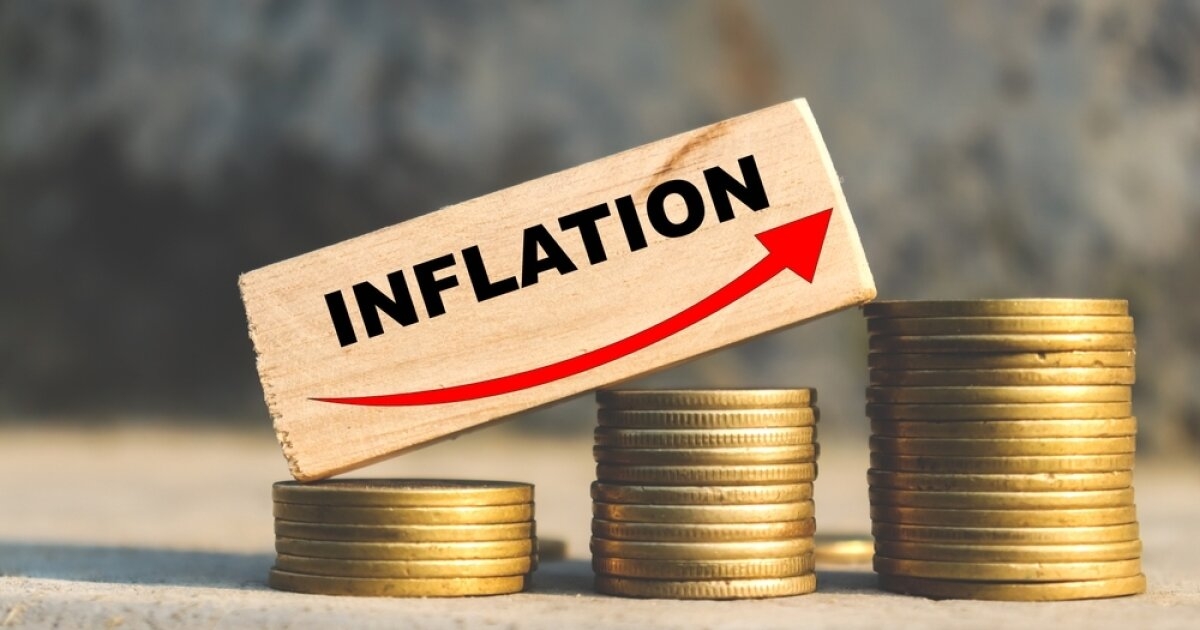
Inflation Formulas: A Complete Guide with Examples
Introduction
Inflation is the rate at which the general price level of goods and services rises over time, reducing the purchasing power of money. Economists, businesses, students, and policymakers use inflation formulas to measure price changes, compare economic performance, and make informed financial decisions.
Understanding inflation formulas helps you calculate inflation rates, adjust prices for inflation, and determine the real value of money. This guide explains the most important inflation formulas, how they work, and when to use them.
What Is the Inflation Rate?
The inflation rate measures the percentage increase in prices over a specific period, usually one year. It indicates how much more expensive goods and services have become.
For example, if inflation is 4%, an item that cost $100 last year would cost approximately $104 this year.
Formula 1: Inflation Rate Formula
The most common inflation formula is:
Inflation Rate (%) = [(Current CPI − Previous CPI) ÷ Previous CPI] × 100
Where:
-
Current CPI = Consumer Price Index for the current period
-
Previous CPI = Consumer Price Index for the earlier period
Example
Suppose:
-
Previous CPI = 250
-
Current CPI = 260
Calculation:
Inflation Rate = ((260 − 250) ÷ 250) × 100
= (10 ÷ 250) × 100
= 4%
Therefore, the annual inflation rate is 4%.
Formula 2: Future Price After Inflation
To estimate the future cost of a product:
Future Price = Present Price × (1 + Inflation Rate)^Number of Years
This formula accounts for compound inflation.
Example
Current price: $500
Annual inflation: 3%
Time: 5 years
Future Price = 500 × (1.03)^5
≈ $579.64
The product is expected to cost approximately $579.64 after five years.
Formula 3: Past Price Using Inflation
To estimate what an item cost before inflation:
Past Price = Current Price ÷ (1 + Inflation Rate)^Number of Years
Example
Current price = $1,200
Inflation = 5%
Years = 2
Past Price = 1200 ÷ (1.05)^2
≈ $1,088.44
Formula 4: Real Value Formula
Inflation affects purchasing power. To find the real value:
Real Value = Nominal Value ÷ (Price Index ÷ 100)
Example
Nominal income = $60,000
Price Index = 120
Real Income = 60,000 ÷ 1.20
= $50,000
Although the person earns $60,000, its purchasing power is equivalent to $50,000 in the base year.
Formula 5: Purchasing Power Formula
Purchasing power shows how inflation reduces the value of money.
Purchasing Power = Initial Value ÷ (1 + Inflation Rate)
Example
Initial Value = $100
Inflation = 8%
Purchasing Power
= 100 ÷ 1.08
≈ $92.59
The $100 now buys what $92.59 could purchase before inflation.
Formula 6: Compound Inflation Formula
When inflation occurs over multiple years:
Final Value = Initial Value × (1 + r)^n
Where:
-
r = annual inflation rate
-
n = number of years
Example
Initial cost = $800
Inflation = 4%
Years = 6
Final Value
= 800 × (1.04)^6
≈ $1,012.65
Formula 7: Average Inflation Rate
If inflation rates vary annually:
Average Inflation Rate = Sum of Annual Inflation Rates ÷ Number of Years
Example
Inflation rates:
-
3%
-
5%
-
2%
-
4%
Average
= (3 + 5 + 2 + 4) ÷ 4
= 3.5%
Formula 8: Real Interest Rate
Inflation reduces investment returns. The approximate real interest rate is:
Real Interest Rate ≈ Nominal Interest Rate − Inflation Rate
Example
Savings interest = 7%
Inflation = 4%
Real Interest Rate
= 7% − 4%
= 3%
The investor's purchasing power increases by approximately 3%.
Formula 9: GDP Deflator Inflation Formula
Economists sometimes measure inflation using the GDP Deflator.
Inflation Rate = [(Current GDP Deflator − Previous GDP Deflator) ÷ Previous GDP Deflator] × 100
Example
Previous GDP Deflator = 110
Current GDP Deflator = 115
Inflation Rate
= ((115 − 110) ÷ 110) × 100
≈ 4.55%
Formula 10: Wage Adjustment for Inflation
To maintain purchasing power:
Adjusted Salary = Current Salary × (1 + Inflation Rate)
Example
Salary = $50,000
Inflation = 6%
Adjusted Salary
= 50,000 × 1.06
= $53,000
The employee would need $53,000 to maintain the same purchasing power.
Why Inflation Formulas Matter
Inflation formulas are useful in many areas, including:
-
Budget planning
-
Salary negotiations
-
Investment analysis
-
Economic forecasting
-
Government policy evaluation
-
Retirement planning
-
Business pricing strategies
They help individuals and organizations understand the changing value of money over time.
Common Inflation Measures
Several price indexes are used in inflation calculations:
-
Consumer Price Index (CPI): Measures changes in consumer prices.
-
Producer Price Index (PPI): Tracks prices received by producers.
-
GDP Deflator: Measures price changes across all domestically produced goods and services.
-
Personal Consumption Expenditures (PCE) Price Index: A broad measure of consumer inflation often used in monetary policy.
Each index serves a different purpose depending on the analysis.
Common Mistakes When Using Inflation Formulas
Avoid these common errors:
-
Mixing percentages with decimals (3% should be written as 0.03 in calculations).
-
Using the wrong base year CPI.
-
Ignoring compound inflation over multiple years.
-
Confusing nominal values with real values.
-
Rounding numbers too early in calculations.
Careful use of formulas leads to more accurate results.
Conclusion
Inflation formulas are essential tools for measuring changes in prices and the value of money. Whether you're calculating the annual inflation rate using the Consumer Price Index, estimating future prices, adjusting wages, or determining real purchasing power, these formulas provide valuable insights into economic trends.
By understanding and applying these formulas correctly, students, professionals, investors, and policymakers can make better financial decisions and interpret economic data with greater confidence.
- Arts
- Business
- Computers
- Jocuri
- Health
- Home
- Kids and Teens
- Money
- News
- Personal Development
- Recreation
- Regional
- Reference
- Science
- Shopping
- Society
- Sports
- Бизнес
- Деньги
- Дом
- Досуг
- Здоровье
- Игры
- Искусство
- Источники информации
- Компьютеры
- Личное развитие
- Наука
- Новости и СМИ
- Общество
- Покупки
- Спорт
- Страны и регионы
- World

 English
 Russian
 French
 Spanish
 Portuguese
 Deutsch
 Turkish
 Dutch
Dutch
 Italiano
 Arabic
 Portuguese (Brazil)
 Greek
Greek
